







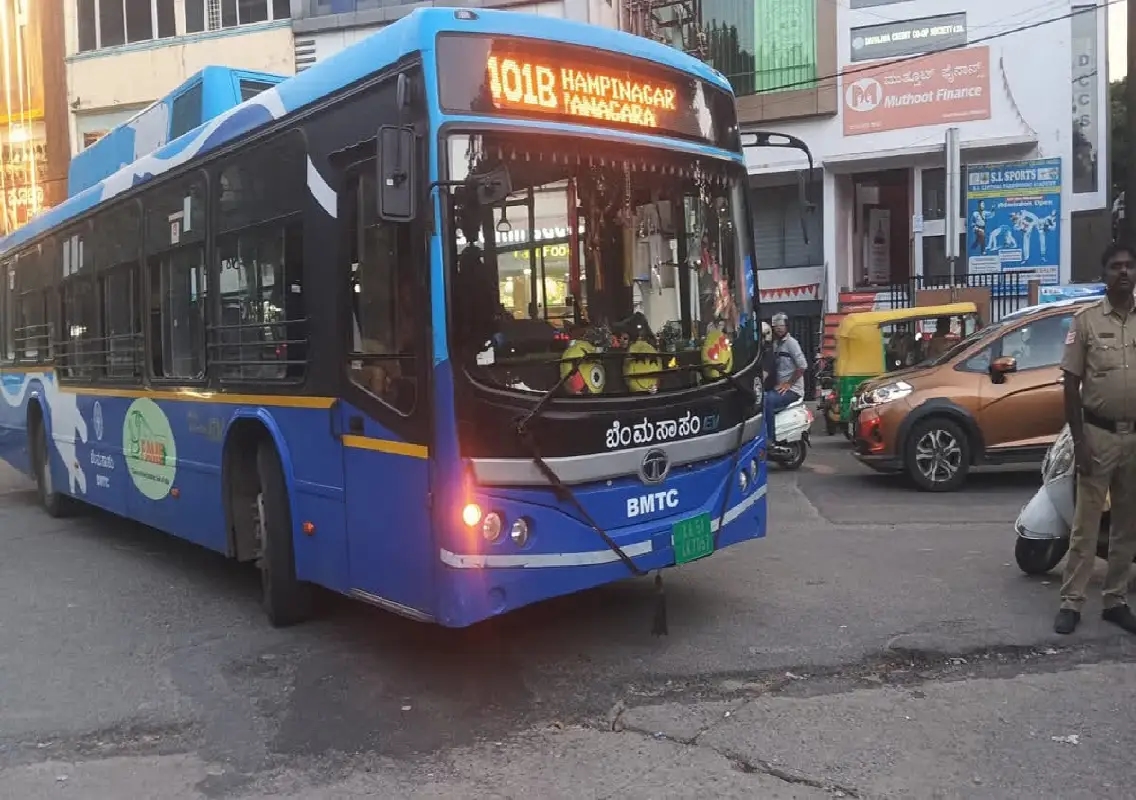


Bengaluru: In a major push to modernise Bengaluru’s public transport system, Karnataka’s Transport Minister has announced that the Bengaluru Metropolitan Transport Corporation (BMTC) will scrap 2,000 ageing buses this year and induct 2,000 new electric buses in their place.
The move is aimed at reducing vehicular pollution, improving commuter comfort, and strengthening safety standards amid rising public transport demand.
Fleet overhaul amid rising ridership
The minister said many BMTC buses had become outdated as no new buses were purchased during the previous four years. Since the present government assumed office, 7,800 new buses have already been added to the fleet.
He noted that the introduction of the Shakti scheme — which offers free bus travel to women — has significantly increased ridership, making it essential to further strengthen and modernise the fleet.
Under the new plan, 2,000 old buses will be phased out during the current year and replaced with electric buses. The Centre is also promoting electric buses nationwide as part of its broader strategy to curb urban air pollution and accelerate the transition to cleaner mobility.
Concerns over safety and outsourcing
Addressing concerns over recent road accidents allegedly involving electric buses, the minister clarified that the government is reviewing the driver hiring process and will introduce stricter conditions for drivers appointed through outsourcing agencies.
Under the existing electric bus model, buses are hired on a per-kilometre rental basis. Drivers are employed through private outsourcing agencies, meaning there is no direct employer-employee relationship between BMTC and the drivers.
The minister said several new conditions will be incorporated into outsourcing agreements to improve accountability and road safety. Special emphasis will be placed on driver training and quality standards. Discussions are also underway to ensure direct support to families affected by accidents.
Training standards under review
Currently, regular BMTC drivers undergo a rigorous recruitment process. Candidates must have completed SSLC, meet medical fitness standards, and undergo six months of training outside Bengaluru. This is followed by on-road training within the city and advanced driving tests using sensor poles. Based on performance, drivers are graded into categories, and top performers receive advanced training before final appointment.
In contrast, electric bus drivers are presently recruited if they hold a valid driving licence and have three years of experience. Many receive only about 15 days of training, and health fitness certificates are not mandatory.
The government now plans to review and strengthen this system to ensure uniform training standards, improve road safety, and reduce accident risks.
Towards cleaner mobility
The induction of 2,000 electric buses is expected to significantly cut emissions from the city’s public transport fleet while improving ride quality. Electric buses are quieter, produce zero tailpipe emissions, and typically offer smoother acceleration compared to diesel-powered vehicles.
With Bengaluru’s traffic congestion and pollution levels continuing to rise, the fleet upgrade is seen as a critical step in making public transport more reliable, safer, and environmentally sustainable.