







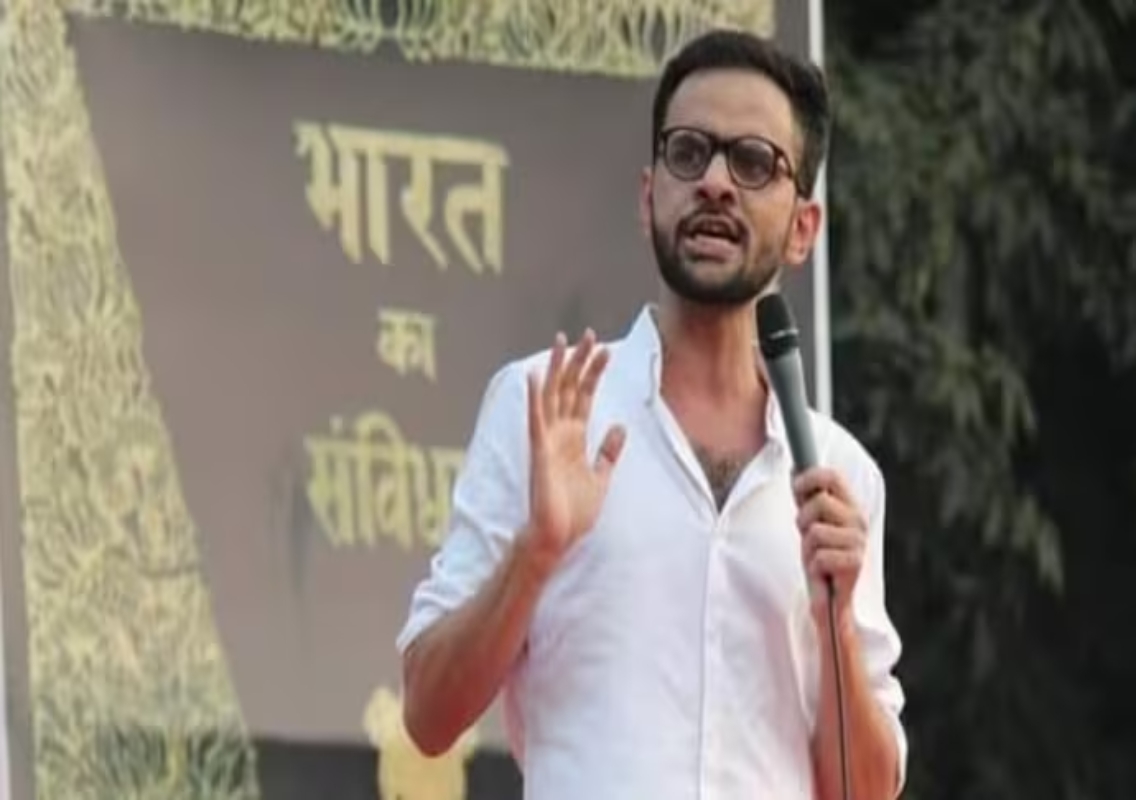


Bengaluru: The Akhil Bharatiya Vidyarthi Parishad (ABVP) has sought the Centre’s intervention to permanently cancel the proposed screening of a documentary on jailed activist Umar Khalid at the National Law School of India University (NLSIU) in Bengaluru. The student organisation has also demanded a high-level inquiry into the university administration over the proposed event.
The controversy comes after the screening of Prisoner No. 626710 is Present, directed by Lalit Vachani, was postponed by the organisers, who cited security and administrative or logistical concerns. The documentary was scheduled to be screened on September 14, followed by a discussion.
ABVP approaches Union ministers
According to the India Today report, the ABVP Bengaluru unit said it had submitted representations to Union Home Minister Amit Shah, Union Education Minister Pralhad Joshi and Union Minister of State for Law and Justice Arjun Ram Meghwal.
The organisation has asked the Centre to intervene and ensure that the proposed screening is cancelled permanently. It has also sought an inquiry into the NLSIU administration and the committee involved in organising the programme.
The ABVP alleged that permission for the screening was granted despite objections raised by student organisations. It further claimed that the postponement was only a temporary measure and described it as a “stalling tactic”, alleging that the event could be revived after public attention around the controversy declines.
Documentary was postponed over security concerns
The documentary, Prisoner No. 626710 is Present, focuses on Umar Khalid’s incarceration. It was planned by the Law and Society Committee (LawSoc), a student organisation at NLSIU.
The screening was scheduled around Political Prisoners’ Day and the sixth anniversary of Khalid’s detention before trial. A discussion was also planned following the screening.
LawSoc later announced that the event would be postponed, citing logistical and security considerations. However, the organisers said the programme had not been cancelled and indicated that it would be held later in the trimester. They also maintained that the decision was not taken because of pressure from any group.
The postponement followed protests and objections from the ABVP, which had earlier approached the NLSIU administration seeking cancellation of the screening.
ABVP raises concerns over documentary’s subject
In its latest statement, the ABVP alleged that educational institutions of national importance should not become platforms for what it described as political propaganda centred on an individual associated with several controversies.
The organisation referred to controversies surrounding the 2016 Jawaharlal Nehru University protests, the commemoration of Parliament attack convict Afzal Guru, the CAA-NRC protests and the 2020 Delhi riots. These references were part of the ABVP’s argument for opposing the proposed screening.
The ABVP has also called for the university to revoke any permissions allowing the documentary to be filmed, screened or promoted on campus.
It further sought strict guidelines governing the use of publicly funded infrastructure in central and national universities, arguing that such facilities should not be used for what it termed “anti-national narratives”.
Debate over academic freedom
The dispute has also brought questions of academic freedom and freedom of expression on university campuses into focus.
The ABVP said it supports open discussion and academic freedom but argued that these freedoms cannot take precedence over national security, sovereignty and institutional integrity.
On the other hand, the student organisers have maintained that the postponement was based on logistical and security considerations rather than pressure from the ABVP or any other organisation. LawSoc has indicated that the screening could still take place later in the academic term.
The competing positions have turned what was initially planned as a documentary screening and discussion into a wider campus debate over the boundaries of political discourse and academic engagement.
NLSIU faces another controversy
The documentary row comes at a time when NLSIU has already faced public attention over other issues surrounding campus events and institutional decisions.
The university recently rescheduled its 34th annual convocation to October 17 after a controversy over the invitation extended to Chief Justice of India Surya Kant and Bar Council of India Chairperson Manan Kumar Mishra. The earlier convocation scheduled for September 12 had been cancelled amid opposition from some students and alumni.
The latest documentary controversy therefore adds another politically sensitive issue to the university’s public discourse.
Screening remains postponed
As of September 15, the documentary screening has been postponed rather than permanently cancelled. The organisers have indicated that the programme may be held later in the trimester, while the ABVP is seeking intervention from the Centre to ensure that it does not take place on the NLSIU campus.
The final decision will determine whether the documentary is eventually screened at the university or whether the objections raised by the ABVP lead to further administrative or government intervention.
For now, the dispute highlights the continuing tensions on university campuses over political expression, academic freedom and the limits of campus programming when controversial public figures are involved.