







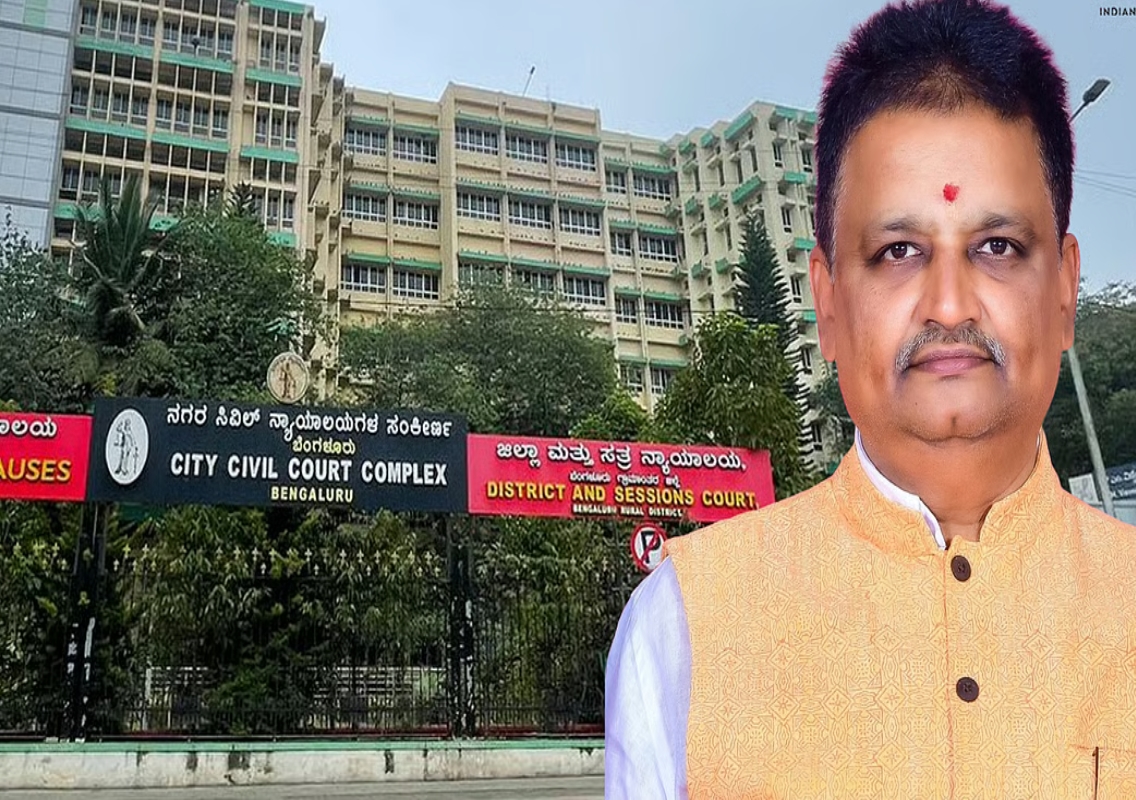


Bengaluru: A Special Court in Bengaluru has acquitted sitting Congress MLA B.K. Sangamesha and four others in a 2010 case concerning the alleged attack on C. Mahesh Kumar and his sister Jayamma in Shivamogga district.
Additional City Civil and Sessions Judge Shivaprasad K.B. acquitted Sangamesha, B.K. Mohan, Ganesh, Basavaraj and Jagadeesh alias Jagannath after finding serious shortcomings and inconsistencies in the investigation and prosecution case. The court held that the accused were entitled to the benefit of doubt.
The case dates back to May 2010, when Mahesh Kumar alleged that he and his sister were attacked at their residence in Bhadravati. The prosecution case subsequently went through several changes during the investigation and trial.
Allegations related to 2010 attack
According to the case presented before the court, Sangamesha and his associates allegedly went to Mahesh Kumar’s house after attending the inauguration of a wrestling event organised as part of the Haladamma Devi festival in Bhadravati.
The prosecution alleged that the accused attacked Mahesh Kumar with deadly weapons. His sister Jayamma was also allegedly assaulted when she intervened.
Mahesh Kumar lodged a complaint the following day at the Paper Town Police Station, following which an FIR was registered.
The prosecution claimed that Mahesh Kumar had developed a political rivalry with Sangamesha, who was the local MLA at the time.
Investigation took a different turn
The FIR was initially registered against five persons. During the investigation, police apprehended another person, Jagadish, and made him accused No. 6.
The investigation subsequently proceeded on a different theory, with the police alleging that Jagadish was responsible for the assault.
The Criminal Investigation Department later filed a chargesheet against Jagadish while dropping Sangamesha and the other four accused from the case.
However, during the trial, based on the evidence of witnesses, the prosecution filed an application under Section 319 of the Code of Criminal Procedure seeking to bring Sangamesha and the four others back into the case as accused.
The application was eventually allowed, resulting in Sangamesha and the four others facing trial.
Court points to investigation lapses
The Special Court found several shortcomings in the investigation.
It noted that Jagadish had initially been apprehended on suspicion and that the prosecution had not produced his alleged confession or material supporting its theory concerning his alleged relationship with Jayamma.
The court also observed that, despite specific allegations against Sangamesha and the other accused in the original complaint, the investigating officer had not properly investigated their alleged involvement.
The court further noted that no test identification parade was conducted in relation to Jagadish, despite witness statements referring to an unknown person having assaulted Jayamma.
Jayamma had subsequently submitted statements and a videograph alleging the involvement of the first five accused. However, the court observed that the investigating officer did not investigate those allegations adequately.
The court consequently concluded that there were significant defects in the investigation.
Court questions implication of sixth accused
The court also examined the circumstances surrounding the implication of Jagadish as accused No. 6.
According to the judgment as reported by Bar & Bench, medical records showed that Jagadish had a history of mental illness and had undergone treatment, including examination at NIMHANS during the pendency of the proceedings.
The court found that he appeared to have been implicated without a definite basis and observed that the investigation had caused him suffering.
The court went further in its criticism of the investigation, observing that the material on record suggested that Jagadish had been used as a “scapegoat” to protect the politically influential accused.
However, the court made an important distinction: shortcomings in an investigation cannot by themselves establish the guilt of the other accused.
The prosecution still had to establish the charges against Sangamesha and the other accused through legally reliable evidence.
Contradictions in prosecution evidence
The court also found doubts concerning the presence of complainant Mahesh Kumar at the scene of the alleged attack.
A car driver who could potentially have provided important evidence was not examined during the trial.
The evidence of Mahesh Kumar, Jayamma and other witnesses also contained contradictions concerning the manner in which the incident took place, according to the judgment.
The court noted that although Mahesh Kumar had taken Jayamma to hospital after the incident, the names of the alleged attackers were not disclosed to medical personnel at the earliest stage.
These circumstances contributed to the court’s assessment of the reliability of the prosecution case.
Three versions emerged during proceedings
Another significant issue identified by the court was the existence of different versions of the incident.
According to the judgment, the original complaint implicated the first five accused. Subsequent evidence implicated some of the accused differently, while other material suggested that an unknown person had assaulted Jayamma.
The court found that these varying versions, coupled with the investigation-related shortcomings and contradictions in witness evidence, created reasonable doubt about the prosecution’s case against Sangamesha and the other accused.
Consequently, the court held that the accused were entitled to the benefit of doubt and acquitted all five.
Court directs review of investigation
Along with the acquittal, the court directed the State to place the case before the Acquittal Review Committee.
The purpose of the review is to identify officials responsible for the defective investigation and consider appropriate action against them.
The court also declined to recommend compensation to the victim, observing that Mahesh Kumar’s evidence did not appear to be truthful.
The acquittal relates to the criminal charges arising from the 2010 attack case. It does not amount to a finding that no incident occurred; rather, the court concluded that the prosecution had failed to establish the charges against the accused to the required criminal-law standard.
The verdict brings to a close the trial against Sangamesha and the four other accused in the case, subject to any further legal proceedings that may arise in accordance with law.