







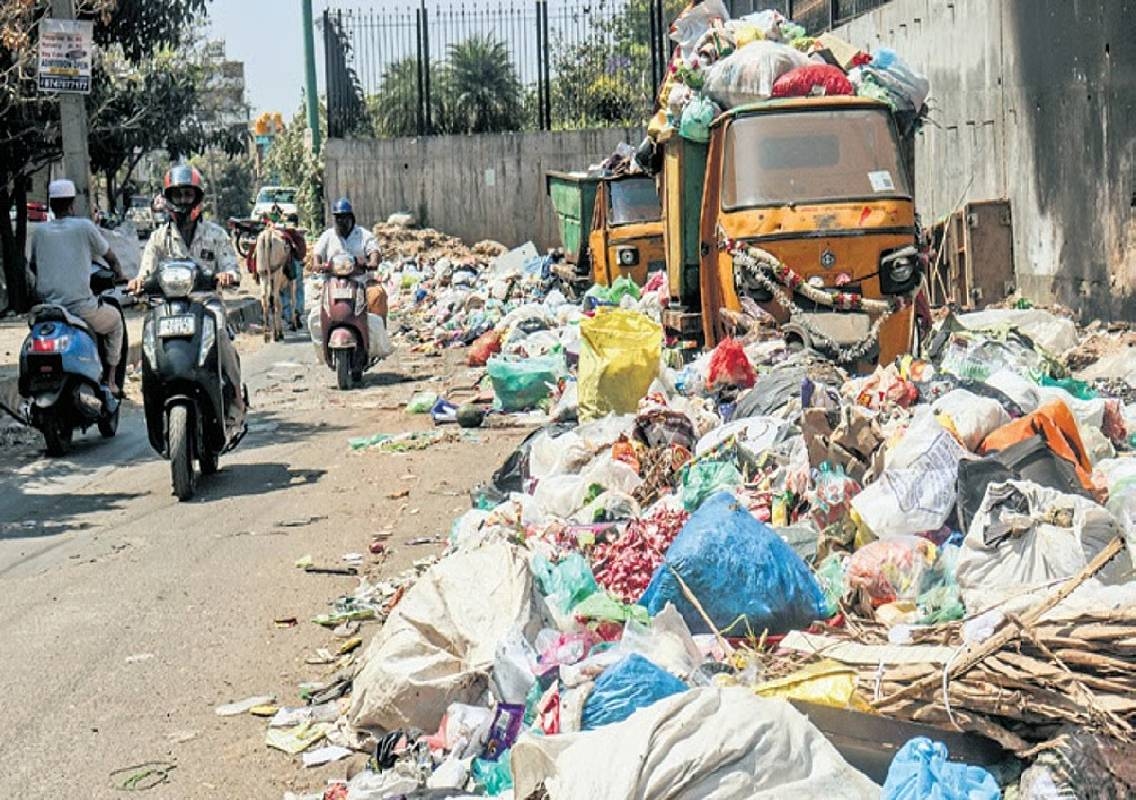


Bengaluru: The Bengaluru Solid Waste Management Limited (BSWML) has intensified efforts to improve Bengaluru’s cleanliness ranking under the Swachh Survekshan survey after the city was ranked among India’s dirtiest major urban centres last year.
Bengaluru had received a 3-star rating in the previous Swachh Survekshan assessment and was ranked as the fifth dirtiest city in the nationwide survey.
Officials now say a series of waste-management reforms and stricter monitoring systems are being implemented to help the city secure a significantly improved ranking this year.
Focus on improving waste collection system
BSWML officials said one of the major focus areas has been improving the functioning of Dry Waste Collection Centres (DWCCs) across the city.
According to officials, Bengaluru currently has 110 DWCCs, but many remained non-functional last year due to operational issues and delays in awarding tenders.
Rajbhir Singh, Chief Marshal of the Greater Bengaluru Authority, said that 74 of the 110 centres are now operational.
Officials believe improved waste segregation and processing through these centres could positively impact Bengaluru’s Swachh Survekshan performance.
Faster grievance redressal system introduced
Authorities have also strengthened the city’s garbage complaint resolution mechanism through the Integrated Command Control Centre (ICCC).
According to officials, BSWML receives nearly 150 solid waste-related complaints daily through the system.
Rajbhir Singh said nearly 90 percent of complaints are being resolved within 48 hours, while unresolved complaints are escalated to higher-level officials for action.
The Swachh Survekshan survey reportedly gives significant weightage to citizen grievance redressal and public feedback.
Dedicated road cleaning stretches for pourakarmikas
As part of the city’s cleanliness drive, each pourakarmika has reportedly been assigned a dedicated road stretch for sweeping and maintenance.
Officials said junior health inspectors and marshals are monitoring the work to ensure roads are cleaned regularly.
If a designated stretch is not maintained properly, action can reportedly be taken against the pourakarmika as well as supervising officials.
The move is aimed at increasing accountability within Bengaluru’s waste management system.
Blackspots identified and contractors penalised
BSWML officials said special attention is being given to clearing garbage blackspots and preventing them from reappearing.
Authorities acknowledged that in some areas, especially slum pockets and roadside dumping zones, contractors have failed to ensure timely garbage collection.
In such cases, contractors are reportedly being penalised and waste blackspots are being cleared before 8.30 am each day.
Officials admitted that documentation of cleanliness-related work was weak during the previous survey cycle, affecting Bengaluru’s evaluation.
This year, authorities claim they are maintaining better records and documentation to support the city’s Swachh Survekshan assessment.
Bengaluru aims for 5-star rating
Karee Gowda, CEO of BSWML, said cities are awarded ratings between one and seven stars based on factors such as waste segregation, scientific processing, visible cleanliness and waste collection efficiency.
He stated that Bengaluru received a 3-star rating last year but is now aiming for a 5-star rating in the upcoming survey.
Officials expressed confidence that recent reforms and improved operational monitoring could help Bengaluru improve its national standing.
Conclusion
With stricter monitoring, improved waste collection systems and faster complaint resolution, Bengaluru authorities are attempting to shed the city’s poor cleanliness image. Whether these reforms translate into better Swachh Survekshan rankings will become clearer once the latest survey results are announced.