







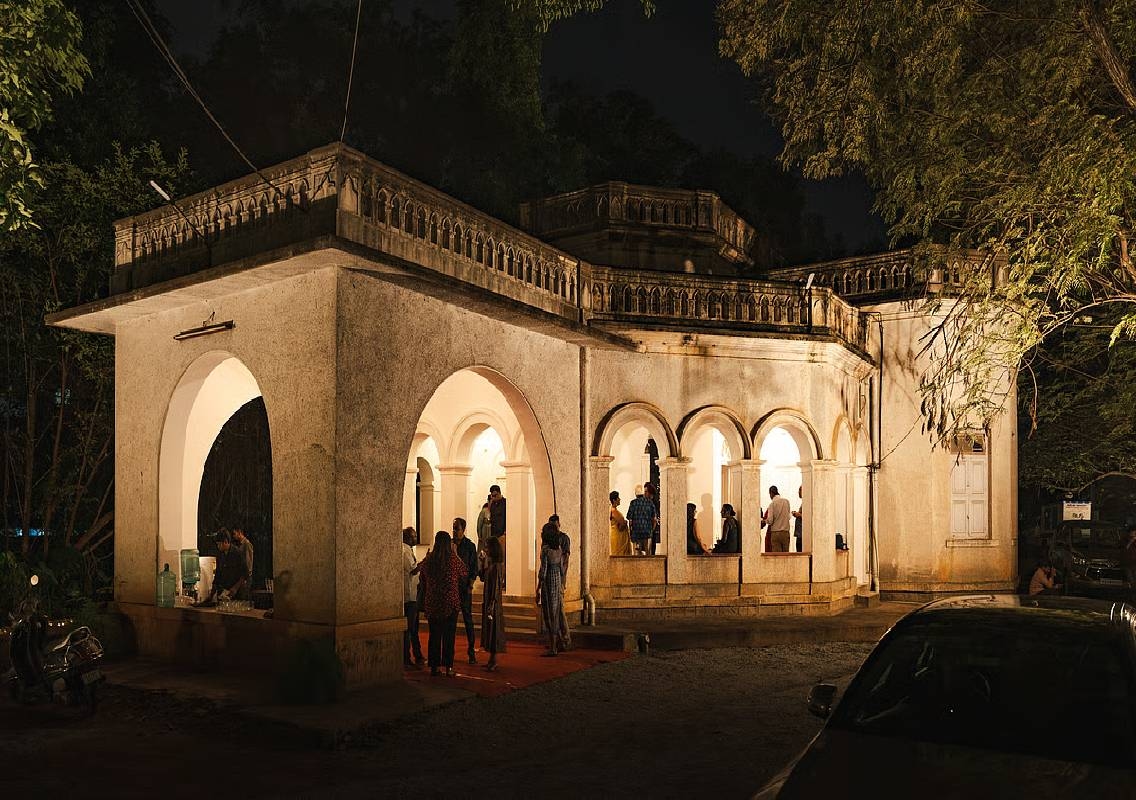


Bengaluru: In a city increasingly defined by glass facades and high-rise developments, a quiet cultural revival is taking place as restored colonial-era buildings are being transformed into vibrant art, design, and culinary spaces.
From intimate galleries to cafés and cultural venues, these heritage structures once homes, institutions, or even orphanages are now being reimagined through a concept known as adaptive reuse. Spaces like Kaash, General Items, Sabha, and Cinnamon are leading this shift.
Revival of old spaces with modern purpose
Art gallery Kaash, located on Berlie Street, operates from a building that is over 150 years old. Its founder, Sridhar Poddar, notes that Bengaluru is witnessing a growing appreciation for its limited remaining heritage spaces.
“What we’re seeing is a revival of older spaces, updated with contemporary facilities,” he says, adding that many historic structures have already been replaced by modern constructions, making preservation efforts even more significant.
These restored venues retain original architectural elements while adapting to present-day needs, creating a blend of past and present that resonates with visitors.
Personal stories drive restoration efforts
For many owners, restoring such buildings is deeply personal. At Bungalow 157 in Domlur, the family behind the property chose preservation over redevelopment to maintain its emotional and historical value.
The venue now hosts a wide range of activities, from art exhibitions and wellness sessions to private gatherings, reflecting a shift towards community-centric use of heritage spaces.
Similarly, Panchavati, the former home of Nobel laureate C V Raman, has been opened periodically for cultural and educational events. Currently under renovation, it is expected to evolve into a prominent public space in the coming years.
According to Vivek Radhakrishnan, Raman’s grandson, the initiative aims to balance family legacy with public engagement. The venue has already hosted exhibitions linked to the Raman Research Institute and events like the BLR Habba.
Stories and aesthetics attract visitors
While the visual appeal of these heritage venues often draws attention on social media, it is the stories behind them that create lasting impressions.
At Cafe Stone, housed within Cinnamon, visitors learn about the building’s transformation from a famine-era orphanage to a modern café. Owner Aarush Jhunjhunwala believes this historical narrative adds a unique identity to the space.
Such venues often evoke nostalgia, with guests comparing their ambience to cities like Goa or Puducherry, offering a rare glimpse into Bengaluru’s past.
Adaptive reuse gains traction
Experts describe this trend as “adaptive reuse,” where old structures are repurposed while retaining their original character. According to conservation architect Swathy V Subramanian, this concept has been widely seen in India, especially in palaces converted into hotels.
In Bengaluru, examples include the Samsung Opera House and Hard Rock Cafe Bengaluru, where historic elements like Mangalore tile roofs, lime-plastered walls, and wooden frameworks have been preserved.
These architectural features not only enhance aesthetic value but also offer practical benefits, such as natural cooling due to high ceilings and terracotta roofing—often eliminating the need for air conditioning.
Challenges in maintaining heritage properties
Despite their charm, maintaining such buildings comes with challenges. Older structures are often vulnerable to environmental factors and require constant upkeep.
For instance, Kaash faces recurring flooding issues during the monsoon due to its location on low-lying land. At Panchavati, restoration efforts have revealed structural complexities, delaying its full reopening.
Experts emphasise that heritage buildings must be treated like living entities, requiring regular maintenance to prevent long-term damage.
Future of heritage spaces in the city
As Bengaluru continues to expand, the adaptive reuse of heritage buildings offers a sustainable way to preserve the city’s history while meeting modern needs.
Owners and conservationists agree that with careful restoration and maintenance, these buildings can continue to serve communities for another 100 to 150 years.
Conclusion: Blending history with modern culture
The transformation of colonial-era buildings into cultural hubs reflects a broader shift in how Bengaluru values its past. By turning historic spaces into living, functional venues, the city is not only preserving its architectural heritage but also enriching its cultural landscape.
As more such initiatives emerge, these timeless structures may well become central to Bengaluru’s identity in the years to come.