







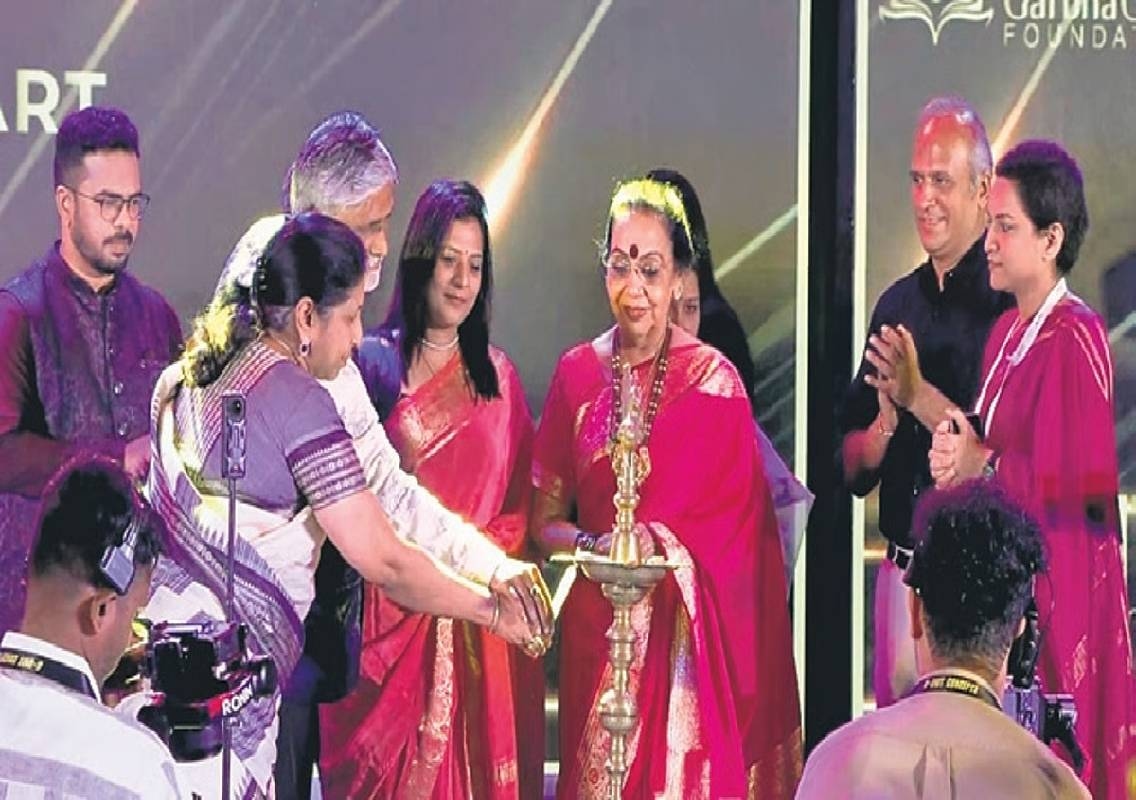


Organised by GarbhaGudi IVF Centre and GarbhaGyaan Foundation, the conference featured scientific sessions, expert lectures, research presentations and hands-on workshops. Discussions covered advances in reproductive medicine, clinical embryology and the growing role of Artificial Intelligence (AI) in in-vitro fertilisation (IVF) and reproductive healthcare.
Around 26 research papers were presented during the conclave, giving participants an opportunity to examine developments and emerging approaches in the field. The event also brought together national and international experts, highlighting the increasing importance of collaboration and knowledge-sharing in reproductive medicine.
Experts discuss emerging developments in reproductive medicine
The conference was designed as a platform for professionals working across different areas of reproductive healthcare. Specialists, embryologists, clinicians and students participated in scientific discussions focusing on advances that could influence fertility treatment and laboratory practices.
Reproductive medicine is a rapidly evolving area, with developments in assisted reproductive technologies, embryology and laboratory procedures continuing to shape fertility care. Conferences such as GARV-2026 provide opportunities for specialists to examine these developments, compare clinical experiences and discuss how new approaches can be applied in practice.
According to the organisers, the conference included multiple scientific sessions addressing developments in reproductive medicine and clinical embryology. The programme also placed emphasis on practical learning through workshops, allowing clinicians and embryologists to gain insights into evolving techniques and technologies.
Artificial Intelligence takes centre stage
One of the notable areas discussed during GARV-2026 was the growing role of Artificial Intelligence in IVF.
AI is increasingly being explored across healthcare, including areas involving data analysis, clinical decision-making and laboratory processes. In reproductive medicine, the technology has attracted interest for its potential applications in IVF and embryology.
The conference provided a platform for participants to discuss the potential of AI in reproductive healthcare while examining developments in the field. The discussions reflected the wider transformation taking place in fertility medicine as technology becomes increasingly integrated into clinical and laboratory settings.
While AI offers opportunities for improving processes and analysing complex information, its use in healthcare also requires appropriate clinical oversight and responsible implementation. The discussions at the conference therefore form part of a broader conversation about how emerging technologies can complement medical expertise.
26 research papers presented
Research was another important component of the two-day conference. Around 26 research papers were presented, allowing participants to share findings and engage with developments across reproductive medicine and clinical embryology.
Research presentations are particularly important in a specialised field such as reproductive medicine, where treatment protocols, laboratory techniques and technologies continue to evolve.
The exchange of research findings can help professionals understand different approaches and identify areas requiring further investigation. It also provides young clinicians, embryologists and students with exposure to ongoing work in the speciality.
The presence of both experienced specialists and students at GARV-2026 further broadened the scope of the discussions, creating opportunities for knowledge transfer between established professionals and the next generation of reproductive healthcare specialists.
Hands-on workshops provide practical exposure
Beyond lectures and scientific presentations, GARV-2026 included hands-on workshops for clinicians and embryologists.
The practical sessions were aimed at providing participants with insights into evolving techniques and technologies used in reproductive medicine and embryology. Such workshops can complement theoretical discussions by allowing professionals to engage directly with techniques and processes relevant to their work.
For embryologists in particular, laboratory practices play a crucial role in assisted reproductive treatment. Practical exposure and continuous professional learning can help specialists keep pace with technological developments in the field.
The inclusion of hands-on training therefore added a practical dimension to the conference, alongside the research-focused and academic sessions.
National and international experts participate
GARV-2026 featured lectures and discussions involving national and international experts. The participation of specialists from different backgrounds was intended to encourage wider exchange of ideas and experiences in reproductive medicine.
Reproductive medicine is a field in which developments and research are taking place across countries, making international collaboration an important component of professional education.
Speaking at the conference, reproductive medicine specialist Dr Asha S Vijay stressed the importance of exchanging new concepts, ideas and developments in reproductive medicine at the international level.
Her remarks highlighted the need for specialists to engage in continuing discussions as the field develops and new technologies emerge.
Dr Kamini Rao attends the conference
The conference also saw the participation of Padma Shri awardee Dr Kamini Rao, a prominent obstetrician and gynaecologist.
Her presence added to the gathering of experienced professionals from the reproductive healthcare sector. GarbhaGudi Group CEO Vijay Kumar S, along with directors Hari Srinivasan, Pushpalatha and Arunkumar Natha, were also present during the inaugural programme.
The participation of senior healthcare professionals alongside clinicians, embryologists and students reflected the conference’s emphasis on bringing different sections of the reproductive medicine community together.
Bengaluru emerges as a hub for medical knowledge exchange
The organisation of an international conference focused on reproductive medicine and embryology in Bengaluru also highlights the city’s role as a major healthcare and medical education centre.
Bengaluru hosts a large network of hospitals, medical institutions, research organisations and specialised healthcare providers. Events such as GARV-2026 contribute to the city’s growing profile as a venue for professional medical conferences and knowledge exchange.
For reproductive healthcare professionals, such gatherings can provide opportunities to interact with peers, discuss research and learn about emerging technologies without limiting the conversation to individual institutions or regions.
The presence of international experts also enables local professionals and students to gain exposure to developments being discussed globally.
Growing importance of continuous learning in fertility care
Fertility treatment has become increasingly technology-driven, with developments in reproductive medicine and embryology requiring healthcare professionals to continually update their knowledge.
From laboratory techniques to assisted reproductive technologies and emerging digital tools, the speciality encompasses several areas that are developing simultaneously. This makes continuing medical education particularly relevant for clinicians and embryologists.
GARV-2026’s combination of scientific presentations, research papers, expert discussions and hands-on workshops reflects this need for comprehensive professional learning.
The conference also provided students with an opportunity to understand the direction in which reproductive medicine is developing and the skills that may become increasingly relevant to their future careers.
AI and research expected to shape future fertility care
The focus on Artificial Intelligence and research at GARV-2026 comes as reproductive healthcare continues to explore ways of using technology to improve clinical and laboratory processes.
However, emerging technologies are likely to remain complementary to medical expertise rather than replacing clinicians and embryologists. Appropriate validation, ethical considerations and clinical oversight will remain important as AI-based tools are explored for use in reproductive healthcare.
The discussions at the Bengaluru conference therefore represent part of a much larger international conversation about how technology, research and clinical expertise can work together in fertility medicine.
Conclusion
Bengaluru: GARV-2026 brought together reproductive medicine specialists, embryologists, clinicians and students for two days of scientific discussions, research presentations and practical workshops. Around 26 research papers were presented, while Artificial Intelligence and its potential applications in IVF and reproductive healthcare emerged as important areas of discussion.
The participation of national and international experts, including Padma Shri awardee Dr Kamini Rao, added to the conference’s focus on knowledge exchange. With reproductive medicine continuing to evolve through research and technology, platforms such as GARV-2026 can play an important role in encouraging collaboration, professional learning and discussion around the future of fertility care.