







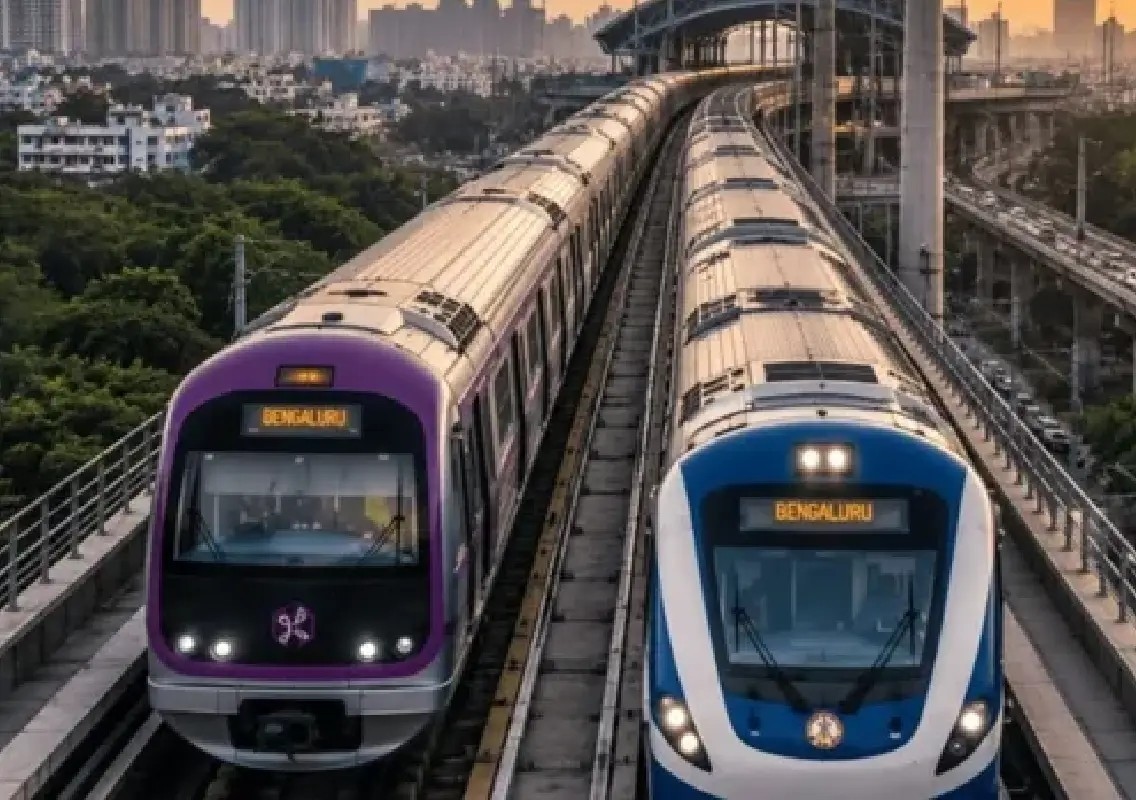


The Bengaluru Metro Rail Corporation Limited (BMRCL) is exploring partnerships with several leading corporate firms to raise an additional ₹460 crore through its innovative financing model that allows private companies to co-brand Metro stations and develop connectivity infrastructure in exchange for upfront investments.
According to sources, BMRCL is currently in discussions with five organisations, including real estate developers, healthcare institutions and technology firms, as part of its efforts to strengthen non-fare revenue streams and reduce dependence on borrowings.
Major firms in talks with BMRCL
Among the proposals under consideration, Sattva Group is reportedly discussing investments for two Metro stations—one on the Airport Metro corridor (Blue Line Phase 2B) and another at Pattanagere on the Purple Line.
Other companies in discussions include Manyata Embassy Business Park, Prestige Group, Apollo Hospitals and InMobi. If all proposals are finalised, BMRCL could secure around ₹460 crore in fresh funding for Metro infrastructure and connectivity projects.
The funding model grants participating companies a 30-year co-branding concession in return for a one-time, non-refundable premium. Benefits include station branding rights, advertising space, retail areas and dedicated connectivity infrastructure such as skywalks and pedestrian bridges where applicable.
Private funding boosts Metro growth
The latest negotiations come after BMRCL successfully raised ₹510 crore through similar partnerships with private organisations. Major contributors include Embassy Property Developments and Infosys Foundation, which invested ₹100 crore each for Metro station projects.
Other contributors include Biocon Foundation, Delta Electronics India, Bagmane Developers and Prestige Beta Projects. In addition, Bengaluru International Airport Limited (BIAL) is investing nearly ₹800 crore towards Metro connectivity linked to the airport corridor.
Focus on sustainable expansion
BMRCL introduced the corporate partnership model after receiving state government approval in 2018. Officials say the initiative has helped accelerate Metro expansion while creating alternative revenue sources beyond ticket collections.
The strategy is also being extended to improve last-mile connectivity. One such proposal is a 9-km pedestrian walkway along the Outer Ring Road Metro corridor, estimated to cost ₹160 crore and expected to be supported by the Outer Ring Road Companies Association (ORRCA).
As Bengaluru’s Metro network continues to expand, public-private partnerships are emerging as a key tool for funding infrastructure and improving commuter access across the city.