







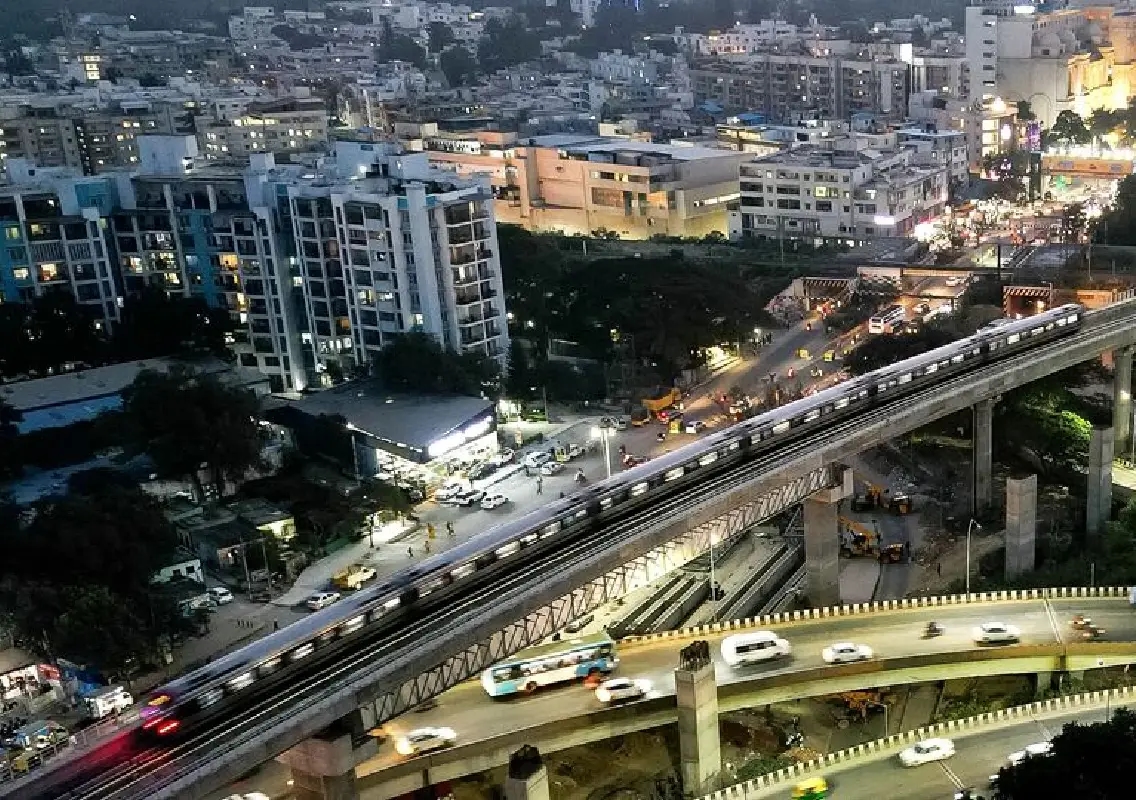


As Indian cities struggle with the rising cost of urban rail projects, Bengaluru Metro Rail Corporation Limited has mobilised more than ₹1,500 crore from private firms through an innovative financing model.
The approach blends public transport development with corporate investment, helping accelerate infrastructure creation without depending entirely on government funding.
PPP model funds metro growth
According to officials, the model is structured as a public-private partnership where companies invest in stations and connectivity projects in return for long-term branding and access rights.
This allows BMRCL to generate upfront capital while giving businesses visibility and strategic association with key metro hubs.
Stations and last-mile focus
The investments are being used for station development, passenger amenities and last-mile connectivity solutions, which remain crucial for increasing metro ridership in Bengaluru.
Urban planners have often said that metro success depends not only on trains, but also on how easily commuters can reach stations.
Smart funding for costly projects
Metro rail construction costs have surged across India due to land acquisition, engineering complexity and inflation.
Bengaluru’s model is being seen as an example of how cities can attract private capital to support public transport expansion.
Growing city needs faster transit
With traffic congestion continuing to burden Bengaluru, expansion of Namma Metro remains critical.
The fresh funding may help speed up network growth while reducing pressure on public finances