







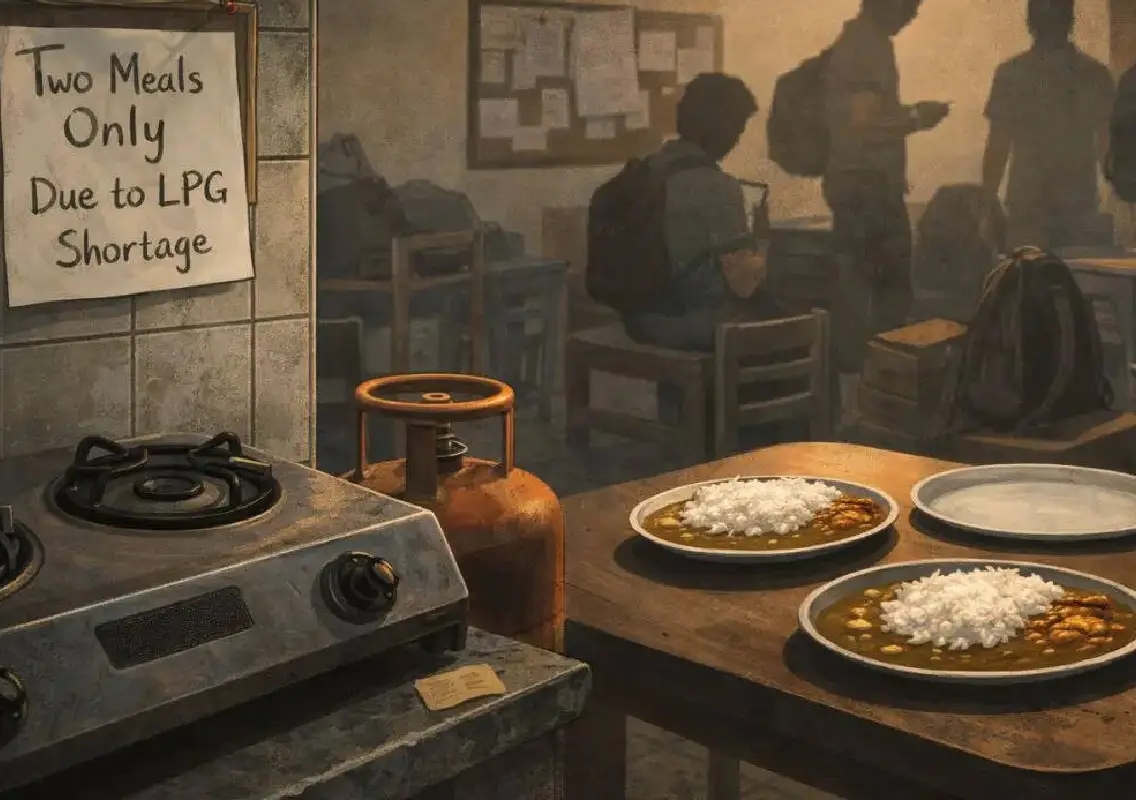


Paying guest (PG) accommodations across Bengaluru have begun introducing temporary meal restrictions and menu changes as a shortage of commercial LPG cylinders—linked to the ongoing tensions between Iran and Israel—starts affecting kitchens in the city.
The advisory was issued by the PG Owners Welfare Association–Bangalore, which warned that thousands of PG kitchens that serve lakhs of residents are already facing difficulties due to the limited supply of commercial gas cylinders.
PG kitchens struggle amid LPG shortage
According to association president Arun Kumar, the shortage has disrupted routine cooking operations across many PG accommodations.
“Due to the shortage of commercial cylinders, PG accommodations are also feeling the impact. The situation is already worsening, as hotels are struggling to prepare food items without cylinders,” he said.
Association leaders from different parts of the city have already held core committee meetings to discuss strategies to manage the crisis and ensure food supply for residents.
Bengaluru has a large population of students and working professionals living in PG accommodations, many of whom depend entirely on PG kitchens for daily meals.
Two meals on weekdays, three on weekends
As part of the temporary guidelines, PG owners have been asked to limit meal frequency and modify menus to conserve gas.
From Monday to Friday, PG accommodations are advised to serve only two meals per day, while residents are encouraged to carry lunch boxes. On weekends, three meals may be served.
PG kitchens have also been asked to avoid high gas-consuming items such as dosa, puri and chapathi.
Instead, they are encouraged to prepare rice-based dishes such as bisibelebath, chitranna and puliyogare, along with salads, fruit salads and other dishes that require minimal cooking.
Alternative cooking methods suggested
To reduce dependence on LPG, the association has recommended the use of induction stoves, electric rice cookers and other electrical appliances.
Small and medium PGs have specifically been advised to consider using 20-litre electric rice cookers to prepare meals more efficiently.
Another suggestion includes joint cooking arrangements among nearby PGs, where food can be prepared at a single location and distributed to neighbouring accommodations.
The association has also temporarily cancelled self-cooking gas facilities for residents, stating that personal gas cylinders should not be used inside PG premises. Residents may use induction stoves if necessary.
PG owners urge government intervention
Arun Kumar warned that the situation could worsen if the shortage continues for more than a few days.
“If this situation remains temporary, we can somehow manage. But if it continues for 10 to 15 days, it will become extremely difficult. The government must intervene immediately because cylinders are essential for PG kitchens,” he said.
The association emphasised that these measures are temporary but necessary to prevent food supply disruptions for PG residents while the LPG shortage continues.