







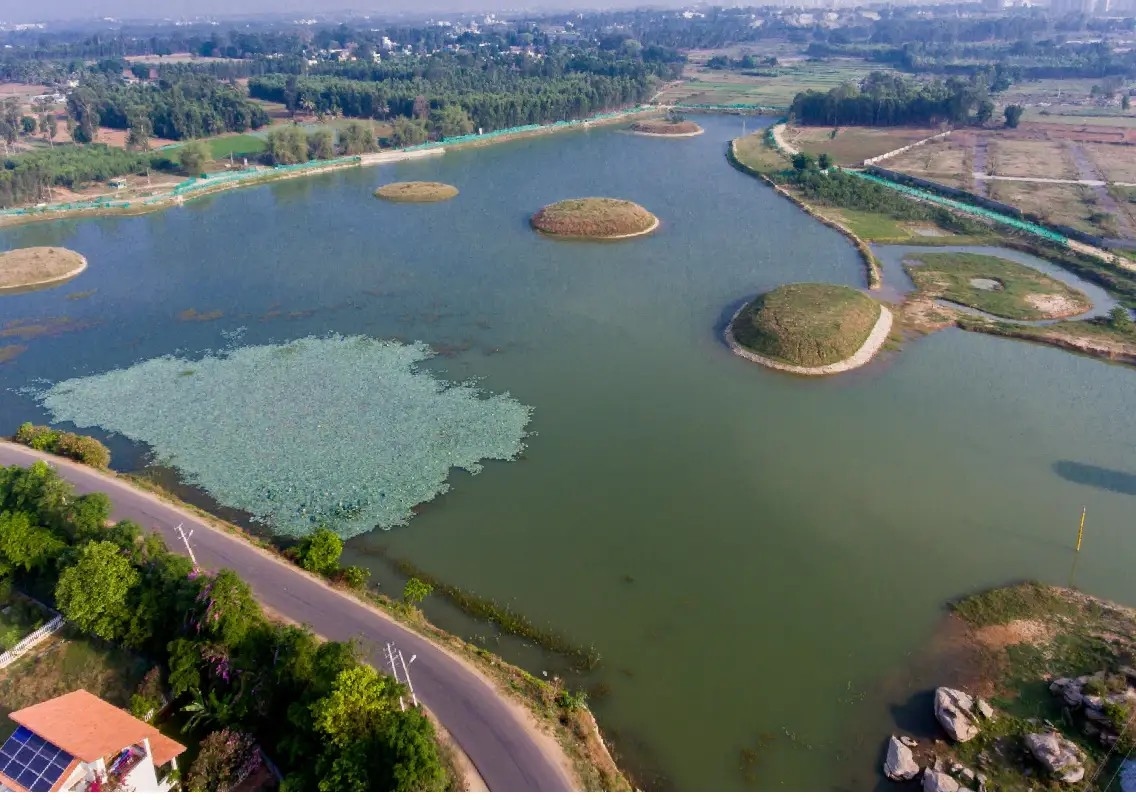


In a significant step towards addressing Bengaluru’s recurring flooding problems, the Greater Bengaluru Authority (GBA) has unveiled plans to create “floodable landscapes” across the city by reviving the flood-mitigation functions of several lost and degraded lakes.
The initiative, led by the GBA Climate Action Cell, aims to convert former lakebeds and flood-prone locations into areas capable of temporarily storing excess rainwater during heavy downpours and releasing it gradually once rainfall subsides.
Lost lakes to get a new purpose
As part of the project, 19 disused lakes have been identified for intervention. Several of these water bodies, including Byataguntepalya, Saneguruvanahalli and Nandi Shettappa lakes, have long disappeared beneath layouts, parks, stadiums and other urban developments.
While some lakes have been completely encroached upon, authorities say portions of land remain available in others, allowing for the restoration of at least part of their original flood-control function.
Parks and public spaces to store rainwater
One of the key locations identified is Silver Jubilee Park near KR Market. Officials plan to develop nearly two acres within the park as a floodable landscape capable of holding excess rainwater for up to 48 hours during intense rainfall events.
Authorities clarified that the park’s regular activities will remain unaffected, with only designated sections temporarily holding water during heavy rain.
GBA Chief Commissioner Maheshwar Rao said the project is expected to be implemented over the next two years, with funding estimates currently being finalised.
Ancient wisdom meets modern planning
The initiative also incorporates bioswales—shallow landscaped channels designed to slow stormwater flow and improve groundwater infiltration.
According to GBA officials, the concept draws inspiration from traditional water-management systems such as agricultural ponds, known as “Krushi Hondas”, and irrigation channels called “Paathis”, which have been used in the region for centuries.
The project gained momentum after nature-based solutions became a key requirement under urban resilience programmes supported by the World Bank.
19 lakes identified for intervention
The identified lakes include Konena Agrahara, Lingarajapura, Byataguntepalya, Shivanahalli, Kamakshipalya, Saneguruvanahalli, Geddalahalli, Tavarekere, Karisandra, Chikkallasandra, Ittamadu, Nandi Shettappa, Doresanipalya, Bilekahalli, Arehalli, Vijinapura, Bovimaranahalli and Gundopanth, among others.
Officials believe the initiative could play a crucial role in reducing urban flooding while enhancing Bengaluru’s climate resilience.