







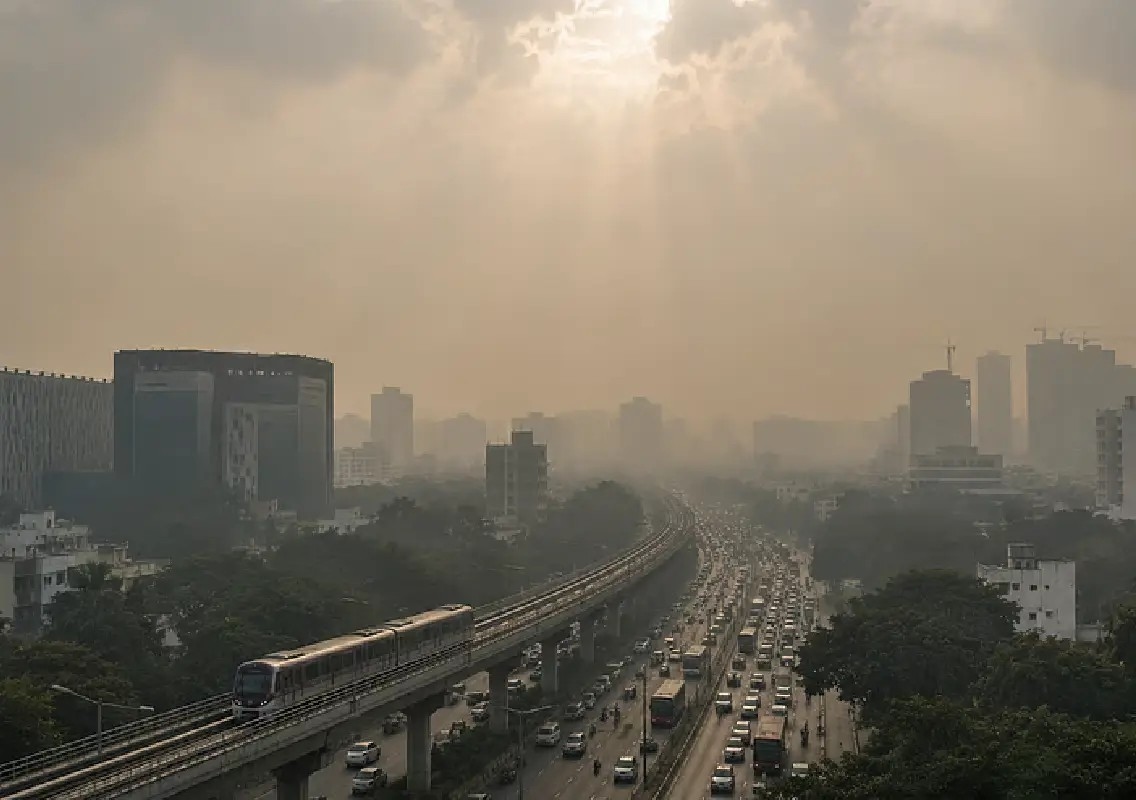


Bengaluru has recorded alarmingly high levels of ground-level ozone, breaching national air quality standards on 55 out of 71 days between March 1 and May 10, according to a study by the Centre for Science and Environment (CSE).
The report places Bengaluru among the country’s worst-affected cities, behind only Delhi, which recorded 62 unsafe days, and Bhopal with 60.
Toxic ozone persists beyond daylight
The study found that Bengaluru exceeded the National Ambient Air Quality Standards (NAAQS) limit of 100 micrograms per cubic metre for eight-hour ozone exposure on all but 16 days during the study period.
Traditionally considered a daytime pollutant, ground-level ozone was found to persist well after sunset in Bengaluru on 14 nights. Residents were also exposed to elevated ozone levels for nearly 16 hours a day, increasing the duration of harmful exposure.
Doctors warn of rising health risks
Health experts say prolonged exposure to ground-level ozone can damage lung tissue, trigger airway inflammation and worsen respiratory illnesses such as asthma and chronic obstructive pulmonary disease (COPD). Long-term exposure has also been linked to an increased risk of heart attacks, strokes and cardiovascular disease.
Doctors in Bengaluru said they have observed a rise in respiratory infections, allergies, persistent cough, wheezing and breathlessness during recent periods of extreme heat and dry weather.
Medical experts also cautioned that children, senior citizens, outdoor workers and people with pre-existing respiratory or chronic illnesses are particularly vulnerable to the effects of poor air quality.
Impact extends to skin health
Dermatologists have also warned that ground-level ozone can increase oxidative stress on the skin, weakening its natural protective barrier. People with conditions such as eczema, rosacea and atopic dermatitis may experience worsening symptoms during periods of high ozone pollution.
The findings underscore the growing need for stronger air quality monitoring and pollution control measures as Bengaluru continues to grapple with rising environmental and public health challenges