







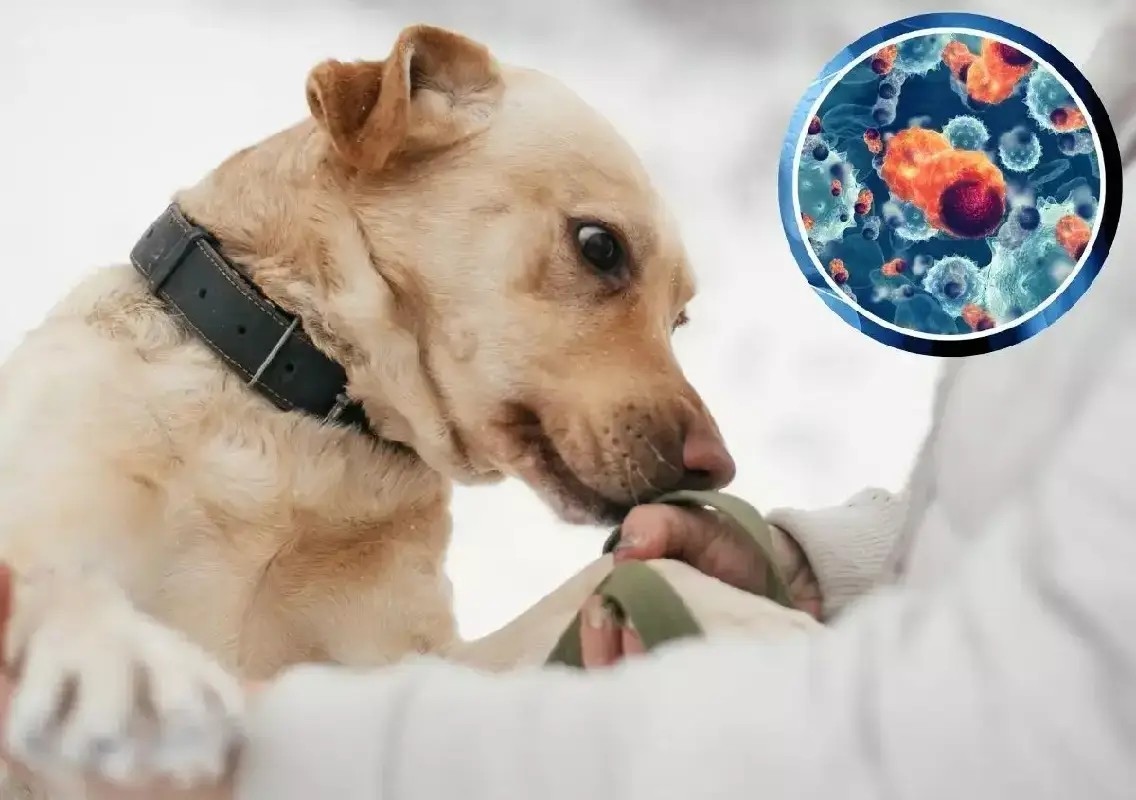


In an innovative approach that blends biology with artificial intelligence, a Bengaluru-based startup is using trained dogs and AI technology to help detect cancer at an early stage through human breath samples.
The startup, Dognosis, has developed a system that combines the exceptional sense of smell of dogs with AI-powered analysis to identify chemical markers associated with cancer, potentially making screening faster, more affordable and widely accessible.
How the technology works
The process begins with participants providing breath samples using specially designed face masks. These masks capture volatile organic compounds (VOCs), which can carry signals linked to diseases such as cancer.
The samples are then analysed by specially trained dogs in a controlled laboratory environment. The dogs are trained to identify specific VOC patterns associated with cancer and indicate positive samples through their responses.
According to Dognosis CEO Akash Kulgod, the dogs can recognise disease-related compounds with remarkable accuracy, providing a unique biological screening mechanism.
AI turns behaviour into scientific data
To ensure consistency, each sample is presented under identical conditions. Sensors record the dogs’ reactions, and AI algorithms analyse the data to convert behavioural responses into objective scientific findings.
Suba, Head of Research and Development at Dognosis, said the integration of AI helps standardise the detection process and reduces subjectivity.
Promising results from trials
Doctors involved in the project have described the results as encouraging. Oncologist Dr Swaratika Majumdar said the technology offers a simple, non-invasive and cost-effective method for early cancer detection.
The company claims that Phase-2 trials conducted over the last two years involving nearly 1,500 participants achieved an accuracy rate of around 90 per cent.
Experts believe such innovations could play a significant role in improving cancer screening, particularly in a country where many cases are diagnosed only at advanced stages.
The startup has also collaborated with international trainers to prepare the dogs involved in the programme, further strengthening the project’s scientific foundation