







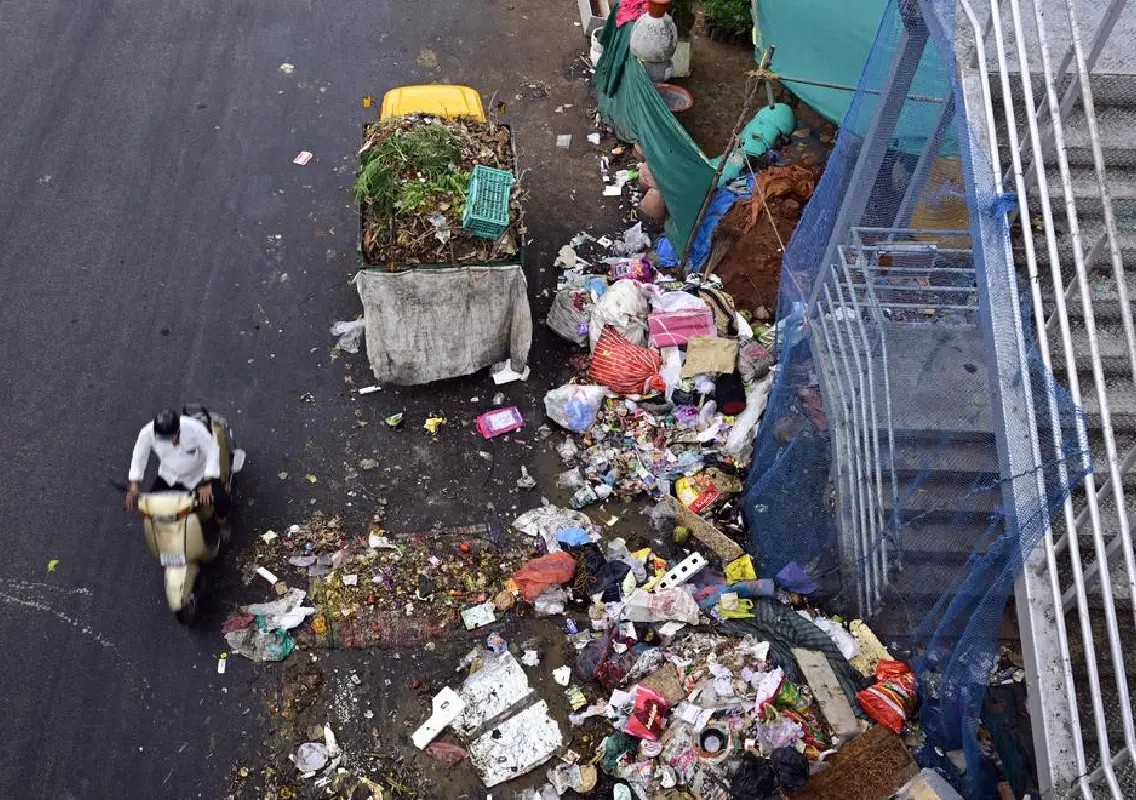


Bengaluru is facing a growing waste-management challenge, with the city generating more garbage each day than its existing infrastructure can process.
According to official estimates, Bengaluru currently generates over 5,880 tonnes of waste daily, while its processing facilities can handle only around 4,105 tonnes. This leaves a daily shortfall of nearly 1,775 tonnes, placing increasing pressure on the city’s waste-management network.
To address the issue, the Greater Bengaluru Authority (GBA), the five city corporations and the Bengaluru Solid Waste Management Limited (BSWML) have drawn up an ambitious plan to overhaul waste collection, transportation and processing systems across the city.
New facilities planned to tackle waste crisis
Officials said the proposed reforms include establishing additional waste-processing facilities and introducing dedicated systems for handling construction and demolition (C&D) waste, bulky waste and animal waste.
The strategy aims to reduce the burden on existing processing centres while ensuring that different categories of waste are managed more efficiently.
Authorities believe specialised treatment facilities will help improve segregation, recycling and disposal practices, reducing the amount of waste ending up in landfills.
Focus on collection and transportation reforms
In addition to expanding processing capacity, civic agencies are planning significant changes to garbage collection and transportation mechanisms.
Officials say improving the efficiency of waste movement from households and commercial establishments to processing centres is critical to managing the city’s growing waste volumes.
The reforms come amid increasing concerns about illegal dumping, overflowing garbage spots and environmental challenges linked to rapid urbanisation.
Long-term solution for a growing city
With Bengaluru continuing to expand, experts stress that waste management will remain one of the city’s most important civic challenges. Effective segregation at source, stronger recycling systems and increased processing capacity are expected to play a key role in achieving sustainable waste management.
Authorities hope the planned overhaul will not only bridge the current processing deficit but also prepare the city to handle future increases in waste generation.
The initiative is expected to be implemented in phases, with civic agencies working to create a more resilient and environmentally sustainable waste-management ecosystem.