







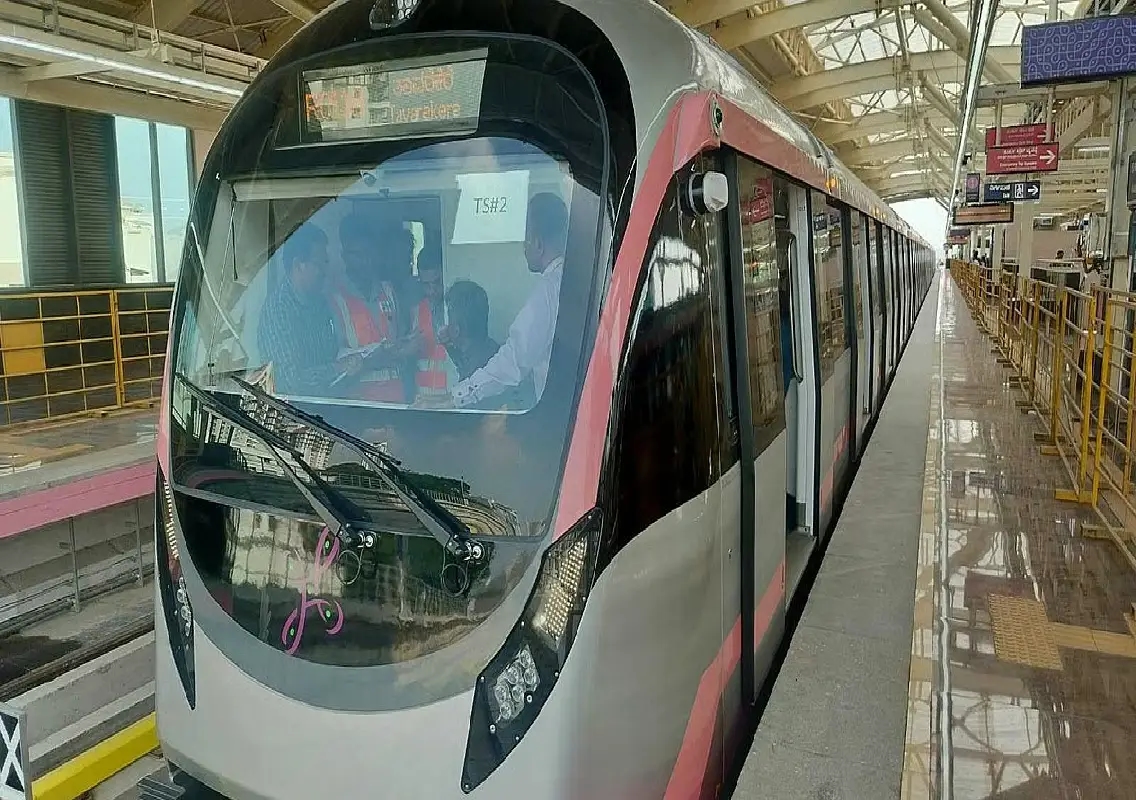


Bengaluru: Missing fire safety arrangements, malfunctioning lift systems, damaged electrical earthing connections and unresolved train testing issues are among the 36 shortcomings identified by the Commissioner of Metro Railway Safety (CMRS) during an inspection of the upcoming Pink Line section between Kalena Agrahara and Tavarekere.
The findings could delay the opening of the elevated section for passenger services until the Bangalore Metro Rail Corporation Ltd (BMRCL) addresses the observations and submits the required compliance reports and technical documents.
In a letter dated October 9, the CMRS, Southern Circle, asked BMRCL to provide the necessary compliance reports and additional technical documentation before authorising the section to open for passenger traffic. The statutory inspection was conducted from October 6 to 8.
BMRCL, however, has expressed confidence that it will respond to the observations within a day or two.
CMRS identifies 36 shortcomings
The five-page inspection report lists 36 observations covering several critical areas, including civil infrastructure, electrical and traction systems, signalling and telecommunications, rolling stock and operational readiness.
Among the concerns raised were incomplete emergency evacuation arrangements and inadequate signage at stations. These facilities are essential to ensuring that passengers can be evacuated safely during emergencies.
The inspection also identified issues with lift systems, raising concerns about their operational readiness ahead of the commencement of passenger services.
Fire safety arrangements and emergency preparedness are particularly important for a metro corridor expected to carry large numbers of commuters. The observations will need to be addressed as part of the process of securing the necessary safety clearance.
The CMRS has sought compliance documentation from BMRCL to establish that the identified shortcomings have been rectified and that the infrastructure is ready for public use.
Electrical and track-related defects flagged
The inspection report also highlighted deficiencies in electrical and traction systems along the corridor.
These included damaged earth conductors and defective electrical earthing connections along the viaduct. Proper earthing is an important safety requirement in electrical installations, helping protect equipment and people against electrical faults.
The inspection further identified rail-top pitting and corrosion. These issues will require appropriate technical assessment and corrective action to establish that the track infrastructure meets the required standards.
The observations extend beyond the physical infrastructure to the documentation required for safe operations. The report pointed to deficiencies in records establishing the fitness of the rolling stock for revenue services.
Such documentation is an important component of the statutory safety assessment, as it helps demonstrate that trains and associated systems meet the applicable requirements before they carry passengers.
Train testing issues require detailed reports
Several unresolved train testing issues were also identified during the inspection.
The CMRS has sought detailed reports prepared jointly by the original equipment manufacturers and BMRCL. The reports are expected to address the outstanding technical questions and provide the information required for the safety assessment.
The involvement of the original equipment manufacturers is significant because they possess technical knowledge of the equipment and systems installed on the trains. BMRCL must coordinate with them to provide the required explanations and supporting documents.
The observations concerning rolling stock, signalling, telecommunications and operational readiness form part of the wider assessment of whether the section can safely begin commercial operations.
Until the required information is submitted and the observations are dealt with to the satisfaction of the safety authority, the opening of the corridor remains subject to the necessary statutory clearance.
BMRCL expects to respond within two days
Despite the number of observations, BMRCL has expressed confidence that it can respond to the CMRS’s queries quickly.
“We will be responding to the queries in a day or two,” a senior BMRCL official said.
The corporation is expected to submit compliance reports and the additional technical documents requested by the safety authority. The process will require the relevant departments and technical teams to address the observations across the different systems.
The statement indicates BMRCL’s expectation of responding promptly, but it does not by itself confirm that all 36 shortcomings have been rectified or that approval to begin passenger services has been granted.
The final decision on authorising the section for passenger traffic depends on the completion of the required safety assessment and the applicable approval process.
Pink Line inauguration awaits clearance
BMRCL has reportedly requested the state government to schedule the inauguration of the elevated Pink Line section as the corporation works towards addressing the observations raised by the CMRS.
Sources said the state government had invited Prime Minister Narendra Modi to attend the inaugural ceremony.
However, the proposed inauguration and the start of commercial operations depend on the completion of the safety clearance process. The CMRS’s letter specifically requires BMRCL to submit compliance reports and additional technical documents before the section can be authorised for passenger services.
The latest observations come at a crucial stage for the project, as the corporation moves towards opening the elevated section to commuters. Resolving the identified issues and demonstrating compliance with safety requirements will be essential before passenger operations can begin.
For commuters awaiting the new metro section, the next significant development will be the submission of BMRCL’s compliance documents and the subsequent decision by the safety authority.