







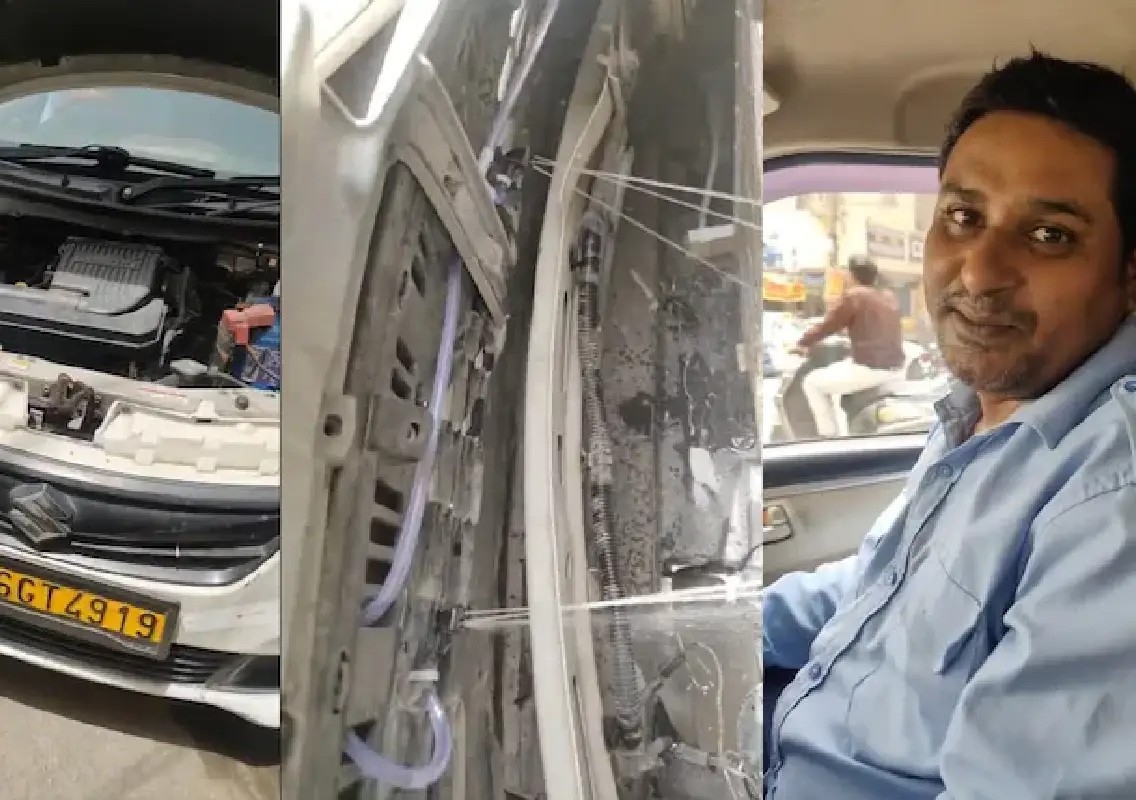


A taxi driver in Delhi has caught social media attention for using a creative “desi jugaad” to improve his car’s air-conditioning performance during the city’s intense summer heat.
The clip circulating online shows a water spray setup directed towards the car’s AC condenser area to help cool the system while temperatures in Delhi continue hovering close to 45-50 degrees Celsius.
Innovative cooling method sparks discussion
According to the post shared online, the taxi’s air conditioner struggled to cool the cabin during peak afternoon heat. To manage the situation, the driver reportedly sprayed water onto the condenser area located near the radiator behind the front grille.
The setup was claimed to provide significantly better cooling despite the extreme weather conditions.
Social media users reacted with curiosity, with many appreciating the driver’s practical innovation while others questioned whether the method could affect the vehicle’s engine or AC system.
Science behind the idea
Experts say the method is based on the principle of evaporative cooling.
A car’s AC condenser releases heat from the refrigerant, but during extreme heat the surrounding air itself becomes too hot for efficient cooling. Spraying water near the condenser temporarily lowers the temperature and helps the system release heat faster.
The concept works similarly to mist-cooling systems often used outdoors during summer.
Experts advise proper AC maintenance
Automobile experts, however, cautioned that the setup is only a temporary workaround and not a permanent fix for weak AC performance.
They warned that excessive water exposure could eventually increase the risk of rusting or electrical issues if water reaches sensitive components.
Experts added that poor cooling could also indicate deeper issues such as low refrigerant gas, clogged condensers or faulty cooling fans, which require proper servicing.
They advised vehicle owners to rely on regular AC maintenance rather than temporary cooling hacks during extreme summer conditions.