







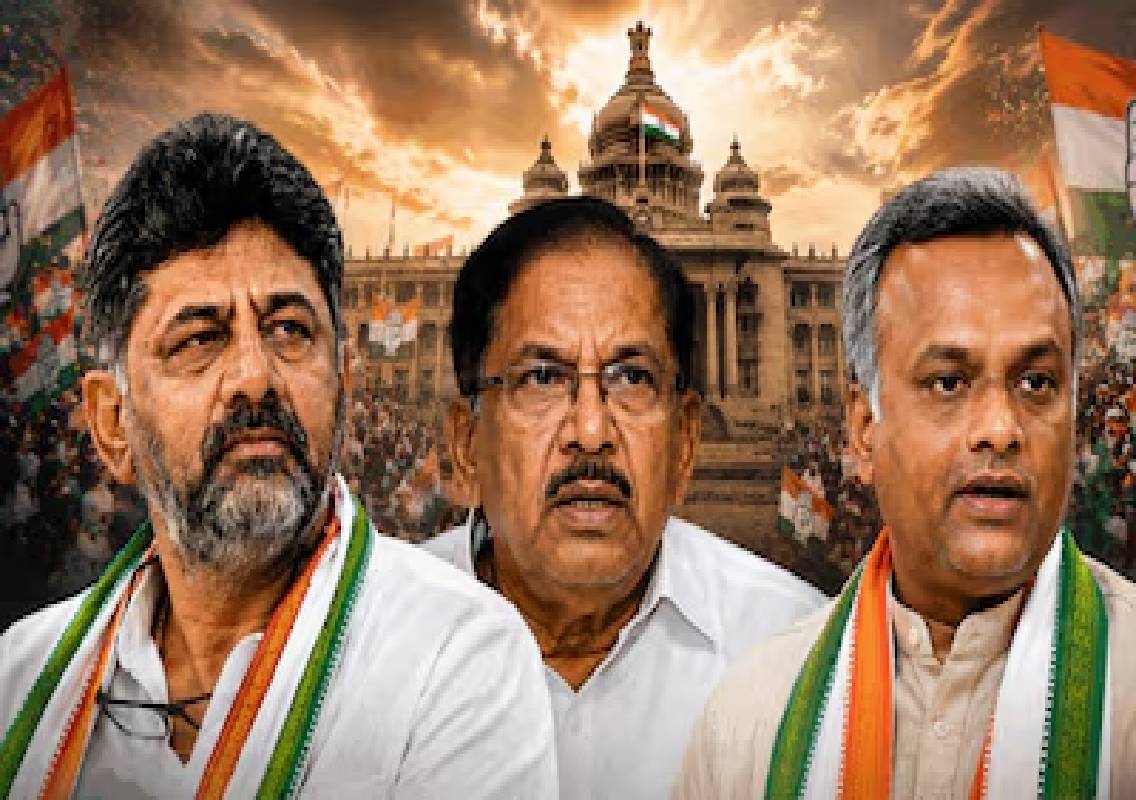


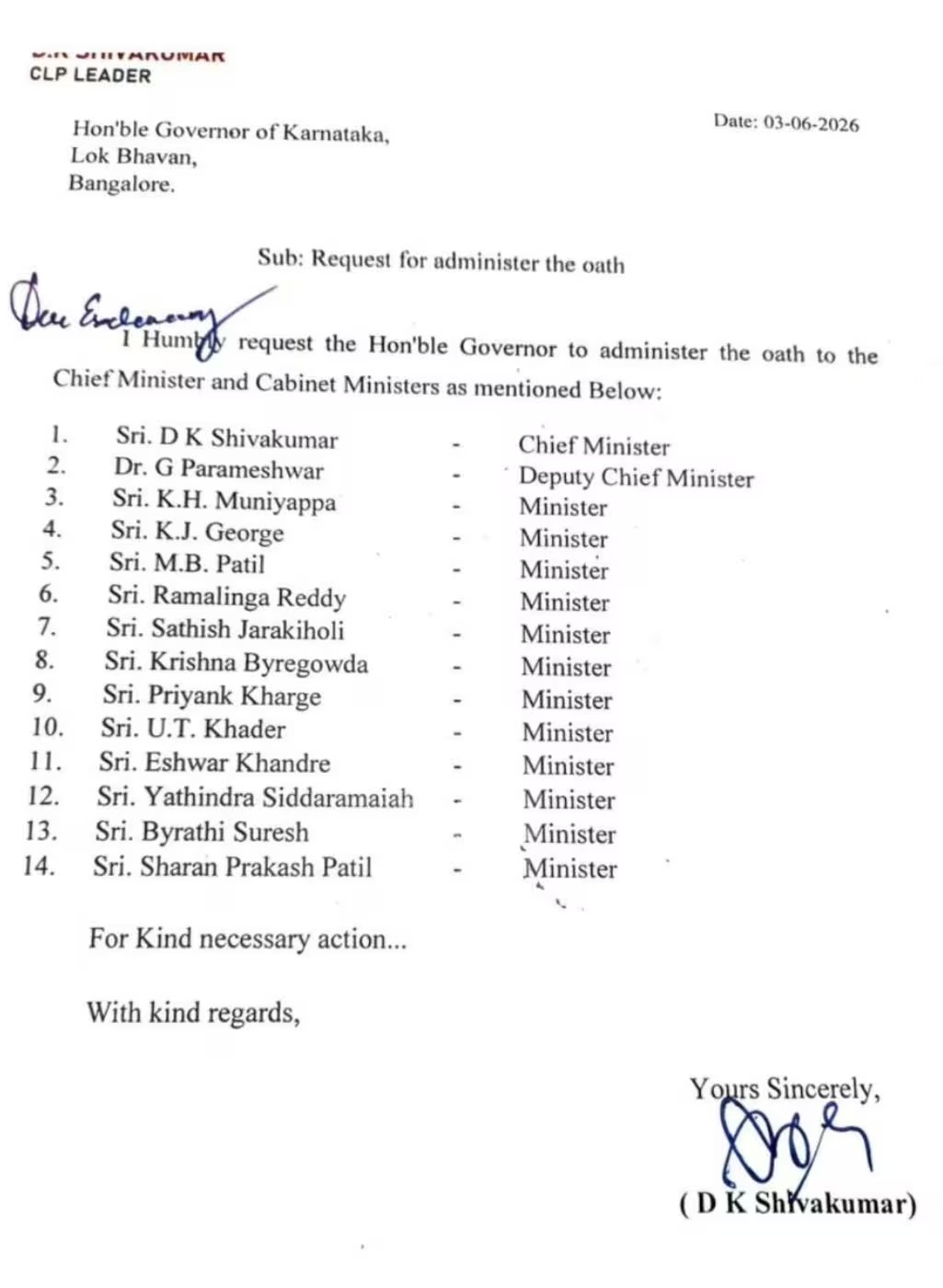
Bengaluru: Karnataka is set to witness a new political chapter as D K Shivakumar takes oath as the Chief Minister, accompanied by a compact first Cabinet comprising 13 ministers. The initial round of Cabinet formation reflects the Congress party’s effort to balance regional representation, caste equations, seniority and political influence following the leadership transition from Siddaramaiah.
The swearing-in ceremony marks the formal beginning of Shivakumar’s tenure after weeks of speculation over the implementation of the Congress party’s leadership arrangement in the state. Ahead of the ceremony, Shivakumar met outgoing Chief Minister Siddaramaiah and invited him to attend the event, signalling continuity and cooperation within the party.
G Parameshwara to serve as Deputy Chief Minister
Among the most prominent appointments is G Parameshwara, who will take oath as Deputy Chief Minister. A veteran Congress leader and one of Karnataka’s most experienced politicians, Parameshwara’s inclusion is seen as a move to ensure stability and provide experienced leadership in the new government.
Parameshwara has held several key positions in the party and government over the years and continues to be an influential Dalit leader within the Congress. His appointment is expected to strengthen the government’s outreach across social groups and regions.
Priyank Kharge among key faces in Cabinet
Priyank Kharge, son of Congress president Mallikarjun Kharge, is among the leaders included in the first Cabinet. Over the past few years, Priyank has emerged as one of the most visible young leaders in Karnataka politics and has handled significant responsibilities in the previous government.
His inclusion highlights the continued influence of the Kharge camp within the Karnataka Congress and is expected to give the government a mix of youth and administrative experience.
Other confirmed names in the Cabinet include K J George, Satish Jarkiholi, Shivaraj Tangadagi, R Ramalinga Reddy, Eshwar Khandre, Krishna Byre Gowda, Byrathi Suresh, Sharan Prakash Patil, M B Patil and K H Muniyappa.
Yathindra Siddaramaiah gets Cabinet berth
One of the most closely watched developments is the inclusion of Yathindra Siddaramaiah. The former MLA and son of outgoing Chief Minister Siddaramaiah has secured a place in the Cabinet, ensuring representation for the political network built by his father over the years.
Political observers view the decision as an attempt by the Congress leadership to maintain internal balance and reassure Siddaramaiah supporters after the change in leadership.
Yathindra’s elevation also signals the party’s willingness to provide opportunities to emerging leaders while retaining the support of established political groups within the organisation.
Regional and social balance at the centre
The composition of the Cabinet reflects a conscious effort to achieve regional and social balance. Leaders representing different parts of Karnataka have been accommodated to ensure broader representation.
Satish Jarkiholi’s inclusion is particularly significant for north Karnataka and the Scheduled Tribe community. Similarly, Eshwar Khandre’s presence provides representation to the Hyderabad-Karnataka region and strengthens the party’s outreach among Lingayat voters.
Krishna Byre Gowda, known for his policy-oriented approach and administrative experience, is expected to play an important role in the government’s governance agenda.
Former Assembly Speaker U T Khader has also been included, enhancing the Congress party’s representation in coastal Karnataka, where political competition remains intense.
Compact Cabinet with scope for expansion
Congress leaders have indicated that the first phase of Cabinet formation has been deliberately kept limited. The party is expected to undertake further expansion after upcoming Legislative Council and Rajya Sabha election processes are completed.
With ministerial aspirants far outnumbering available positions, the leadership has opted for a cautious approach. Several leaders have publicly acknowledged the intense competition for Cabinet berths, making future expansions crucial for maintaining party unity.
The phased approach also allows the Congress high command to assess political requirements and accommodate additional leaders at a later stage.
High command plays decisive role
The final Cabinet composition was shaped after extensive consultations involving the Congress central leadership. Party leaders have repeatedly stressed that the ultimate decisions were taken by the high command after evaluating organisational, regional and electoral considerations.
The Cabinet formation comes at a critical time for the Congress as it prepares for future electoral challenges while seeking to consolidate its position in Karnataka. The new team under Shivakumar is expected to focus on governance, development initiatives and strengthening the party’s organisational structure ahead of the next electoral cycle.
With a blend of senior leaders, experienced administrators and younger faces, the first Shivakumar Cabinet aims to project both continuity and change as Karnataka enters a new phase of political leadership.