







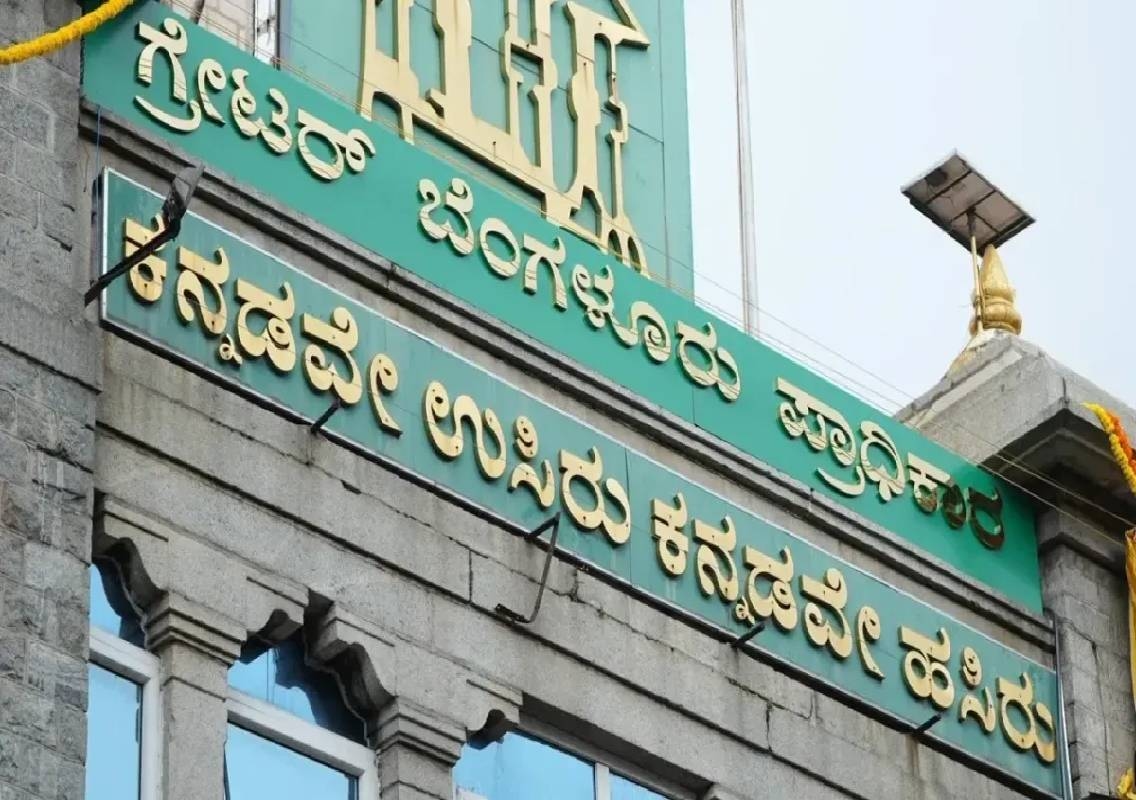


Bengaluru: The Greater Bengaluru Authority has reworked its Cadre and Recruitment (C&R) rules, bringing down its estimated monthly staff expenditure from Rs 50 crore to Rs 20 crore following directions from the Urban Development Department.
The move comes as part of a broader effort to streamline administrative costs while ensuring adequate staffing for the city’s governance under the newly restructured civic framework.
Shift from BBMP to new civic structure
Earlier, the Bruhat Bengaluru Mahanagara Palike managed Bengaluru with a sanctioned strength of over 22,000 employees, including pourakarmikas. However, the civic body operated with around 17,000 staff in practice.
With the transition to the GBA and the formation of five separate city corporations, officials indicated that staffing requirements have increased due to expanded administrative responsibilities.
Revised staffing plan cuts costs
Under the initial proposal, the GBA had planned to recruit around 6,500 employees across Groups A, B, C, and D (excluding pourakarmikas). This plan carried a financial implication of over Rs 50 crore per month.
However, after revising the proposal, the authority has significantly reduced the number of Group D employees, which constitute the bulk of the workforce, thereby cutting overall expenditure to Rs 20 crore monthly.
Officials noted that while higher-level positions in Groups A and B remain limited, the earlier demand for a large number of Group D staff has now been rationalised.
Adoption of ‘Bidar model’ for hiring
A key aspect of the revised strategy is the adoption of the ‘Bidar model’ for staffing. Under this system, contractual and outsourced employees are appointed through district-level workers’ services multi-purpose cooperative societies.
These societies function under the supervision of the district administration, specifically the deputy commissioner. In Bengaluru’s case, this responsibility falls under the Bengaluru Urban deputy commissioner.
Through this model, the GBA can request staff as needed, rather than maintaining a large permanent workforce, thereby reducing fixed salary burdens.
Additional workforce to be sourced
Despite the cost-cutting measures, the GBA is expected to receive an additional workforce of around 3,000 employees, excluding pourakarmikas, to support its operations.
This flexible staffing approach is aimed at balancing operational efficiency with financial prudence.
Approval process underway
According to GBA Special Commissioner (Finance and Administration) Harish Kumar, the revised C&R rules have been submitted to the government and are currently under review.
The proposal has been forwarded to the Department of Personnel and Administrative Reforms, along with the Finance and Law Departments, for detailed examination.
These departments are expected to review the norms, seek clarifications if required, and provide their observations before final approval is granted.
Focus on financial sustainability
The decision to scale down staffing costs reflects a broader push by the government to ensure financial sustainability in urban governance.
By reducing dependency on permanent staff and leveraging contractual hiring, the GBA aims to optimise resource allocation while maintaining service delivery standards.
Conclusion
The revised cadre rules mark a significant shift in Bengaluru’s civic administration strategy. If approved, the new framework is expected to help the GBA manage its workforce more efficiently while keeping expenditure under control, setting a precedent for other urban bodies in the state.