







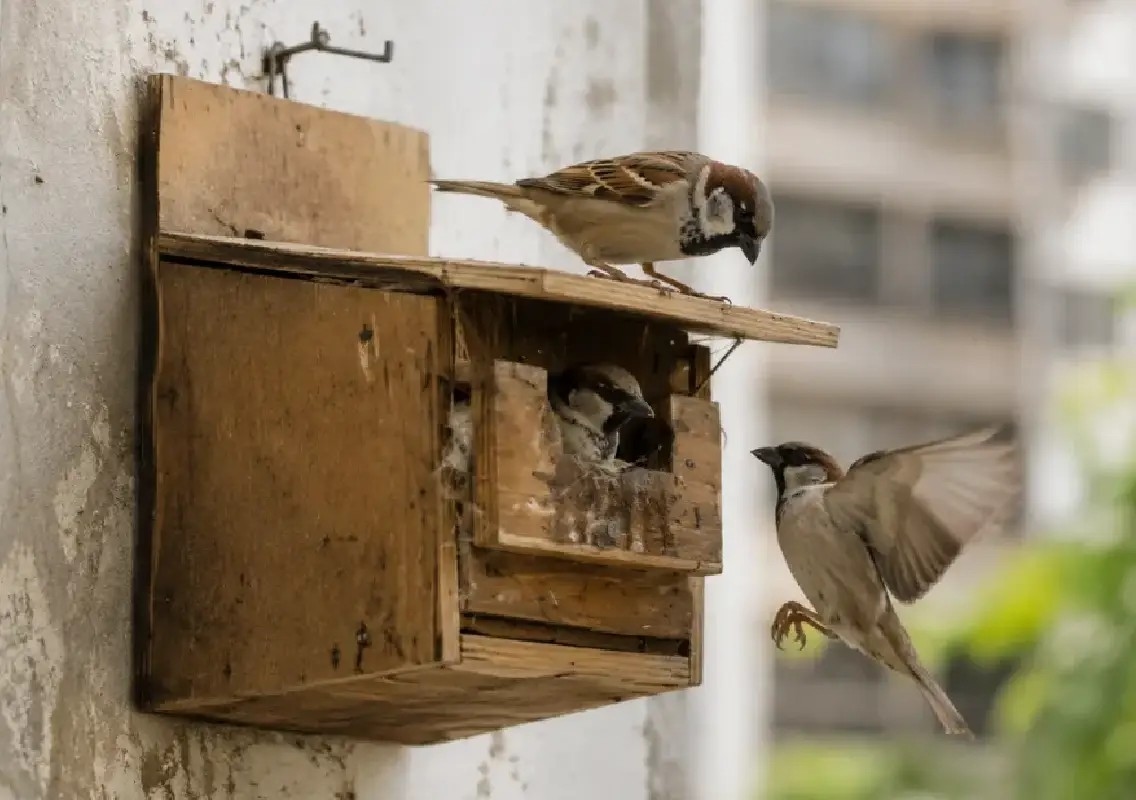


The cheerful chirping of house sparrows, once a familiar part of everyday life across Indian cities and towns, is becoming increasingly rare. Conservationists warn that rapid urbanisation and changing lifestyles are making cities less hospitable for one of India’s most recognisable birds.
Studies indicate that sparrow populations have declined significantly over the past few decades. Similar trends have been observed globally, with experts linking the decline to habitat loss, food scarcity and changing urban environments.
Why sparrows are disappearing
Experts say modern urban development has dramatically altered the habitats that sparrows once depended upon. Traditional homes with tiled roofs, ventilators and small openings provided ideal nesting spaces. In contrast, modern glass-and-concrete buildings offer very few places for sparrows to nest and breed.
The disappearance of gardens, hedges and open spaces has further reduced suitable habitats. At the same time, increased pesticide use has led to a decline in insect populations, a crucial food source for sparrow chicks.
Water scarcity is another challenge. Older neighbourhoods often had accessible water sources, while modern urban layouts provide fewer opportunities for birds to drink and bathe.
More than just a bird
Conservationists note that the decline of sparrows is also an indicator of broader environmental changes. Air pollution, habitat fragmentation, competition from other bird species and reduced biodiversity are all contributing to the problem.
Experts emphasise that sparrows have not disappeared entirely. Instead, they have gradually been pushed out of urban areas that no longer meet their basic requirements for food, shelter and nesting.
How citizens can help
Wildlife experts believe simple actions can help support sparrow populations and other urban birds:
- Place water bowls on balconies and terraces
- Install bird-friendly nest boxes
- Grow native shrubs and flowering plants
- Reduce pesticide use in gardens
- Leave some green spaces natural and less manicured
- Encourage bird-friendly designs in schools and apartment complexes
Several community-led initiatives across India have already demonstrated positive results through nest-box programmes and habitat restoration efforts.
The decline of the house sparrow serves as a reminder that sustainable urban development must go hand in hand with biodiversity conservation if cities are to remain healthy environments for both people and wildlife.