







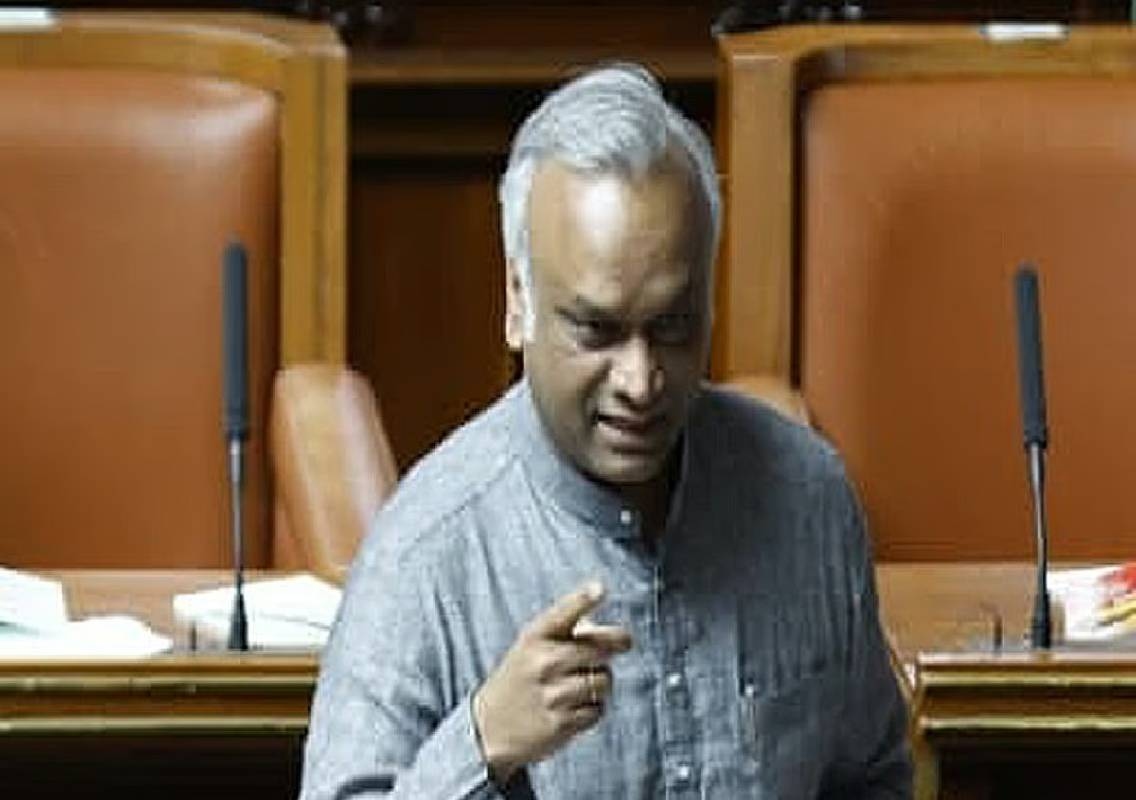


Bengaluru: Priyank Kharge outlines vision for space tech growth Karnataka is aiming to strengthen its position as a leading hub for commercial space technology and deep-tech innovation in India, with the state government focusing on infrastructure, manufacturing, research, and startup support to drive future growth.
Speaking at a roundtable conference with space-tech startup founders, industry leaders, and academic institutions in Bengaluru, Karnataka IT/BT Minister Priyank Kharge said space technology would play a central role in the state’s “DeepTech Decade” vision.
“Space technology is a key pillar in Karnataka’s DeepTech Decade vision. The state is uniquely positioned to lead the next phase of India’s commercial space growth by building deep capabilities across innovation, advanced manufacturing, data, upstream and downstream applications,” Kharge said.
The conference brought together stakeholders from the rapidly growing space-tech ecosystem to discuss collaboration opportunities, infrastructure development, policy support, and innovation strategies for the sector.
Focus on startups and MSMEs
Kharge stressed the importance of establishing common testing and validation infrastructure to support startups and micro, small and medium enterprises (MSMEs) operating in the commercial space segment.
According to the minister, shared facilities would significantly lower entry barriers for emerging companies while accelerating product development and commercial readiness.
Industry experts at the event highlighted that access to affordable testing infrastructure remains one of the major challenges for space-tech startups, especially during early-stage product development and satellite validation processes.
The government believes that building such facilities within Karnataka could help attract more investments, encourage innovation, and strengthen the state’s role in India’s growing private space economy.
Karnataka highlights early policy push
N Manjula, Secretary of the IT/BT Department, said Karnataka was the first state in the country to introduce a draft Space Policy, reflecting its long-term commitment towards developing a globally competitive commercial space ecosystem.
“Our policy vision is anchored in long-term ecosystem leadership spanning infrastructure, manufacturing, research, talent development and industry collaboration,” she said.
Officials noted that Karnataka already hosts a strong aerospace and technology ecosystem, including research institutions, public sector undertakings, defence establishments, and private deep-tech companies.
The state government now plans to leverage this existing ecosystem to position Karnataka as a preferred destination for private space-tech investments and innovation.
Leading startups and institutions participate
The roundtable witnessed participation from several leading startups and organisations working in the Indian space and aerospace sectors.
Representatives from companies such as Pixxel, KaleidEO, Astrogate Labs, GalaxEye, Ananth Technologies and Centum Electronics attended the discussions.
Public sector and research institutions including Hindustan Aeronautics Limited (HAL), BHEL, Raman Research Institute and Indian Institute of Astrophysics also participated in the conference.
Officials said the discussions focused on improving collaboration between startups, academia, industry, and the government to create a stronger commercial space ecosystem.
Karnataka aims to become deep-tech hub
Karnataka has increasingly positioned itself as a major destination for emerging technologies, including artificial intelligence, aerospace, semiconductor manufacturing, robotics, and space technology.
The state government believes the commercial space sector could generate substantial employment opportunities, attract global investments, and contribute significantly to India’s growing private space economy.
Experts at the conference also emphasised the importance of skill development, talent retention, and research partnerships in ensuring sustainable growth in the sector.
With India’s private space industry witnessing rapid expansion following policy reforms and increased participation from startups, Karnataka is now seeking to establish itself as a national leader in commercial space innovation.
Officials indicated that future initiatives may include dedicated space-tech parks, startup incubation support, testing centres, and stronger industry academia partnerships to accelerate the sector’s growth trajectory.