







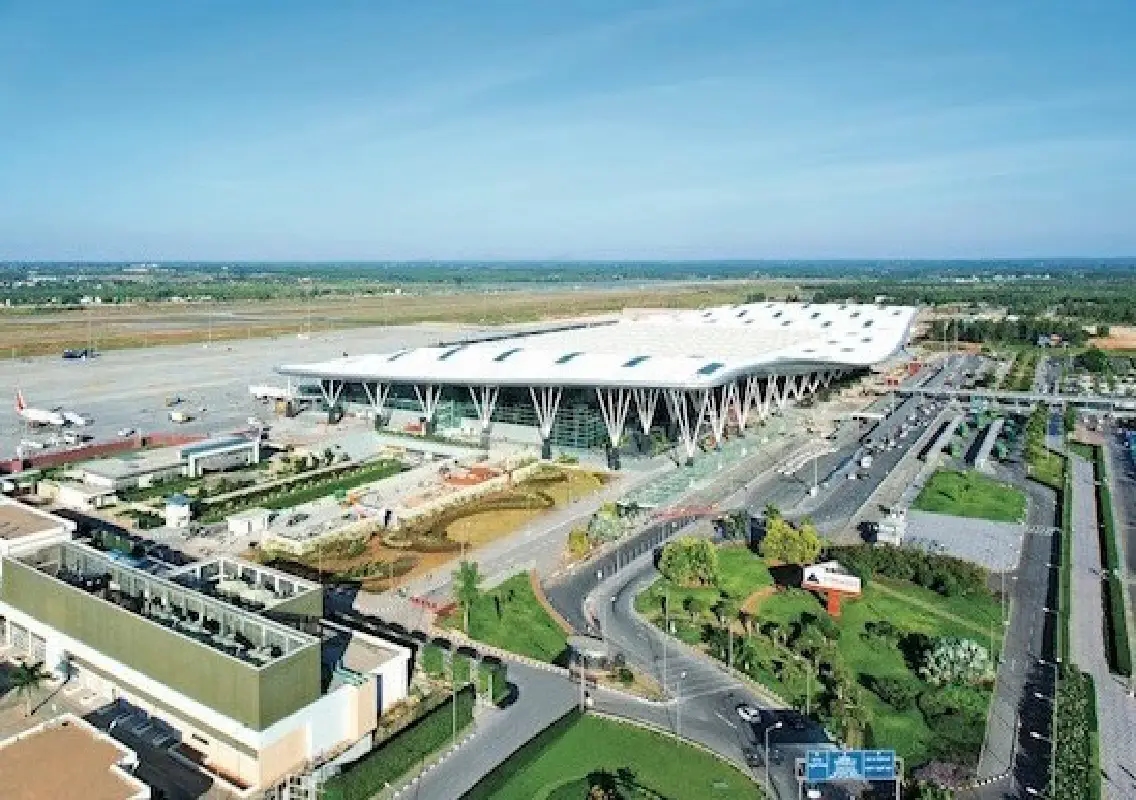


Bengaluru: Switching between terminals at Kempegowda International Airport (KIA) is set to become significantly faster and more seamless, with Bangalore International Airport Limited (BIAL) initiating steps to introduce an automated people mover (APM). The proposed system, once implemented, will mark a major milestone in Indian aviation infrastructure, as KIA is poised to become the first airport in the country to operate an automated inter-terminal transit system.
BIAL invites bids for design consultancy
BIAL, which operates Bengaluru’s international airport, has invited bids for design consultancy services for the APM project. The move signals that planning for the system has entered a more concrete phase, following the initial announcement of the proposal in December 2023.
The selected consultant will be tasked with preparing detailed designs and technical frameworks for the APM, including alignment options, system specifications, and integration with existing terminal infrastructure. However, BIAL has not yet disclosed details regarding the project’s cost, passenger capacity, route length or implementation timeline.
What is an automated people mover?
Automated people movers are fully automated, driverless transit systems designed for short-distance, high-frequency travel. These systems typically operate on dedicated guideways using rail-based technologies such as monorails, automated light rail or rubber-tyred vehicles running on concrete tracks.
Globally, APMs are widely used at large international airports, business districts, university campuses and theme parks. Airports in the United States, China, Malaysia and Singapore rely extensively on such systems to transport passengers quickly and efficiently between terminals, parking areas and transit hubs.
Need for faster inter-terminal connectivity
Kempegowda International Airport currently operates two terminals—Terminal 1 and the newly developed Terminal 2. Passengers transferring between the terminals presently depend on electric shuttle buses operating on airport roads.
While these buses are environmentally friendly, they are subject to road congestion, operational delays and peak-hour demand fluctuations. During busy travel periods, transfer times can increase, affecting passenger convenience, especially for those with tight connecting flights.
The proposed APM is expected to address these challenges by offering predictable, frequent and weather-independent connectivity. Airport officials believe it will significantly reduce transfer times and enhance reliability as passenger volumes continue to grow.
Passenger traffic driving infrastructure expansion
Bengaluru airport has witnessed steady growth in passenger traffic over the past few years, emerging as one of the busiest airports in India. With the commissioning of Terminal 2 and continued expansion of air routes, passenger numbers are expected to rise further, increasing the demand for efficient internal mobility.
Industry experts note that as airports scale up operations beyond 4–5 crore passengers annually, road-based inter-terminal transport becomes less sustainable. Automated transit systems are increasingly viewed as essential infrastructure for large hub airports.
First-of-its-kind system in India
Once commissioned, the APM at KIA will make Bengaluru the first airport in India to operate an automated inter-terminal people mover. Aviation analysts say this could set a benchmark for other large airports in the country, including those in Delhi, Mumbai and Hyderabad, as they plan future expansions.
The introduction of such a system is also aligned with global best practices in airport design, focusing on passenger comfort, reduced carbon footprint and long-term operational efficiency.
Parallel plan for ultra-luxury airport hotel
In a parallel development, BIAL’s subsidiary, Bangalore Airport Hotel Limited (BAHL), has floated a separate request for proposal to appoint consultants for a feasibility study for an ultra-luxury hotel within the airport precinct.
The proposed hotel is envisioned as part of BIAL’s broader aerotropolis strategy, which aims to transform the airport area into a self-sustained business and lifestyle hub. The property is expected to cater to premium travellers, airline crew, business visitors and international transit passengers.
While details regarding the hotel’s scale, investment size and brand affiliation are yet to be announced, officials indicated that it would strengthen the airport’s position as a comprehensive aviation and commercial destination.
Conclusion
With plans for an automated people mover and an ultra-luxury hotel, Kempegowda International Airport is entering a new phase of infrastructure-led growth. The APM, in particular, is expected to redefine inter-terminal travel in India by offering faster, safer and more reliable connectivity. As passenger traffic continues to rise, such projects underline BIAL’s intent to future-proof the airport and align it with leading global aviation hubs.