







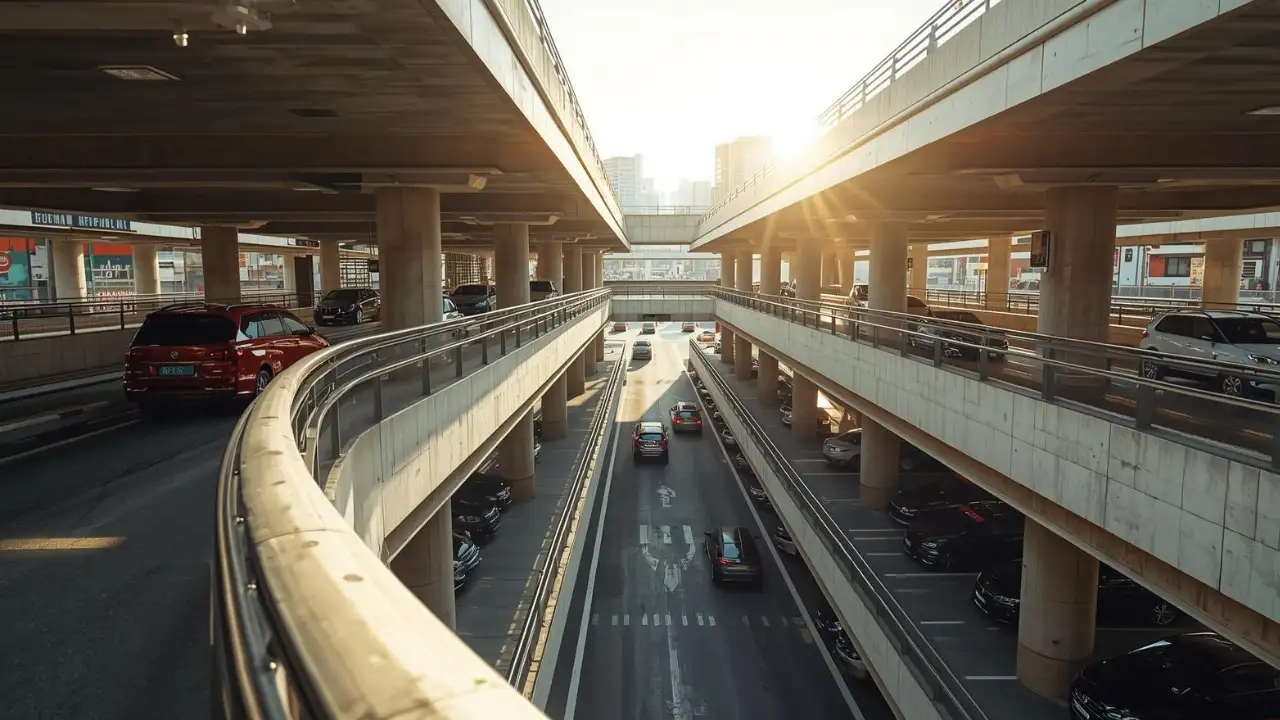


Bengaluru Metro commuters may soon get relief from chronic parking shortages near stations, with the Greater Bengaluru Authority (GBA) unveiling plans to construct modern multi-level parking complexes at select locations across the city. The initiative aims to bring order to unregulated parking, improve commuter safety, and reduce traffic congestion around busy metro corridors.
Parking shortage a long-standing issue
At present, parking facilities near several Namma Metro stations are managed by private contractors, often using vacant plots or open spaces. While this arrangement offers basic convenience, commuters frequently complain of poor space management, lack of security, inadequate lighting, and inconsistent facilities. In many locations, haphazard parking also spills onto roads, worsening congestion and creating safety risks for pedestrians.
Recognising these challenges, the GBA has proposed high-tech, structured parking facilities that can systematically address capacity and management issues.
How multi-level parking will help commuters
Officials said the proposed multi-level parking complexes will significantly increase vehicle capacity without requiring large land parcels. By accommodating more two-wheelers and cars vertically, the facilities are expected to free up surrounding roads and footpaths, easing traffic bottlenecks near metro stations.
Improved surveillance systems, designated entry and exit points, and better lighting are also expected to enhance commuter safety. Authorities believe that organised parking will contribute to smoother traffic flow and a better overall experience for daily metro users.
Stations to be identified
During a recent coordination meeting, GBA Chief Commissioner Maheshwar Rao directed officials to prepare a detailed list of metro stations suitable for multi-level parking construction. The meeting saw participation from commissioners of the city’s five municipal corporations, the Bengaluru Police Commissioner, and senior officials from the Bangalore Metro Rail Corporation Limited (BMRCL).
This inter-agency coordination is seen as crucial, as the project involves urban planning, traffic management, policing, and metro operations. Officials said feasibility will depend on land availability, traffic patterns, and commuter demand at individual stations.
Renewed hope for commuters
For years, metro users have been demanding structured and secure parking near stations, especially at key interchange and high-footfall locations. Although similar ideas were discussed earlier, they failed to progress beyond planning stages. The latest directive to identify specific stations has renewed optimism that the project may finally move forward.
If implemented effectively, the multi-level parking initiative could mark a significant improvement in Bengaluru’s metro ecosystem, encouraging more commuters to shift to public transport and reducing dependence on roadside parking.