







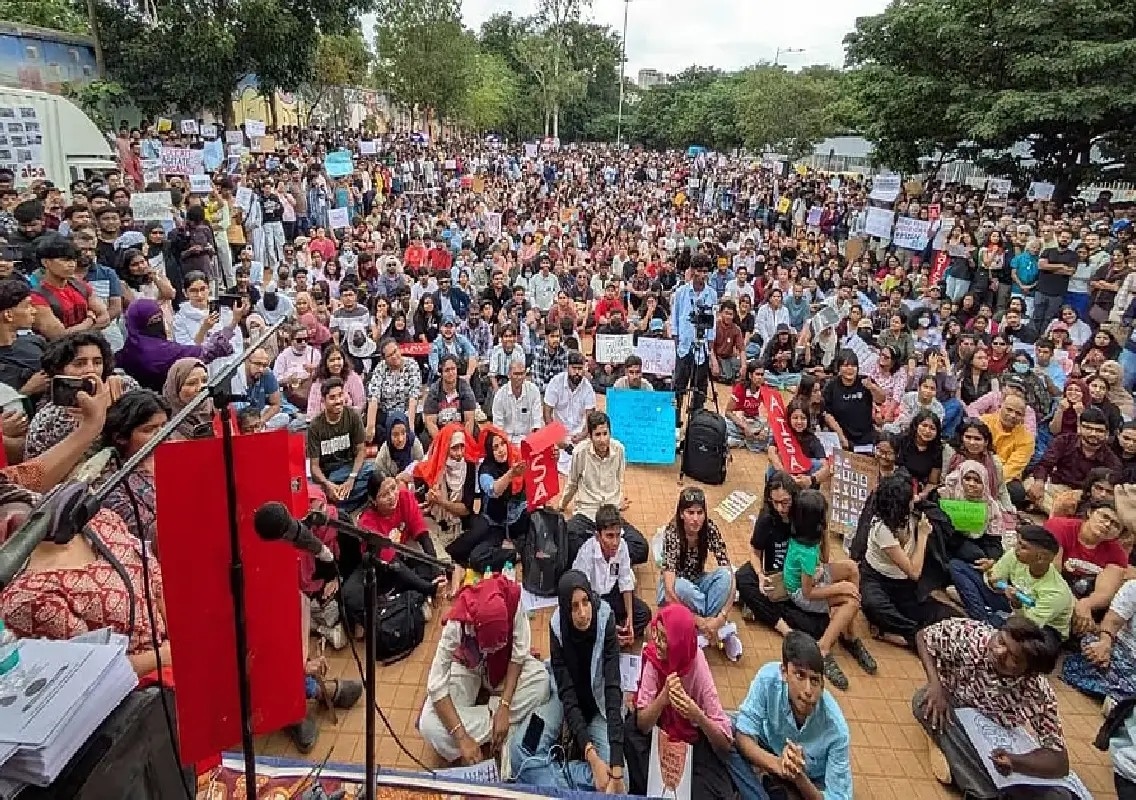


Bengaluru: Protests over the alleged NEET paper leak entered their eighth consecutive day at Freedom Park on Sunday, with demonstrators reaffirming that the agitation would continue until comprehensive educational reforms are enacted. The gathering drew students, youth organisations, activists and members of the public, who called for greater accountability and long-term changes to the examination system.
The protest took on a celebratory tone following the resignation of Union Education Minister Dharmendra Pradhan, with many participants describing it as a significant milestone in their movement. However, organisers maintained that the resignation alone was insufficient and stressed that structural reforms remained their primary demand.
Protest enters eighth day
Freedom Park witnessed another large turnout as protesters assembled under the banners of youth collectives, the All India Students’ Association (AISA) and the Cockroach Janata Party (CJP).
Throughout the day, demonstrators raised slogans such as “Inquilab Zindabad” and “Jai Bhim” while participating in cultural activities that included singing patriotic songs, face painting and group performances.
The event combined protest with creative expression, reflecting what organisers described as a peaceful and inclusive movement demanding transparency and accountability in the country’s examination system.
Volunteers support participants
According to Bhavana from the Bengaluru unit of the Cockroach Janata Party, volunteers arranged essential facilities for those attending the protest.
Makeshift counters were set up to distribute drinking water, fresh fruits and snacks to the thousands of students, activists and citizens who gathered at the venue.
Organisers said the arrangements were intended to ensure that participants could continue the prolonged protest comfortably while maintaining a peaceful atmosphere.
Art and cultural activities mark demonstration
Participants used art and cultural expression to communicate their demands during the protest.
Many painted watermelon slices—a symbol adopted by the movement—on each other’s cheeks, while others displayed posters carrying messages such as “Long Live the Revolution” and “When You Ask the Government for Accountability.”
Youth groups also played hand drums, performed with hula hoops and displayed satirical placards criticising what they described as inadequate political action on examination irregularities.
The combination of music, art and public participation gave the protest the atmosphere of a civic gathering while keeping attention focused on the issue of examination reforms.
Speakers call for systemic changes
Historian Ramachandra Guha addressed the gathering during the programme, emphasising the constitutional right to peaceful assembly.
He called for systemic reforms in national testing agencies and highlighted the importance of ensuring transparency and fairness in public examinations.
Children and college students also addressed the crowd, sharing their views on education and accountability before leading call-and-response slogans that were met with applause from the audience.
One undergraduate student described the resignation of the Union Education Minister as a significant moment for student-led democratic action, while adding that the movement would continue until broader reforms were implemented.
Letter-writing campaign launched
As part of the protest, demonstrators organised a large-scale letter-writing campaign addressed to government offices in New Delhi.
Thousands of handwritten postcards were collected and packed for dispatch to ministries, outlining a series of demands.
Among the key demands mentioned by organisers were compensation for families affected by the alleged examination irregularities, stringent action against those responsible for paper leaks and greater accountability regarding police action during student demonstrations.
Protest leaders said the campaign was intended to ensure that policymakers remained aware of the concerns being raised by students and civil society.
Movement to continue
Organisers reiterated that the protest would continue until legislation introducing structural reforms to the examination system is enacted.
They said the movement seeks long-term measures to strengthen the integrity of competitive examinations and restore public confidence in national testing processes.
The demonstrations at Freedom Park have become one of the focal points of student-led mobilisation over the alleged NEET paper leak, with organisers maintaining that sustained public engagement is necessary to achieve lasting reforms.