







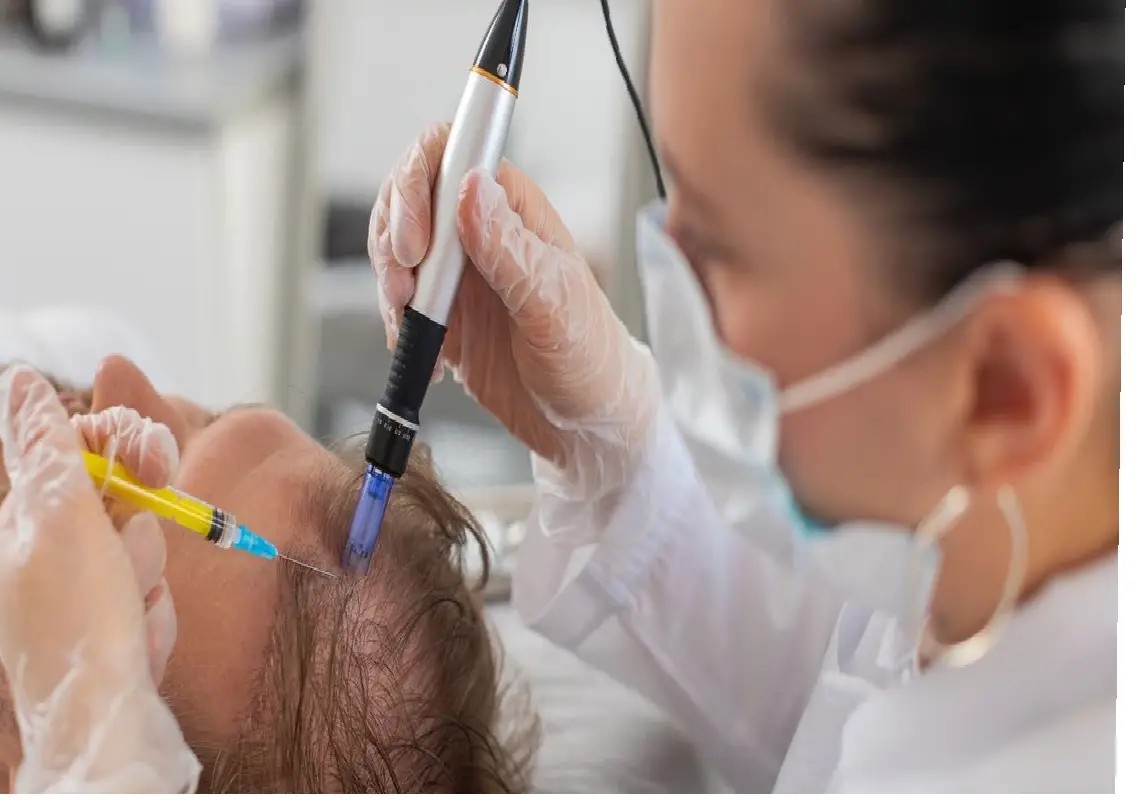


Hair loss affects millions of people worldwide, impacting confidence and emotional well-being. Now, researchers are exploring a new generation of treatments that go beyond slowing hair loss and may actually stimulate significant hair regrowth.
Several emerging therapies are showing encouraging results in laboratories and early clinical trials, raising hopes for more effective solutions in the coming years.
AI-designed drug targets hair regrowth
One of the most promising developments is ABS-201, an injectable treatment being developed by biotechnology company Absci.
Unlike conventional treatments that primarily aim to slow hair loss, ABS-201 is designed to reactivate dormant hair follicles by targeting the prolactin receptor. In preclinical studies involving animals, researchers reported substantial hair regrowth after treatment.
The drug entered human clinical trials in late 2025 and is expected to progress to expanded testing phases during 2026.
Scientists focus on waking dormant follicles
Researchers at the University of California, Los Angeles (UCLA) have taken a different approach by studying the metabolism of hair follicle stem cells.
Their research found that increasing lactate levels within dormant follicles may help reactivate hair growth. This discovery led to the development of a topical treatment known as PP405, which is currently undergoing clinical testing.
Scientists believe the treatment could stimulate sleeping follicles rather than merely slowing hair loss.
Sugar-based discovery surprises researchers
Another breakthrough emerged unexpectedly during research into wound healing. Scientists discovered that deoxyribose, a naturally occurring sugar involved in DNA formation, appeared to stimulate blood vessel growth and encourage hair regrowth in laboratory studies.
Researchers reported that the treatment performed similarly to some existing hair loss medications in animal experiments.
Future of hair restoration
While most of these therapies remain under clinical evaluation and are not yet commercially available, experts say they represent a significant shift in hair loss research.
Rather than simply preserving existing hair, many of these treatments aim to reactivate dormant follicles and restore growth.
If future human trials confirm their effectiveness and safety, the next decade could bring entirely new options for millions struggling with hair loss worldwide. #HairLoss #HealthNews #MedicalResearch #Innovation #Healthcare #newskarnataka