


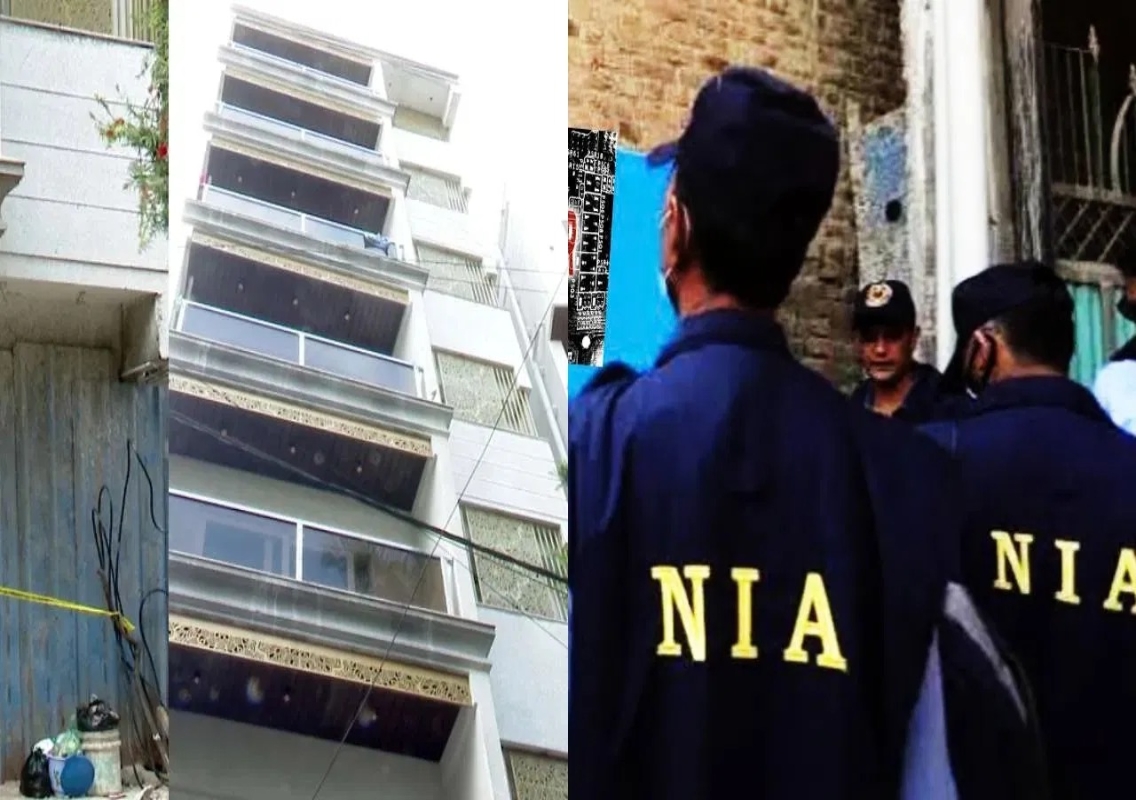


Bengaluru: The National Investigation Agency (NIA) has sought investigation details and reports concerning the explosion at a construction site in Bengaluru’s Pulakeshinagar, as authorities examine the possibility that an improvised explosive device (IED) may have caused the blast.
The explosion occurred at approximately 2.30 pm on October 20 at an under-construction five-storey building, injuring two workers identified as Allauddin and Naresh. Although the incident initially raised suspicions of a battery explosion, preliminary findings have prompted investigators to examine whether a more complex device was involved.
The precise cause of the explosion and the nature of the device remain unconfirmed. Investigators are awaiting forensic findings to establish what triggered the blast and whether any explosive material was used.
NIA seeks investigation and forensic reports
NIA officials have sought details of the investigation conducted by local authorities and are expected to examine the findings of forensic experts. The agency may also inspect the site before deciding on further action, depending on the evidence available and the conclusions of the forensic science laboratory.
The agency’s examination comes as investigators attempt to establish whether the incident was an accidental explosion or involved a deliberately assembled device. However, the possibility of an IED remains under investigation and should not be treated as a confirmed conclusion.
The forensic findings are expected to play a crucial role in determining the composition of the device, the materials involved and the sequence of events that led to the explosion.
Investigators are also examining whether three batteries were used in a mechanism connected to the blast. The significance of the batteries, their possible arrangement and their relationship to the explosion have yet to be conclusively established.
Forensic teams collect evidence at the site
Local police and the Anti-Terrorism Cell (ATC) are continuing their investigation into the incident. A Scene of Crime Officers team and forensic science laboratory (FSL) experts inspected the construction site and collected samples for examination.
The findings from the site examination have reportedly been made available to the NIA. These reports could help investigators determine whether the explosion resulted from a battery-related malfunction or involved an explosive mechanism.
Bomb disposal personnel and forensic specialists also examined the premises following the incident. Their work forms part of the effort to identify the source of the blast and determine whether the site presents any continuing safety concerns.
The investigation involves several aspects, including the physical evidence recovered from the building, statements from witnesses and information about the parcel reportedly linked to the explosion.
Officials are expected to assess these findings together rather than draw conclusions from any single piece of evidence.
Security guard’s statement becomes a key lead
A security guard’s statement has emerged as an important element of the preliminary inquiry. According to the account given to police, the guard received an anonymous telephone call directing him to place a parcel inside the under-construction building.
The guard and a painter reportedly attempted to open the package, following which the explosion occurred. Investigators are now trying to establish the identity of the caller, the origin of the parcel and the circumstances under which it reached the construction site.
The account has raised questions about whether the package was deliberately delivered to the premises and whether the caller had any connection to the explosion.
Police are examining the sequence of events surrounding the parcel’s arrival and the instructions allegedly given to the security guard. Establishing the authenticity and details of the call could help investigators reconstruct what happened before the blast.
The contents of the parcel and the identity of the person who arranged its delivery have not been conclusively established.
Two workers injured in the explosion
The explosion injured two workers, identified as Allauddin and Naresh, who were present at the construction site when the incident occurred.
The blast prompted an investigation by Pulakeshinagar police, who registered a case and formed special teams to examine the circumstances. Bomb disposal personnel, forensic specialists and ATC officials subsequently inspected the premises and collected evidence.
The incident initially appeared to involve a possible battery explosion. However, the circumstances surrounding the parcel and the preliminary examination of the site have led investigators to consider other possibilities.
Determining the actual cause is essential to understanding whether the explosion resulted from an accidental failure, the use of an explosive substance or another mechanism.
Authorities have not yet publicly established that the incident was a terror attack or confirmed that an IED was responsible.
Investigation focuses on device, parcel and caller
The investigation is now centred on three major questions: what caused the explosion, where the parcel originated and who instructed the security guard to place it inside the building.
Forensic analysis is expected to help establish the nature of the materials involved and whether the device contained components consistent with an IED. Investigators are also working to verify witness accounts and identify any individuals connected with the parcel.
The NIA’s next steps are expected to depend on its assessment of the available reports and forensic evidence. A site inspection or further investigation by the agency would depend on the findings and the requirements of the case.
Until the forensic examination is complete, the suspected involvement of an IED remains a line of inquiry rather than an established fact.
The Pulakeshinagar explosion has raised security concerns because of the circumstances surrounding the parcel and the possibility that the blast involved a deliberately assembled device. However, the investigation must establish the facts before any conclusions can be drawn about the motive or those responsible.
Local police, the ATC and forensic experts are continuing their work, while the NIA examines the reports submitted to it. Further developments are likely to depend on the forensic findings and the progress made in tracing the anonymous caller and the parcel’s origin.