







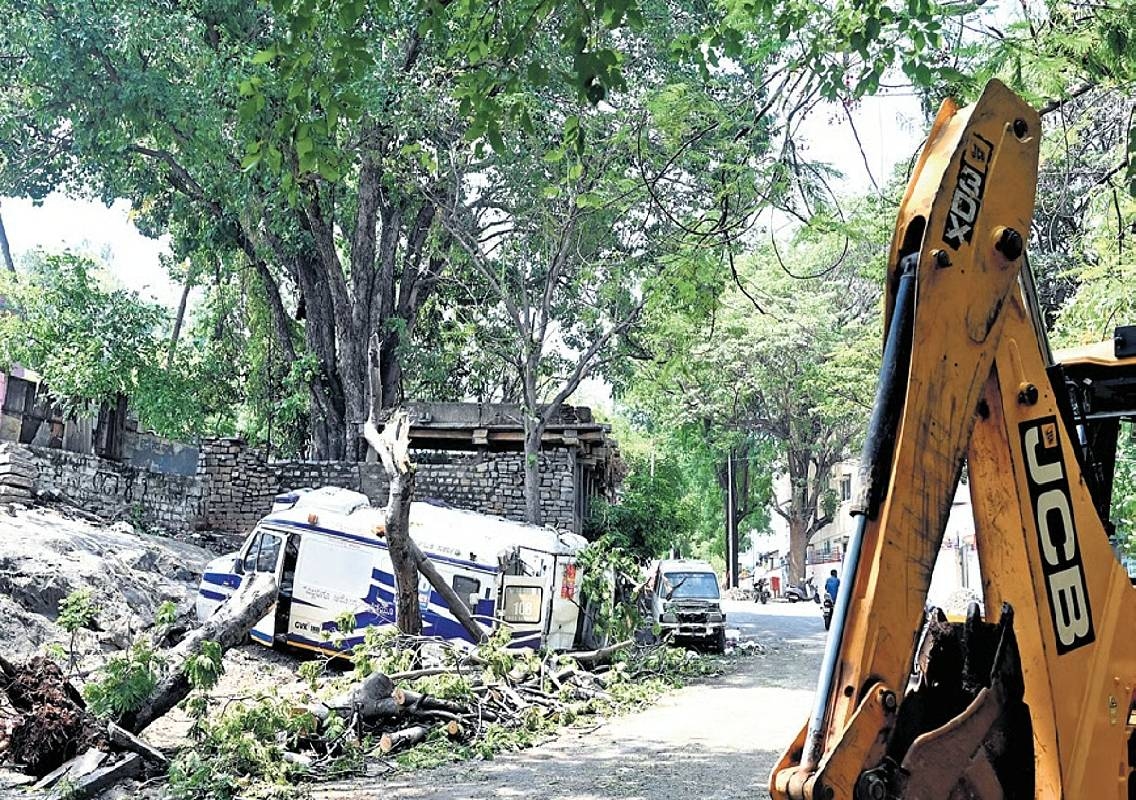


Bengaluru: In the wake of the fatal wall collapse at Bowring and Lady Curzon Hospital, Deputy Chief Minister DK Shivakumar has directed officials to identify and remove dangerous structures and trees across the city to prevent further tragedies.
The directive comes after seven people lost their lives in the collapse during heavy rains earlier this week, triggering concerns over urban safety and infrastructure maintenance.
448 hazardous trees identified
Shivakumar said the Traffic Department has identified 448 trees across Bengaluru that pose a risk to life and property. Instructions have been issued to city police and civic corporations to take immediate action.
Officials noted that removal of such trees is also essential to ensure smooth vehicular movement, especially during extreme weather conditions.
Recent data highlights the scale of the issue. Between April 29 and May 1, as many as 376 trees and 981 branches fell across Greater Bengaluru Authority (GBA) limits, underscoring the urgency of preventive measures.
Focus on unsafe buildings and walls
The Deputy Chief Minister also instructed civic bodies to identify dilapidated buildings, weak compound walls, and other unsafe structures that could collapse and endanger public safety.
Authorities have previously identified hundreds of such structures across the city. Following earlier incidents, including a building collapse in Babusab Palya in October 2024 and another in Lakkasandra in 2021, over 500 unsafe buildings had been flagged.
Experts have recommended issuing notices to property owners, giving them 15 days to vacate and demolish unsafe structures, failing which authorities may step in to carry out demolition.
However, officials admitted that enforcement has often been inconsistent, with actions limited to reactive measures after major incidents.
Action against officials sparks debate
In connection with the Bowring Hospital incident, an executive engineer and an assistant executive engineer have been placed under suspension, while a show-cause notice has been issued to the hospital dean.
The move has sparked internal debate within departments, with some officials questioning the accountability framework, as the hospital property falls under a different administrative jurisdiction.
Sources indicated that a detailed probe will examine the role of maintenance authorities and determine responsibility for the collapse.
Push for preventive measures
Shivakumar emphasised the need for proactive action ahead of the monsoon season. Civic officials have been directed to:
- Trim or remove dangerous tree branches
- Clear silt from stormwater drains
- Remove debris and fallen trees from roads
- Install barricades in flood-prone underpasses
These steps aim to minimise risks during heavy rains and improve overall city preparedness.
Conclusion
The Bowring Hospital wall collapse has once again exposed gaps in Bengaluru’s urban safety systems. With directives now issued to remove hazardous trees and structures, authorities face the challenge of ensuring timely and consistent implementation to prevent further loss of life.