







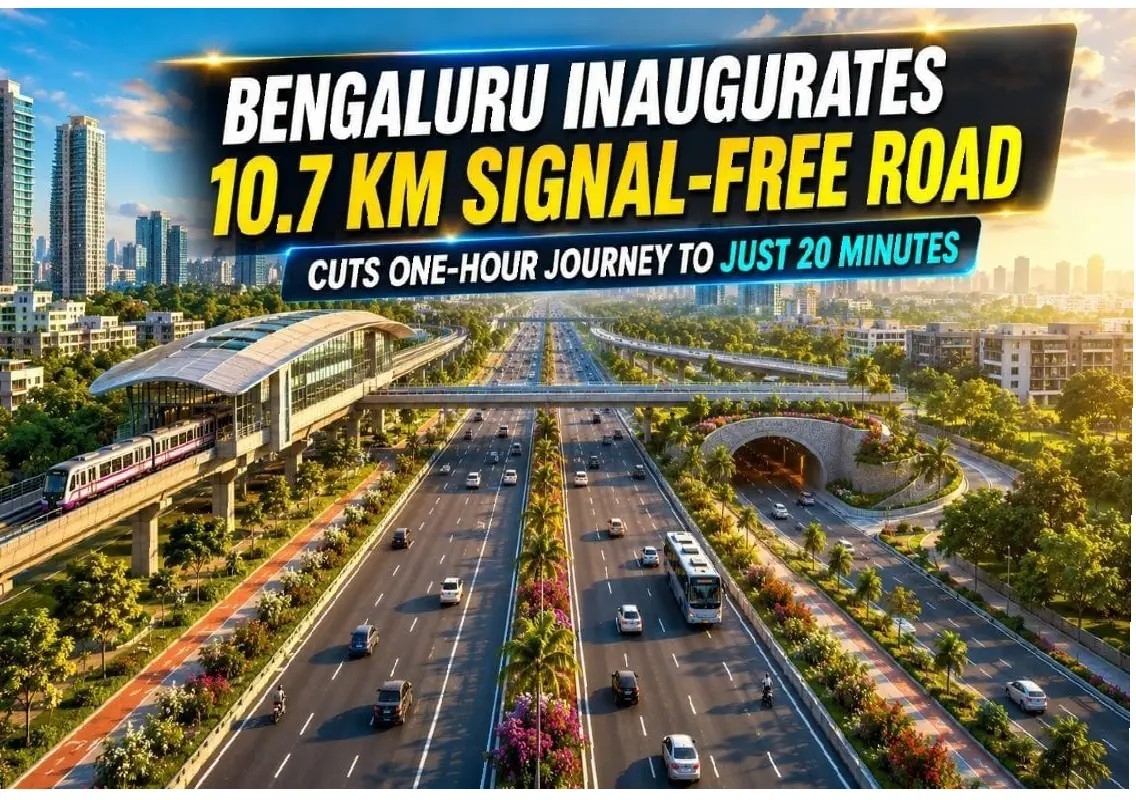


Karnataka Deputy Chief Minister D.K. Shivakumar has inaugurated the S.M. Krishna Corridor, a 10.7-km-long and 100-metre-wide signal-free, toll-free arterial road aimed at improving connectivity and easing traffic congestion in west Bengaluru.
Constructed at a cost of ₹631 crore, the corridor has been named after former Chief Minister S.M. Krishna, recognising his contribution to Bengaluru’s growth and urban development.
Faster connectivity for commuters
The newly opened corridor is designed to significantly reduce travel time between Magadi Road and Mysuru Road, providing commuters with a seamless, signal-free route through one of the city’s busiest traffic corridors.
Officials said the project is expected to improve traffic flow, reduce congestion on adjoining roads and provide quicker access for thousands of daily commuters travelling between western Bengaluru and other parts of the city.
Boost to Bengaluru’s infrastructure
Speaking at the inauguration, Shivakumar said the corridor is part of the state government’s broader vision to modernise Bengaluru’s transport infrastructure and address the city’s growing traffic challenges.
The project is expected to benefit residents, businesses and commercial vehicles by improving road connectivity while reducing fuel consumption and travel delays.
Named after S.M. Krishna, who is widely credited with transforming Bengaluru into a global technology hub during his tenure as Chief Minister, the corridor stands as a tribute to his legacy in shaping the city’s infrastructure.
More projects on the way
The Karnataka government has reiterated its commitment to expanding Bengaluru’s road network through new flyovers, elevated corridors and signal-free roads to improve urban mobility.
Officials believe the S.M. Krishna Corridor will become a key transport link for west Bengaluru, helping decongest existing roads and supporting the city’s continued growth.
The inauguration marks another milestone in Karnataka’s ongoing efforts to build modern, efficient and commuter-friendly infrastructure for the state’s capital.