







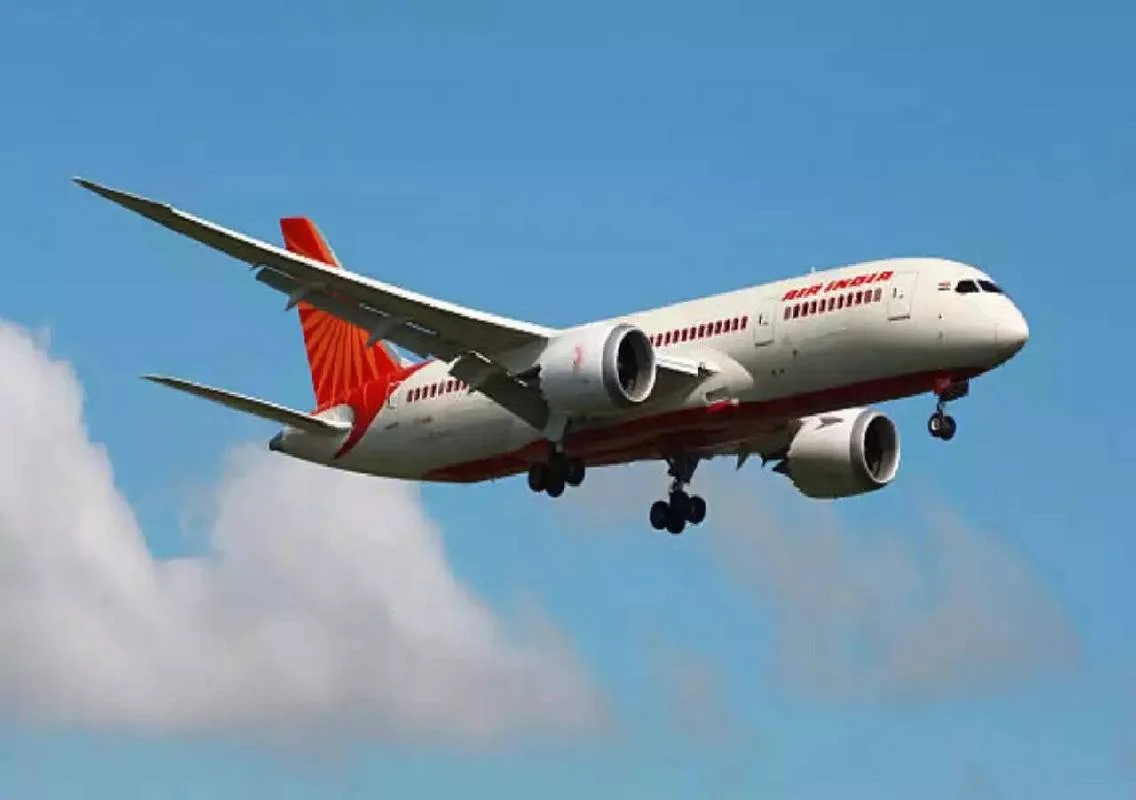


New Delhi: Air India is reportedly planning to seek a financial lifeline of around ₹22,000 crore from its key shareholders, Tata Group and Singapore Airlines, after recording losses significantly higher than internal estimates for the financial year ended March 31.
The airline’s losses are estimated to have crossed ₹2.2 lakh crore globally (over $2.4 billion), surpassing earlier projections of around $1.6 billion. The development highlights the mounting financial pressure on the carrier despite ongoing restructuring efforts following its privatisation.
Losses deepen amid multiple challenges
The financial setback comes after a turbulent year for Air India, marked by a series of external and operational challenges. Among the most significant events was a deadly crash involving a Boeing 787 Dreamliner, which added to the airline’s operational and reputational strain.
Additionally, geopolitical tensions played a major role in disrupting operations. The closure of Pakistani airspace to Indian carriers following a brief conflict in May forced airlines, including Air India, to reroute flights to the United States and Europe. These longer routes increased fuel consumption and operational costs, further impacting profitability.
The ongoing conflict in the Middle East also contributed to instability in international aviation, affecting passenger demand and route planning.
Talks underway for capital infusion
According to reports, Air India is currently in discussions with Tata Group and Singapore Airlines, which holds a 25.1 per cent stake in the airline, to secure fresh capital infusion.
While the exact size of the funding is still under negotiation, it is expected that the amount may fall short of the airline’s total requirement. This could prompt Air India to explore additional financing options, including debt instruments or external investors.
The proposed ₹22,000 crore lifeline is seen as crucial for stabilising operations and supporting the airline’s long-term expansion plans.
Leadership transition adds to uncertainty
The financial challenges coincide with a leadership transition at Air India. CEO Campbell Wilson recently announced his resignation after leading the airline through four years of transformation post-privatisation.
In a message to employees, Wilson expressed pride in the airline’s progress and acknowledged the collective effort of its workforce. He noted that the timing of his exit aligns with the airline entering its next phase of growth, particularly with large-scale aircraft deliveries expected from 2027.
The leadership change comes at a critical juncture, as the airline navigates financial strain while preparing for future expansion.
Tata Group urges focus on execution
N Chandrasekaran, Chairman of Tata Sons, has acknowledged the challenges faced by Air India and urged employees to remain focused on execution.
In a recent townhall, Chandrasekaran described the situation as a “perfect storm” of external pressures and internal transformation. He emphasised the importance of resilience and maintaining momentum despite the setbacks.
His remarks underline the group’s continued commitment to reviving Air India and positioning it as a globally competitive airline.
Early gains overshadowed by setbacks
Air India had started the financial year on a positive note, reporting operating profits in the early weeks of April 2025. However, the situation deteriorated rapidly following geopolitical disruptions and rising operational costs.
The combination of external shocks and internal restructuring efforts has made the recovery path more complex than anticipated.
Conclusion
Air India’s move to seek a ₹22,000 crore lifeline reflects the scale of challenges facing the airline as it attempts to stabilise its finances and continue its transformation journey. With support from Tata Group and Singapore Airlines, the carrier aims to navigate the current crisis and prepare for long-term growth. However, the coming months will be crucial in determining how effectively it can balance financial recovery with its ambitious expansion plans.