







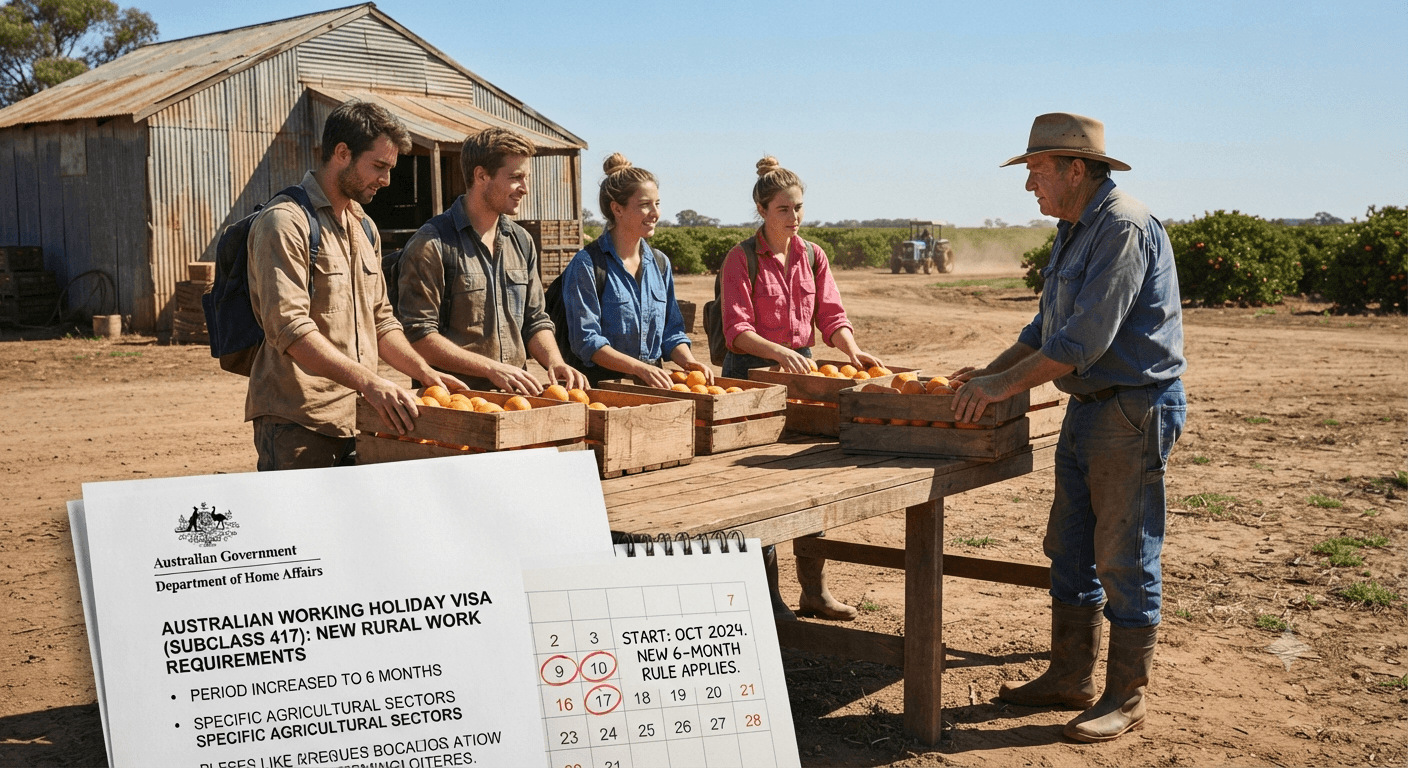


Sydney: Australia will require tourists on working holiday visas to complete additional rural work to qualify for a second year in the country, as the government seeks to address labour shortages in agriculture, tourism and hospitality while managing migration levels.
The government announced the change on Tuesday, November 17, increasing the required period of regional work from three months to four months for eligible working holiday makers seeking to extend their stay for a second year.
The move affects Australia’s Working Holiday Maker programme, which allows young people from more than a dozen countries to travel and work in the country. The programme is popular among international backpackers who take up temporary jobs while exploring Australia.
The decision comes amid growing debate over migration levels and the availability of workers in regional areas. While the government has introduced measures to manage migration, rural employers continue to depend on overseas visitors to fill seasonal vacancies.
Home Affairs Minister Tony Burke said working holiday makers played an important role in the Australian economy, particularly in industries that rely on temporary workers.
“Working holiday makers make an important contribution to our economy, especially in agriculture, tourism and hospitality and in regional Australia,” Burke said.
“But when demand grows too fast, the government needs the tools to manage the program properly,” he added.
Rural work requirement increased to four months
Under the revised rules, working holiday visa holders will have to complete four months of eligible rural or regional work to qualify for a second year in Australia. The requirement currently stands at three months.
The programme is designed to allow young travellers to earn money during their stay while helping employers in sectors that face seasonal labour demands.
Agriculture is among the industries most dependent on this workforce. Farms and regional businesses often need additional workers during harvesting periods and other seasonal activities, when finding sufficient local labour can be challenging.
Backpackers also take up jobs in tourism and hospitality, including positions in hotels, restaurants and other service businesses. Some work as nannies, while others find temporary employment in retail and related sectors.
The additional month of required work means applicants will have to spend longer in eligible regional employment before they can qualify for the second-year visa extension.
The government has not indicated in the supplied announcement that the basic one-year visa arrangement will change. The announced adjustment concerns the work requirement for those seeking to remain for a second year.
Working Holiday Maker programme explained
Australia’s Working Holiday Maker programme is open to eligible young people aged between 18 and 35, depending on the applicable country-specific arrangements.
The programme generally provides an initial one-year visa, allowing participants to travel around Australia and undertake temporary employment during their stay.
Eligible participants can apply for a second year if they complete the required period of regional work. Further regional employment can also provide a pathway to a third year, subject to the programme’s conditions.
The scheme has become a popular option for young international travellers who want to experience life in Australia while earning money to support their stay.
For employers, the programme provides access to a mobile workforce that can take up temporary positions in locations where recruitment is difficult. This is particularly relevant to farming communities, where labour requirements can rise sharply during planting and harvesting seasons.
The increase from three to four months is expected to affect the length of time backpackers need to spend undertaking qualifying work before applying for a second year.
Rural employers depend heavily on backpackers
Australia’s regional employers have relied on working holiday makers to fill vacancies across several industries. The agricultural sector, in particular, has repeatedly raised concerns about labour availability during critical periods.
Seasonal farm work can involve physically demanding tasks and employment opportunities that are concentrated in particular locations and months. Employers often depend on temporary workers to meet these changing requirements.
Tourism and hospitality businesses in regional areas also recruit backpackers for short-term roles. Hotels, restaurants and other service providers may need additional staff during busy travel periods.
The increased work requirement comes as the government attempts to balance its migration policies with the needs of businesses that depend on overseas labour.
The policy change may require backpackers to spend more time in regional employment before securing a second-year extension. For employers, the longer requirement could potentially encourage participants to remain in rural areas for an additional period, although the actual effect will depend on how workers respond to the revised conditions.
UK backpackers remain exempt from rural work rules
The existing programme includes a separate arrangement for backpackers from the United Kingdom.
Under a carve-out agreed in 2021 by the previous governments of Australia and the UK, British working holiday makers are not subject to the same rural work requirements to qualify for visa extensions.
The exemption has contributed to an increase in British arrivals under the programme, according to the report, while regional employers have continued to face shortages of workers.
The difference in requirements has also drawn attention to how country-specific arrangements can affect the distribution of temporary workers across Australia’s labour market.
While the latest announcement increases the rural work requirement for affected participants, the existing UK exemption remains an important distinction within the programme.
Australia tightens migration settings amid labour concerns
The revised working holiday rules form part of a wider effort by the Australian government to manage migration levels.
Authorities have already announced restrictions on foreign students bringing partners and children to Australia while they study. The government has also introduced a ballot system for backpackers as part of changes to the programme.
These measures come amid public debate over the number of people entering the country and the pressures associated with high migration levels.
At the same time, the government faces competing demands from employers who rely on overseas workers to fill vacancies. Agriculture, tourism and hospitality businesses in regional areas are among those that have highlighted their dependence on temporary labour.
The latest decision reflects this balancing act. While the government wants to manage the working holiday programme, it also recognises the contribution backpackers make to industries that need seasonal and temporary staff.
What the change means for backpackers
For eligible working holiday makers planning to stay in Australia for a second year, the main change is the additional month of required regional work.
Instead of completing three months, they will need to undertake four months of qualifying employment under the revised requirement.
The change could influence how backpackers plan their travel, employment and visa applications. Those hoping to extend their stay will need to account for the longer work period when arranging jobs in regional areas.
For rural employers, the policy comes as businesses continue to seek workers for seasonal roles. Whether the additional requirement will ease shortages will depend on the number of backpackers taking up eligible jobs and the availability of workers across different regions.
Australia’s Working Holiday Maker programme remains an important link between international travel and temporary employment. The government’s latest announcement changes one of its key conditions, while keeping the broader objective of connecting young travellers with work opportunities across the country.