







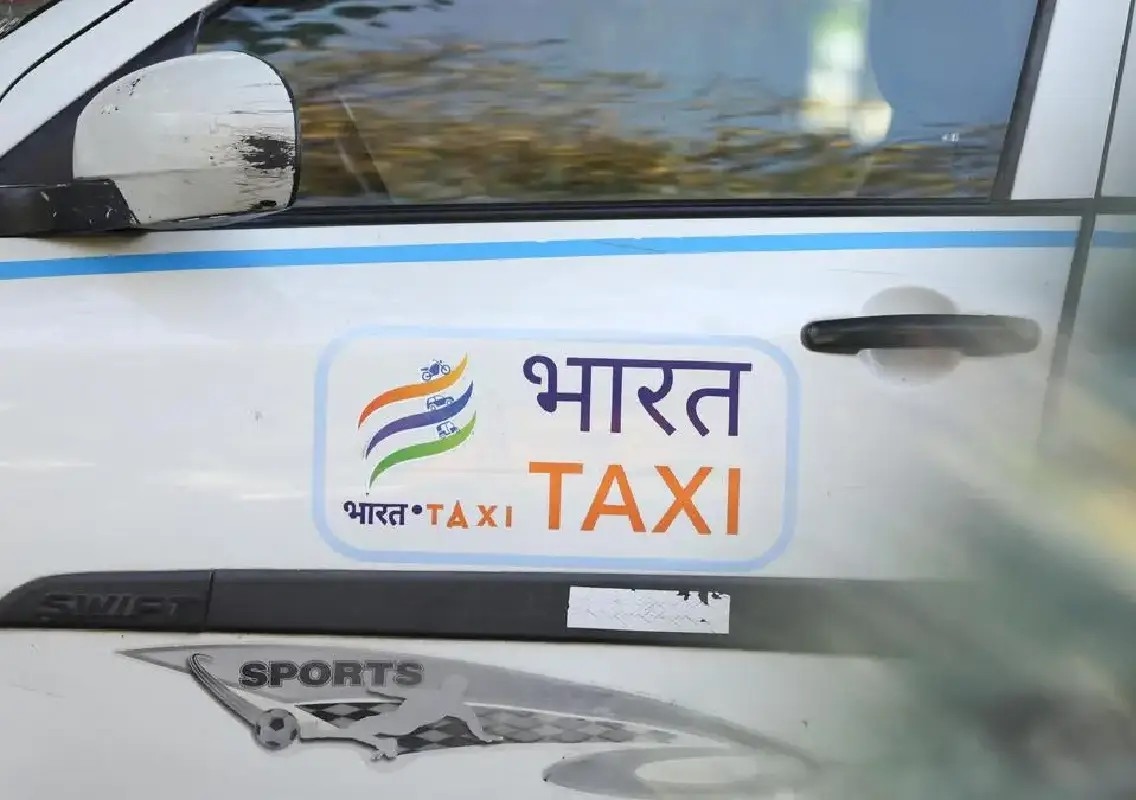


Bharat Taxi, the ride-hailing platform launched under the Ministry of Cooperation-backed cooperative model, is aiming to expand its services to 100 cities and towns across India by the end of the 2026-27 financial year.
The platform, formally launched by Union Home and Cooperation Minister Amit Shah in February this year, is positioning itself as an alternative to private ride-hailing aggregators through a cooperative ownership structure.
Expansion plans underway
According to officials, Bharat Taxi currently operates in Delhi-NCR, Gujarat, Lucknow, Chandigarh, Jaipur and Mumbai, and is actively onboarding drivers in several new markets.
The platform plans to expand to 100 cities and towns during the current financial year, with a particular focus on tier-2 urban centres.
Driver registration is already underway in Kanpur and Pune, where commercial operations are expected to begin by July or August.
The next phase of expansion is expected to include:
- Ranchi
- Patna
- Bhubaneswar
- Guwahati
Services in these cities are likely to commence between August and September.
A subsequent expansion phase scheduled between October and December is expected to cover:
- Bhopal
- Indore
- Nagpur
- Kolkata
Over 4.5 lakh drivers onboarded
Bharat Taxi has significantly expanded its driver network since launch.
According to company officials, around 4.5 lakh drivers, referred to as “Sarathis”, have already been onboarded across operational markets.
Mumbai, one of the platform’s newest markets, has reportedly seen nearly 30,000 drivers register on the platform within a short period.
Focus on tier-2 cities
Officials said smaller cities form a key part of Bharat Taxi’s long-term growth strategy.
The platform expects strong demand in tier-2 cities, where two-wheelers often serve as the primary mode of transport.
“Launching services in tier-2 cities will result in easier access to transport services,” an official associated with the platform said.
Inter-city rides on the horizon
As its network grows, Bharat Taxi is also exploring inter-city ride services.
One of the first such routes under consideration is Mumbai-Pune, which could be launched once operations are fully established in both cities.
Fleet composition
The platform currently operates a mixed fleet comprising:
- Four-wheelers: Nearly 50 per cent
- Two-wheelers: Around 28 per cent
- Auto-rickshaws: Around 22 per cent
This diversified fleet is expected to help cater to different transportation needs across urban and semi-urban markets.
Cooperative model sets platform apart
Bharat Taxi operates under Sahakar Taxi Cooperative Limited, a multi-state cooperative society registered under the Multi-State Cooperative Societies Act, 2002.
Unlike conventional ride-hailing companies, the platform does not charge drivers a commission on rides.
Instead, it collects a nominal subscription fee or per-ride service fee to meet operational expenses.
Under the cooperative structure, drivers become members and part owners of the organisation, enabling them to participate in profit-sharing and gain representation in the cooperative’s management.
Challenging established players
India’s ride-hailing market is currently dominated by major private aggregators. Bharat Taxi hopes its cooperative ownership model, driver-centric policies and zero-commission framework will help it attract drivers and customers alike.
As the platform enters new cities and expands its network, industry observers will be closely watching whether the cooperative approach can successfully compete with established players in India’s rapidly growing mobility sector.