







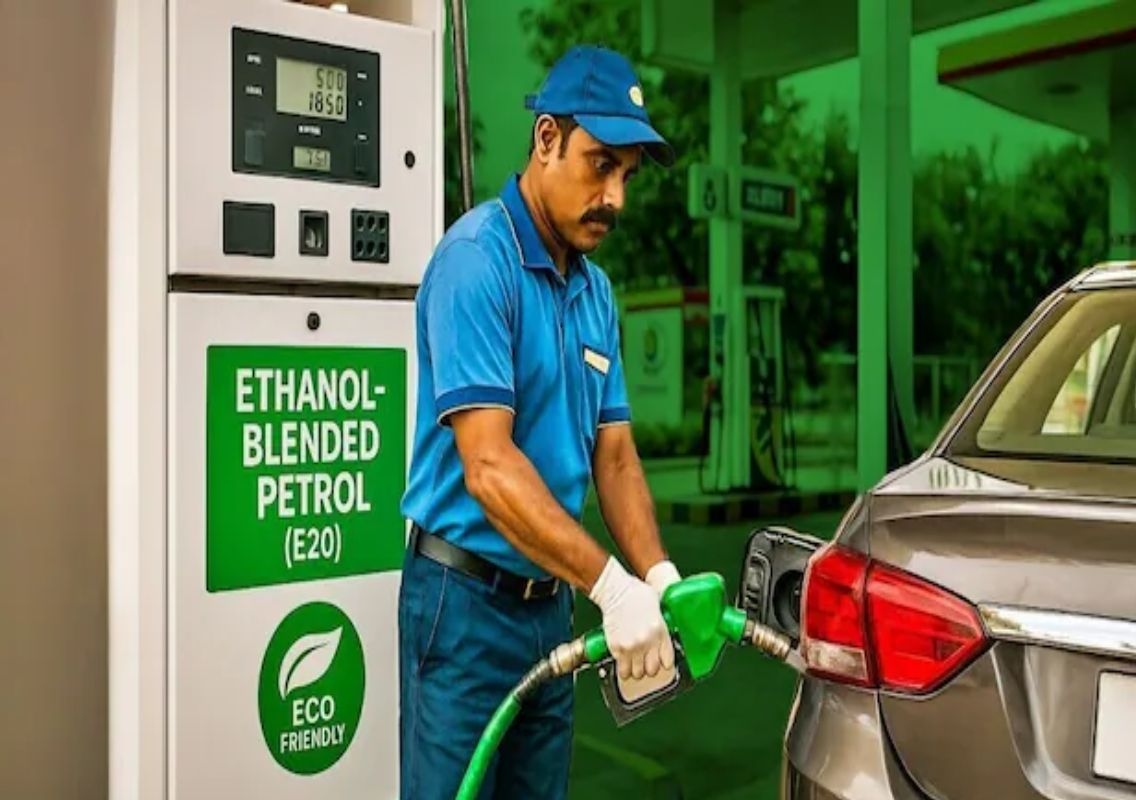


New Delhi: India’s rapid transition to ethanol-blended fuel has triggered fresh concerns among vehicle owners, with many reporting that the shift to E20 petrol may be quietly increasing their monthly fuel expenses. A recent survey by Local Circles indicates that nearly half of petrol vehicle owners, particularly those with older models, have observed a noticeable drop in mileage since the rollout of E20 fuel in 2025.
The findings have added a consumer perspective to India’s ambitious ethanol-blending programme, which has been widely promoted by the government as a key strategy to reduce crude oil imports, cut foreign exchange outflow and support domestic agriculture.
Survey flags significant mileage drop
According to the LocalCircles survey, which collected responses from over 24,000 vehicle owners across the country, a substantial number of respondents reported reduced fuel efficiency after switching to E20 petrol.
Among those who noticed a decline, nearly 25% claimed their vehicle mileage had dropped by more than 20%. Another 7% reported a reduction between 15% and 20%, while about 13% experienced a fall in the range of 10% to 15%.
These figures stand in contrast to earlier official estimates, which suggested that the shift to E20 fuel would result in only a marginal decrease in efficiency, typically between 1% and 6%. The gap between projected and reported outcomes has now become a focal point of discussion among consumers and industry observers.
For households already dealing with high fuel prices, even a modest decline in mileage can translate into a noticeable rise in monthly expenses. This is especially relevant for middle-class families that depend on two-wheelers and petrol cars for daily commuting.
Older vehicles under greater stress
A key insight from the survey is that most complaints are coming from owners of vehicles manufactured before 2023. This is significant because many of these vehicles were originally designed to run on lower ethanol blends such as E5 or E10.
Ethanol has a lower energy density compared to conventional petrol, which means engines may need to burn more fuel to deliver the same performance. This can directly impact mileage.
Additionally, ethanol has different chemical properties that may affect vehicle components over time. It tends to absorb moisture more easily and can interact with certain rubber and plastic parts used in older fuel systems. As a result, vehicles not specifically designed for higher ethanol blends may face performance issues or increased wear and tear.
Repair concerns add to consumer anxiety
Beyond mileage, the survey also highlights concerns related to vehicle maintenance. Nearly 29% of respondents reported experiencing unusual wear and tear or mechanical issues after using E20 fuel.
Some users mentioned problems involving fuel lines, carburettors and engine performance. While these observations are based on user experiences rather than controlled technical studies, they contribute to growing unease among vehicle owners.
For many consumers, the possibility of higher repair costs alongside reduced fuel efficiency raises questions about the overall cost of ownership. This is particularly relevant for those who rely on older vehicles and may not have immediate plans to upgrade.
India’s ethanol strategy and long-term goals
The government’s push for ethanol blending is rooted in long-term economic and strategic objectives. India currently imports nearly 87% of its crude oil requirements, making it vulnerable to global price fluctuations and geopolitical uncertainties.
By increasing the proportion of ethanol in petrol, the government aims to reduce dependence on imported oil, conserve foreign exchange and provide additional income opportunities for farmers engaged in sugarcane and maize production.
The E20 target was achieved ahead of schedule, reflecting the pace of policy implementation. Authorities are now exploring even higher blending levels, including E22, E25, E30 and eventually E85 in certain segments.
Automobile manufacturers have also been encouraged to produce vehicles compatible with higher ethanol blends, signalling a long-term shift in fuel standards.
The consumer dilemma
While policymakers view ethanol blending as a necessary transition for energy security, consumers are primarily concerned about immediate financial implications. For many, the key question is whether their vehicles now consume more fuel than before.
If mileage declines while petrol prices remain high, monthly fuel bills are likely to increase. Coupled with potential maintenance issues, this could make older petrol vehicles more expensive to operate over time.
There are also broader implications for resale value and vehicle lifespan. As fuel standards evolve, vehicles not designed for higher ethanol blends may face reduced demand in the second-hand market.
Conclusion
The LocalCircles survey underscores a growing disconnect between policy goals and consumer experience. While ethanol blending offers clear macroeconomic benefits, its impact at the individual level is becoming a subject of debate.
As India continues to expand its ethanol programme, addressing consumer concerns around mileage, maintenance and compatibility will be crucial. Transparent communication, technical studies and possible support measures for owners of older vehicles may help bridge the gap between ambition and acceptance.
For now, many vehicle owners remain watchful, as the real cost of E20 petrol is increasingly being measured not just at the pump, but in their monthly budgets.