







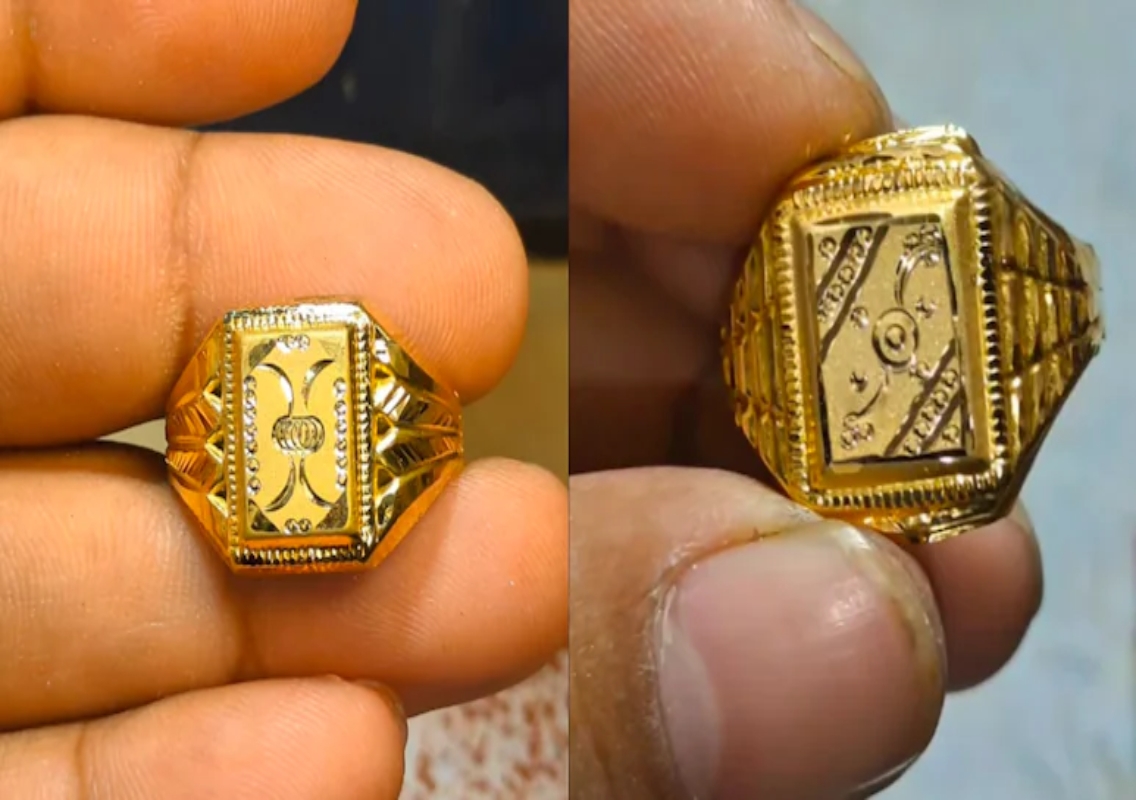


New Delhi: A man who reportedly spent nearly three years saving money to buy an iPhone ended up purchasing two gold rings instead, following his wife’s advice. Three years later, the jewellery was reportedly valued at around ₹1.14 lakh, compared with its original purchase price of ₹49,770, according to a viral social media post reported by NDTV Profit.
The story has attracted attention online because it contrasts the potential appreciation of gold with the depreciation typically associated with consumer electronics. The post claims that the man could not save enough to purchase the smartphone despite years of effort. His wife suggested buying gold with the money he had accumulated, and he eventually purchased two rings.
When he reportedly returned to the jewellery shop three years later to check their value, he discovered that the rings were worth more than twice their original price.
However, the account remains an unverified social media anecdote. The purchase, valuation and circumstances have not been independently established, and the reported figures should not be interpreted as proof that gold jewellery will deliver similar returns for every buyer.
Gold rings reportedly rise from ₹49,770 to ₹1.14 lakh
According to the viral post shared on X by a user identified as Lakshmi, the two gold rings were purchased for approximately ₹49,770. Their reported value after three years was around ₹1.14 lakh.
Based on these figures, the difference between the purchase price and the reported current value is ₹64,230.
The reported appreciation can be summarised as follows:
- Original purchase price: ₹49,770
- Reported value after three years: ₹1,14,000
- Difference in value: ₹64,230
- Approximate increase: 129%
- Value compared with original price: Around 2.29 times
These calculations are based entirely on the figures mentioned in the post. They do not establish the amount the owner would actually receive if the rings were sold.
The distinction matters because a jeweller’s quoted value may reflect the prevailing price of gold, while the amount paid when the jewellery was purchased may have included making charges, applicable taxes and other costs. The final resale proceeds can also depend on purity, weight, deductions and the jeweller’s buying policy.
The reported increase nevertheless illustrates why gold often attracts attention as a store of value, particularly during periods when its market price rises sharply.
Why gold and smartphones have different financial outcomes
The story draws a comparison between gold and an iPhone, two purchases that serve very different purposes.
A smartphone is primarily a consumer product. Its value depends on its condition, age, functionality, software support and demand in the second-hand market. New models are released regularly, and older devices generally lose resale value as technology advances.
Gold, on the other hand, is a globally traded precious metal whose price can rise or fall depending on several factors. These include international demand, currency movements, interest rates, central-bank purchases, geopolitical uncertainty and investor sentiment.
As a result, a gold purchase can appreciate over time, while an electronic device typically depreciates. However, neither outcome is guaranteed. Gold prices can decline, and the financial benefit of holding jewellery depends on the purchase cost and the amount ultimately received on resale.
The viral story therefore highlights a possible difference between spending on a product that loses value and buying an asset that may appreciate. It does not mean that purchasing gold is always preferable to buying a smartphone.
A phone can also provide years of practical value through communication, work, education and entertainment. Whether it is a worthwhile purchase depends on the buyer’s needs, budget and intended use.
Jewellery is not the same as investment-grade gold
One important consideration is that gold jewellery and gold purchased specifically for investment purposes have different cost structures.
When a person buys a ring or necklace, the price generally includes the value of the gold as well as making charges and applicable taxes. These additional expenses may not be recovered when the jewellery is sold.
Jewellers commonly calculate buyback values using the weight and purity of the gold, together with their applicable valuation policies. Stones, non-gold components and deductions may also affect the final amount.
For this reason, the difference between the original bill and a later quoted value does not necessarily represent the owner’s actual profit.
People considering gold as an investment may also compare jewellery with other options, such as gold exchange-traded funds, gold mutual funds or sovereign gold bonds where available and applicable. Each option has different costs, risks, liquidity considerations and tax treatment.
The appropriate choice depends on an individual’s financial goals and circumstances. Jewellery may have personal, cultural or sentimental value in addition to its material worth, but those benefits should be separated from calculations of financial return.
What savers can learn from the viral story
The account has resonated with social media users because it presents a familiar financial dilemma: whether to spend accumulated savings on a desired product or put the money towards something that might retain or increase its value.
A useful lesson is to distinguish between essential spending, discretionary purchases and long-term financial goals. Before buying an expensive gadget, consumers can consider whether their existing device still meets their needs and whether the purchase would interfere with emergency savings or other priorities.
At the same time, saving money solely to buy an asset is not automatically a sound investment strategy. Buyers should understand the product, its costs and the risks involved rather than relying on a single success story.
Gold can play a role in a diversified financial plan, but concentrating savings in one asset exposes a person to its price fluctuations. Maintaining accessible emergency funds and spreading investments across suitable asset classes can help manage financial risks.
The reported experience also highlights the importance of discussing major purchases with family members. In this case, the wife’s suggestion reportedly led to a different use of the money. However, the outcome should be understood in the context of the gold price over that particular period, rather than as a universal formula for wealth creation.
A striking story, but not a guaranteed investment strategy
The reported rise in the value of two gold rings from ₹49,770 to ₹1.14 lakh has made the story an engaging example of how an alternative purchase may turn out differently from an intended consumer purchase.
Yet the figures have not been independently verified, and the actual resale proceeds remain unknown. The case also does not account for jewellery-making charges, taxes or other transaction costs that could reduce the final return.
For consumers, the broader takeaway is to make purchases according to their needs and financial capacity, while evaluating investments on evidence rather than viral anecdotes. Gold may offer protection or diversification in some circumstances, but its price can fluctuate, and jewellery does not guarantee a profit.
Ultimately, the story is less a verdict on whether gold is always better than an iPhone and more a reminder that financial decisions can have consequences that become visible only years later.