







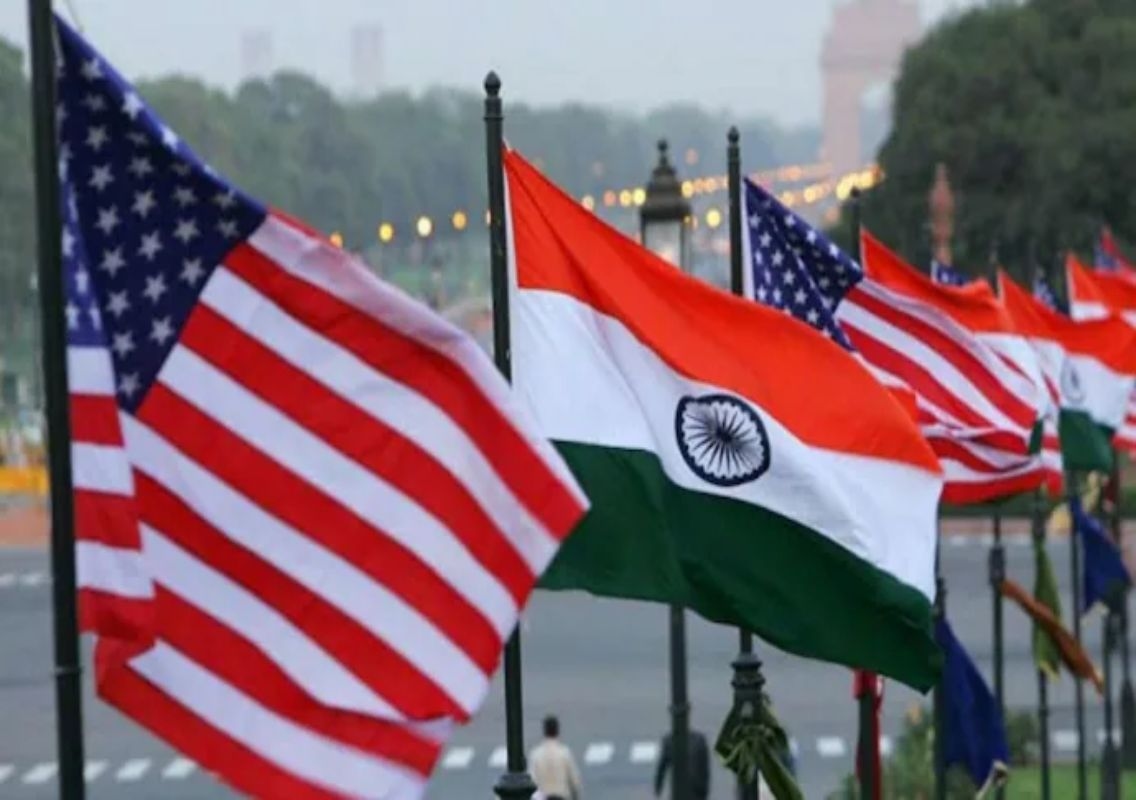


New Delhi: Fresh trade negotiations between India and the United States began in the national capital on Tuesday, with a potentially contentious issue taking centre stage—Section 301 of the US Trade Act. While both sides are believed to be close to finalising the first phase of a bilateral trade agreement, India is seeking firm assurances that future American tariff actions will not dilute the benefits of the deal.
The talks, involving Indian officials and a US delegation led by Brendan Lynch, come at a time when optimism around a trade pact is high. Commerce Minister Piyush Goyal recently stated that nearly 99% of discussions have already been completed. However, the remaining gaps—particularly around trade enforcement mechanisms—could prove decisive.
What is Section 301 and why it matters
At the heart of the current negotiations lies Section 301, a powerful enforcement tool under US trade law. It allows the Office of the United States Trade Representative to investigate countries suspected of unfair trade practices that may harm American businesses.
If such practices are identified, the US can impose additional tariffs or take other restrictive measures. Unlike multilateral dispute mechanisms, Section 301 enables unilateral action, making it a source of concern for trading partners worldwide.
Historically, the provision has been used to address issues ranging from intellectual property violations and market access barriers to subsidies and forced technology transfers. Its broad scope and unilateral nature make it one of Washington’s most potent trade instruments.
India’s concerns over future tariff risks
India’s primary concern is not limited to any ongoing investigation but centres on future uncertainty. Following legal setbacks to reciprocal tariff measures during the tenure of Donald Trump, the US administration initiated fresh probes under Section 301 targeting multiple trading partners, including India.
These investigations open the door for potential tariff impositions independent of any bilateral agreement. For New Delhi, this raises a critical question: what value does a trade deal hold if its benefits can be offset by subsequent tariffs?
As a result, India is pushing for safeguards to ensure that any tariffs arising from Section 301 actions do not undermine negotiated concessions. Trade officials are expected to discuss tariff structures, the scope of ongoing investigations, and mechanisms to protect Indian exports.
Impact on Indian exporters and industry
The United States remains one of India’s largest export destinations, with sectors such as pharmaceuticals, engineering goods, textiles, chemicals, gems and jewellery, and IT services heavily reliant on American markets.
Any additional tariffs could erode competitiveness, making Indian goods more expensive compared to those from rival economies. This is particularly significant in a global environment where supply chains are shifting and companies are actively diversifying manufacturing bases.
For Indian exporters, predictability is as important as market access. Uncertainty over tariffs could influence long-term investment decisions, production planning, and export strategies. Industry stakeholders are closely monitoring the outcome of these talks, given their far-reaching implications.
Competition beyond bilateral ties
An often-overlooked dimension of the negotiations is India’s competition with other Asian economies. Countries such as Bangladesh, Pakistan and Sri Lanka are also vying for favourable access to global markets.
India is therefore not just negotiating with the United States but also positioning itself against regional competitors. Securing preferential tariff treatment could strengthen its appeal as a manufacturing hub, especially for global firms seeking alternatives in Asia.
Conversely, if competing nations receive similar or better tariff concessions, India’s relative advantage could diminish. This makes the negotiations critical not only for immediate trade gains but also for long-term economic positioning.
Can a trade deal offer protection?
One of the key questions surrounding the talks is whether a bilateral agreement can shield India from future tariff actions under Section 301. Reports suggest that an interim deal could potentially prevent the imposition of additional duties linked to ongoing investigations, even if those probes continue.
Such an arrangement would provide a degree of certainty to exporters and investors, reinforcing confidence in the trade relationship. It could also signal a willingness on both sides to balance enforcement concerns with broader economic cooperation.
Senior US officials, including Jamieson Greer and Ambassador Sergio Gor, have indicated that a deal could be finalised in the coming weeks or months, suggesting steady progress in negotiations.
Conclusion
As India and the United States move closer to sealing a trade agreement, Section 301 has emerged as a defining issue that could shape the final contours of the deal. For New Delhi, the objective is clear: secure meaningful market access while ensuring that future tariff actions do not erode negotiated gains.
The outcome of these talks will not only influence bilateral trade but also determine India’s competitiveness in the global market. In that sense, the stakes extend far beyond tariffs, touching upon economic strategy, investor confidence, and long-term growth prospects.