







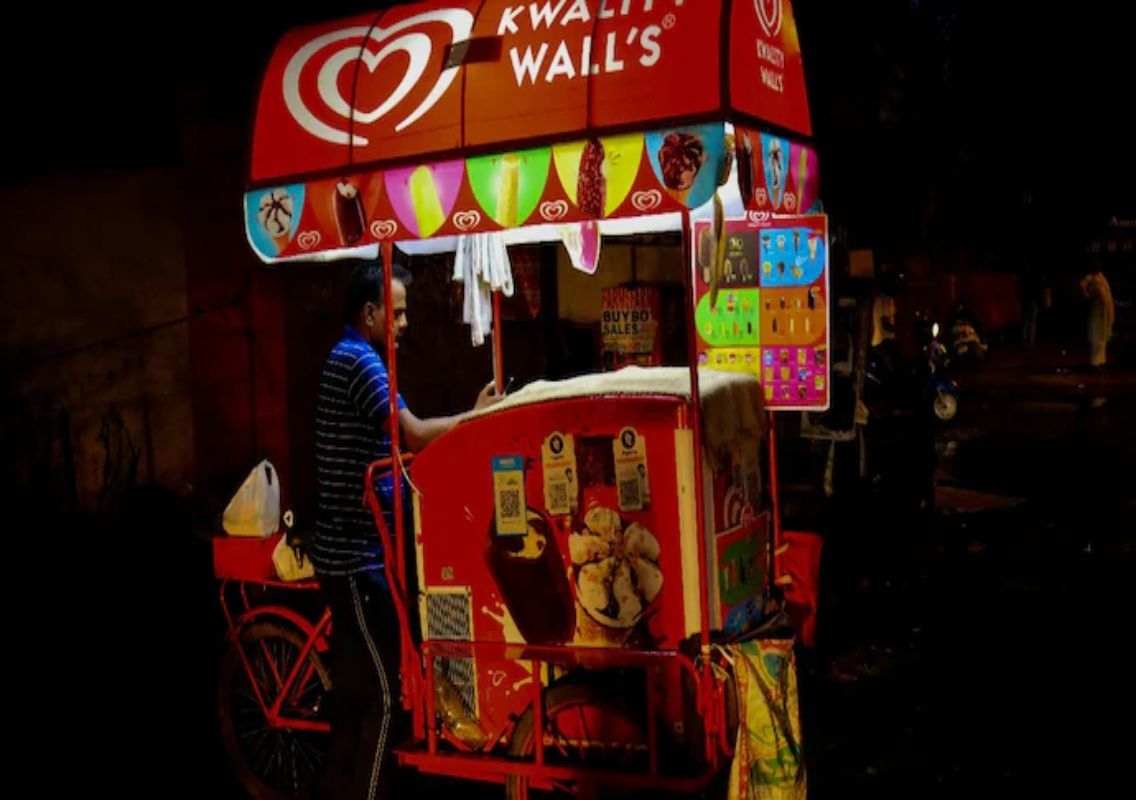


Mumbai: Kwality Wall’s is undertaking a major transformation in India as it pivots from frozen desserts made with vegetable fats to fully dairy-based ice creams. The move is part of a broader strategy to regain market share in a highly competitive segment dominated by strong local players.
The shift comes at a time when Indian consumers are increasingly favouring dairy-based products, viewing them as healthier and superior in quality. The company believes aligning its portfolio with these preferences will help it strengthen its position in the market.
Strategic push led by global leadership
According to Peter ter Kulve, global CEO of The Magnum Ice Cream Company, India has emerged as a priority market following the separation of the ice cream business from Unilever.
Speaking about the transition, Kulve noted that the decision to move entirely towards dairy products was driven by long-term vision rather than immediate financial calculations. He described it as a “principled decision” aimed at building a sustainable and premium product portfolio in India.
This renewed focus signals a significant shift from earlier years, when the brand had comparatively limited investments and attention in the Indian market.
Overhaul across product and pricing strategy
Kwality Wall’s is implementing sweeping changes across its operations, including product development, pricing, manufacturing and supply chain systems.
Nearly half of its product portfolio is expected to be dairy-based in 2026, with the transition set to be largely completed by 2027. This phased approach allows the company to gradually adapt its infrastructure and consumer base to the new offerings.
In a bid to attract more price-sensitive consumers, the company has also reduced prices in certain categories by up to 30 per cent. This move is aimed at making dairy-based ice creams more accessible, especially in comparison to affordable alternatives offered by competitors.
Additionally, Kwality Wall’s is expanding its range of local flavours such as kulfi and kesar bhog. These flavours are tailored to Indian tastes and are expected to resonate strongly with regional consumers, further strengthening the brand’s appeal.
Strengthening supply chain and distribution
A key component of the company’s strategy is enhancing its cold-chain infrastructure. Kwality Wall’s plans to deploy nearly 10 lakh cold cabinets across India, significantly improving product availability and storage capabilities.
This expansion is crucial in a country like India, where maintaining product quality in varying climatic conditions is a major challenge. A robust cold-chain network will enable the company to reach deeper into smaller towns and rural markets, which remain largely untapped.
The investment in logistics and infrastructure also reflects the company’s long-term commitment to the Indian market.
Facing strong competition from domestic players
Despite its global presence, Kwality Wall’s has faced stiff competition in India, particularly from Amul and several regional brands. These competitors have gained significant market share by offering dairy-based ice creams at competitive prices.
Kulve acknowledged that the company had lost ground over the years as rivals expanded rapidly and built strong local connections. He specifically praised Amul for its ability to deliver quality dairy products at affordable prices, a combination that has resonated well with Indian consumers.
The challenge for Kwality Wall’s now lies in matching this balance while leveraging its global expertise and brand strength.
India seen as future growth engine
Currently valued at around $200 million for the company, the Indian market holds immense growth potential. Kulve expressed confidence that India could eventually become the largest market for the business globally.
This optimism is based on several factors, including rising disposable incomes, increasing urbanisation and a growing preference for premium food products. The shift towards dairy-based ice creams aligns well with these trends, positioning the company for long-term success.
Conclusion
Kwality Wall’s ambitious transition to dairy-based ice creams marks a decisive step towards reclaiming its position in India’s competitive frozen dessert market. By focusing on product quality, competitive pricing and improved distribution, the company aims to reconnect with Indian consumers.
However, success will depend on how effectively it competes with established domestic players and adapts to local preferences. If executed well, the strategy could not only help Kwality Wall’s regain lost market share but also establish India as its most important growth market in the years ahead.