







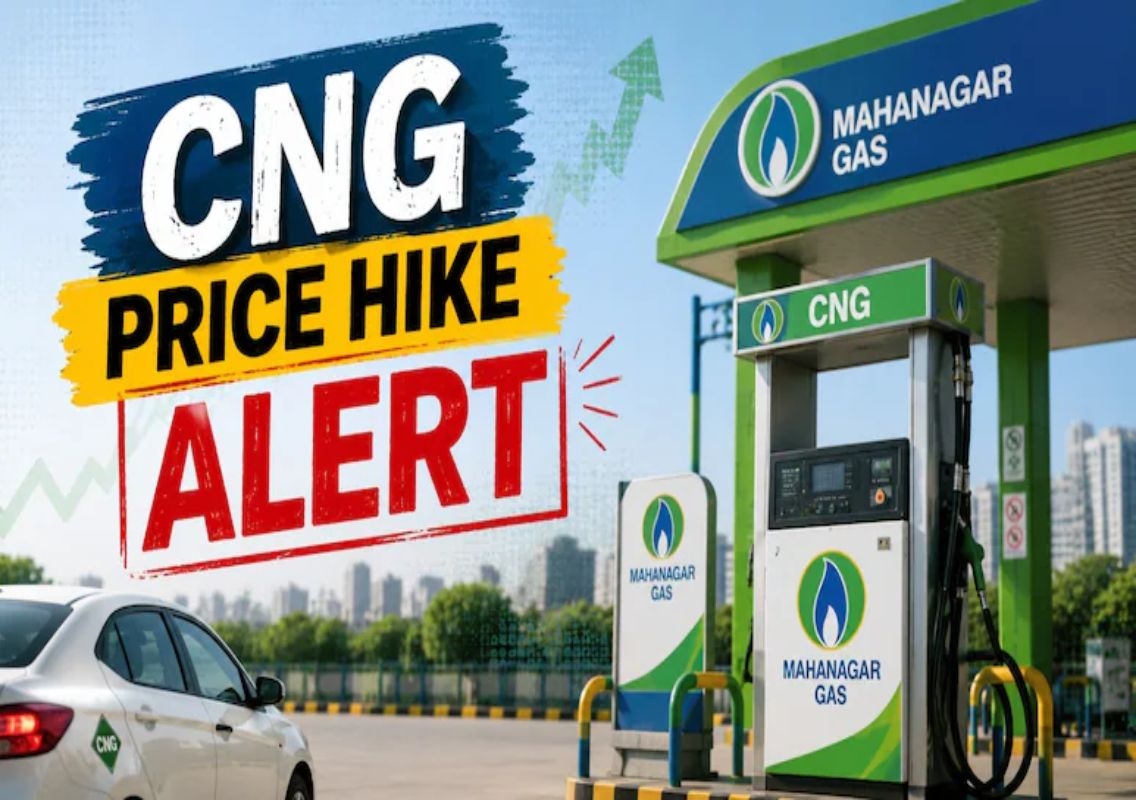


Mumbai: Mahanagar Gas Ltd. (MGL) has increased the retail price of compressed natural gas (CNG) by Rs 2 per kg in Mumbai, taking the price to Rs 88 per kg. The company has also raised the price of domestic piped natural gas (PNG) by Rs 1 per standard cubic metre (SCM), with both revisions effective from September 1.
MGL attributed the price revision to a significant increase in input gas costs amid the ongoing crisis in the Middle East. The company said higher international-index-linked gas prices, rising CNG demand and greater dependence on imported spot regasified liquefied natural gas (RLNG) have increased the cost of supplying gas to consumers.
The latest hike comes at a time when energy markets are facing renewed uncertainty due to developments in West Asia. Natural gas prices and supply availability have come under pressure, prompting city gas distribution companies to reassess retail prices.
The increase in Mumbai follows a similar move by Indraprastha Gas Ltd. (IGL), which raised CNG prices across Delhi-NCR by Rs 3.89 per kg from August 29.
CNG price in Mumbai rises to Rs 88 per kg
Following MGL’s latest revision, CNG will cost Rs 88 per kg in Mumbai, compared with the earlier price of Rs 86 per kg.
CNG is widely used by private motorists, taxis, auto-rickshaws, buses and commercial vehicles across Mumbai and surrounding areas. The Rs 2 per kg increase is therefore likely to raise transportation expenses for both individual consumers and commercial operators.
The impact on monthly fuel expenditure will depend on the distance travelled and the vehicle’s fuel efficiency.
For commercial drivers and fleet operators, however, even a moderate increase in CNG prices can have a noticeable effect on operating costs because fuel represents a significant portion of daily expenses.
MGL said the revision had become necessary because of higher input gas costs.
Domestic PNG price increases by Rs 1 per SCM
Along with CNG, MGL has increased the price of domestic PNG by Rs 1 per SCM.
PNG is supplied directly to households through pipelines and is primarily used for cooking. Unlike LPG cylinders, PNG is billed according to the quantity of gas consumed.
The revision will therefore affect households connected to MGL’s domestic PNG network in Mumbai.
While the increase is smaller in absolute terms than the CNG hike, households with higher gas consumption will see a corresponding increase in their monthly energy bills.
The company has linked the revision to the broader increase in input gas costs caused by international market conditions.
Middle East crisis pushes up input gas costs
MGL said the ongoing crisis in the Middle East has resulted in a significant increase in input gas prices linked to international indices.
The company explained that the CNG segment is experiencing strong demand, while a major portion of the gas required for CNG is being sourced through imported spot RLNG.
RLNG refers to natural gas that has been imported in liquefied form and subsequently converted back into gaseous form for distribution.
The increased dependence on spot purchases means that city gas distributors can become more exposed to international price movements.
When spot RLNG prices rise, the cost of procuring gas can increase significantly, putting pressure on the margins of companies supplying CNG and PNG.
Strong CNG demand adds to pressure
MGL has also highlighted strong demand for CNG as one of the reasons behind the higher requirement for imported gas.
CNG consumption tends to increase alongside economic activity, particularly as commercial transportation, public mobility and other sectors expand.
When domestic gas supplies are insufficient to meet the growing requirement, distributors have to rely more heavily on imported spot LNG.
MGL said the combination of stronger CNG demand and higher spot RLNG prices has resulted in a considerable increase in the input cost for the CNG segment.
The company has therefore revised prices to partially account for the higher procurement cost.
Imported spot RLNG becomes more important
The role of imported spot RLNG is particularly important in the current situation.
Natural gas supplied to city gas networks can come from different sources, including domestic production and imported supplies. When domestic availability does not adequately meet demand, additional gas may have to be purchased from international markets.
Spot purchases are particularly sensitive to changes in global prices.
The West Asia crisis has created additional uncertainty in global energy markets, making imported gas more expensive and potentially increasing the cost of supplying CNG.
MGL’s latest decision reflects this pressure.
Delhi-NCR CNG prices also increased
MGL’s price revision in Mumbai follows a significant increase announced by IGL for Delhi-NCR.
IGL raised CNG prices by Rs 3.89 per kg from August 29.
Following the revision, the retail CNG price in Delhi increased to Rs 86.98 per kg, compared with Rs 83.09 per kg earlier.
The Delhi-NCR increase was also linked to elevated spot LNG prices and renewed disruptions associated with the West Asia crisis.
IGL said the revision was required to partially offset the increase in input gas costs while continuing to maintain reliable supplies.
Fuel costs remain under pressure
The simultaneous price increases in Mumbai and Delhi-NCR indicate the growing pressure faced by city gas distribution companies.
The companies operate within a changing energy environment in which demand, domestic gas availability and international prices all influence procurement costs.
CNG has become an important transport fuel in India’s major cities, while PNG has expanded as a household cooking fuel in areas connected to city gas networks.
Any significant increase in the cost of imported gas can therefore have a direct impact on consumers.
The latest revisions also demonstrate how geopolitical events outside India can influence domestic fuel prices.
Impact on Mumbai motorists
For CNG vehicle owners in Mumbai, the revised price means paying an additional Rs 2 for every kilogram of fuel purchased.
The financial impact will be higher for people who use their vehicles extensively.
Auto-rickshaw and taxi drivers could face greater pressure because their vehicles often cover significantly more kilometres each day than private cars.
Fleet operators may also need to reassess fuel budgets following the latest revision.
Whether the higher CNG cost is passed on to passengers through fares will depend on regulatory decisions and market conditions.
Impact on households using PNG
Households using domestic PNG will also see higher energy costs following the Rs 1 per SCM increase.
The actual effect on a household’s monthly bill will depend on its consumption.
Families using gas primarily for cooking may see a relatively limited increase compared with commercial users, but sustained increases in energy prices can add to household expenses over time.
PNG remains an important part of the urban energy mix because it provides a continuous supply of cooking gas through pipelines, eliminating the need for cylinder storage and replacement.
India’s growing gas demand
India’s demand for natural gas has been increasing across transportation, household, industrial and commercial sectors.
CNG has expanded significantly as an alternative transport fuel, while PNG has gained wider adoption in cities with established distribution networks.
As demand increases, ensuring adequate gas supplies becomes increasingly important.
Domestic production can meet part of this demand, but imported LNG remains necessary to bridge supply gaps.
This makes India sensitive to international LNG prices and global supply disruptions.
Geopolitical developments remain a key factor
The latest price revisions underline the connection between global geopolitical developments and domestic energy costs.
The West Asia crisis has affected international energy markets by increasing uncertainty around supplies and prices.
For companies such as MGL and IGL, higher international procurement costs can eventually require adjustments to retail prices.
Consumers therefore remain exposed to developments in global energy markets even when they use locally distributed fuels such as CNG and PNG.
Companies seek to maintain reliable supplies
Despite raising prices, MGL and IGL have stressed the importance of maintaining reliable gas supplies.
MGL said the higher price was necessary because it now has to source gas at higher spot RLNG prices to meet increased CNG demand.
IGL similarly said its price increase was intended to partially offset higher input costs while maintaining reliable supplies.
This indicates that the companies are attempting to balance consumer affordability with the financial requirements of securing sufficient gas.
What consumers should know
The revised MGL prices took effect from September 1.
For Mumbai consumers, the key changes are:
- CNG: Up by Rs 2 per kg to Rs 88 per kg.
- Domestic PNG: Up by Rs 1 per SCM.
- Reason: Higher input gas costs linked to international prices and the ongoing Middle East crisis.
- Additional pressure: Strong CNG demand and greater reliance on imported spot RLNG.
Consumers using CNG or PNG should account for the revised rates when planning their monthly transportation or household budgets.
Conclusion
Mahanagar Gas Ltd. has increased CNG prices in Mumbai by Rs 2 per kg to Rs 88 per kg, while domestic PNG prices have risen by Rs 1 per SCM from September 1.
The company has attributed the decision to higher input gas costs arising from international market conditions amid the continuing crisis in the Middle East. Strong CNG demand has also increased the requirement for imported spot RLNG, further raising procurement costs.
The Mumbai price revision follows IGL’s Rs 3.89 per kg CNG increase in Delhi-NCR from August 29, which took the retail price in Delhi to Rs 86.98 per kg.
With India’s demand for natural gas continuing to grow, the availability and cost of imported LNG are likely to remain important factors for city gas distributors. For consumers, the latest hikes mean higher transportation and household energy costs, while companies face the challenge of maintaining reliable supplies amid volatile international markets.