







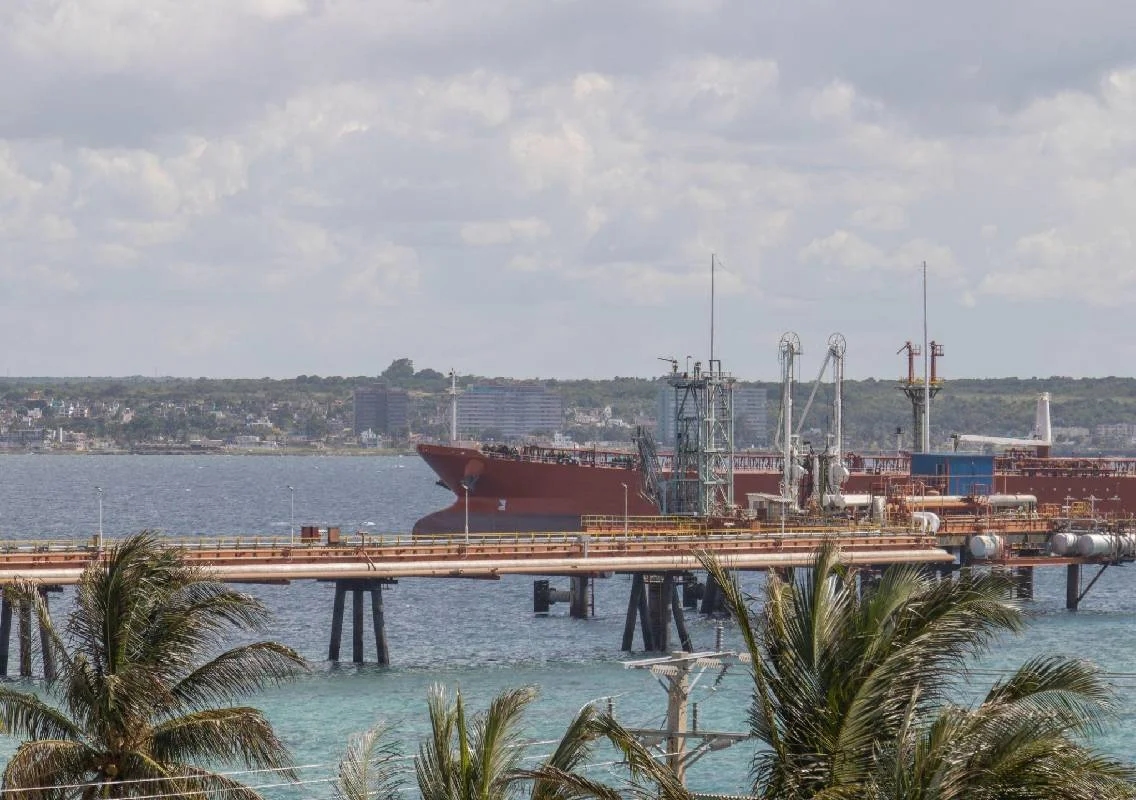


Havana, Cuba: A Russian-flagged oil tanker carrying nearly 7.3 lakh barrels of crude oil has reached Cuban waters after US President Donald Trump allowed it to bypass his administration’s fuel blockade, offering limited relief to the island nation grappling with a severe energy crisis.
The vessel, identified as the Anatoly Kolodkin, was reported by Russian authorities to have arrived at the port of Matanzas on Monday. However, maritime tracking data indicated that the tanker was still within Cuban territorial waters near Cayo Guillermo, moving westward towards its final destination.
The development comes at a time when Cuba is facing widespread blackouts, fuel shortages and mounting pressure on essential services.Havana, Cuba
A Russian-flagged oil tanker carrying nearly 7.3 lakh barrels of crude oil has reached Cuban waters after US President Donald Trump allowed it to bypass his administration’s fuel blockade, offering limited relief to the island nation grappling with a severe energy crisis.
The vessel, identified as the Anatoly Kolodkin, was reported by Russian authorities to have arrived at the port of Matanzas on Monday. However, maritime tracking data indicated that the tanker was still within Cuban territorial waters near Cayo Guillermo, moving westward towards its final destination.
The development comes at a time when Cuba is facing widespread blackouts, fuel shortages and mounting pressure on essential services.
Russia’s transport ministry and Kremlin officials, including spokesperson Dmitry Peskov, confirmed that the tanker had reached Cuba. Peskov also indicated that the issue had been discussed in advance with US officials, suggesting coordination behind the scenes.
Meanwhile, Cuba’s state-run media highlighted the ship’s imminent arrival as a major development, reflecting the urgency of the ongoing energy crisis.
Despite the differing reports on the tanker’s precise location, it is expected to dock at Matanzas port by late Monday or early Tuesday.
US allows shipment on humanitarian grounds
The decision to allow the tanker to reach Cuba marks a temporary relaxation of the United States’ strict fuel restrictions on the island.
Speaking to reporters aboard Air Force One, President Trump said the move was driven by humanitarian concerns. “If a country wants to send some oil into Cuba right now, I have no problem… because the people need heat and cooling,” he said.
However, the White House clarified that this does not signal a broader policy shift. Press Secretary Karoline Leavitt stated that the decision was made on a case-by-case basis and that existing sanctions remain in place.
In recent months, Washington has tightened pressure on Cuba by curbing supplies from key partners such as Venezuela and warning other nations against providing fuel, citing security concerns.
Limited impact on Cuba’s energy crisis
Experts caution that the arrival of the tanker will provide only temporary and limited relief to Cuba’s deepening energy crisis.
According to energy analysts, the crude oil must first be transported to a refinery in Havana, where it will undergo processing before it can be used. This process could take up to 20 days due to outdated infrastructure and inefficiencies.
Cuba requires approximately 1 lakh barrels of oil per day but currently meets only about 40% of its demand through domestic production. The remainder has historically been supplied by foreign partners.
Even after refining, the fuel from this shipment is expected to last only between 10 and 30 days, depending on consumption and distribution priorities set by the government.
Worsening conditions on the island
The ongoing fuel shortage has had severe consequences across Cuba. Frequent power outages have disrupted daily life, while hospitals and essential services are struggling to operate.
Public transport and food distribution systems have also been affected, leading to rising prices and growing public dissatisfaction. In recent weeks, several cities have witnessed rare protests, with residents taking to the streets to express frustration over prolonged blackouts and shortages.
The island has also experienced multiple power grid collapses in the past month, plunging large parts of the country, including Havana, into darkness.
Geopolitical implications
The situation highlights the complex geopolitical dynamics surrounding Cuba’s energy supply. The reduction in oil shipments from Venezuela — once Cuba’s primary supplier — has significantly worsened the crisis.
The Kremlin has indicated that it remains in contact with Cuban authorities regarding potential assistance, though it has not confirmed further shipments.
President Trump dismissed concerns that allowing the tanker would benefit Russian President Vladimir Putin, stating that the shipment represents only a minor concession.
Conclusion
While the arrival of the Russian oil tanker offers a short-term lifeline to Cuba, it is unlikely to resolve the country’s broader energy challenges. With demand far exceeding supply and infrastructure constraints limiting efficiency, Cuba may continue to face recurring shortages in the coming weeks. The episode underscores the fragile balance between humanitarian considerations and geopolitical strategy in global energy politics.