







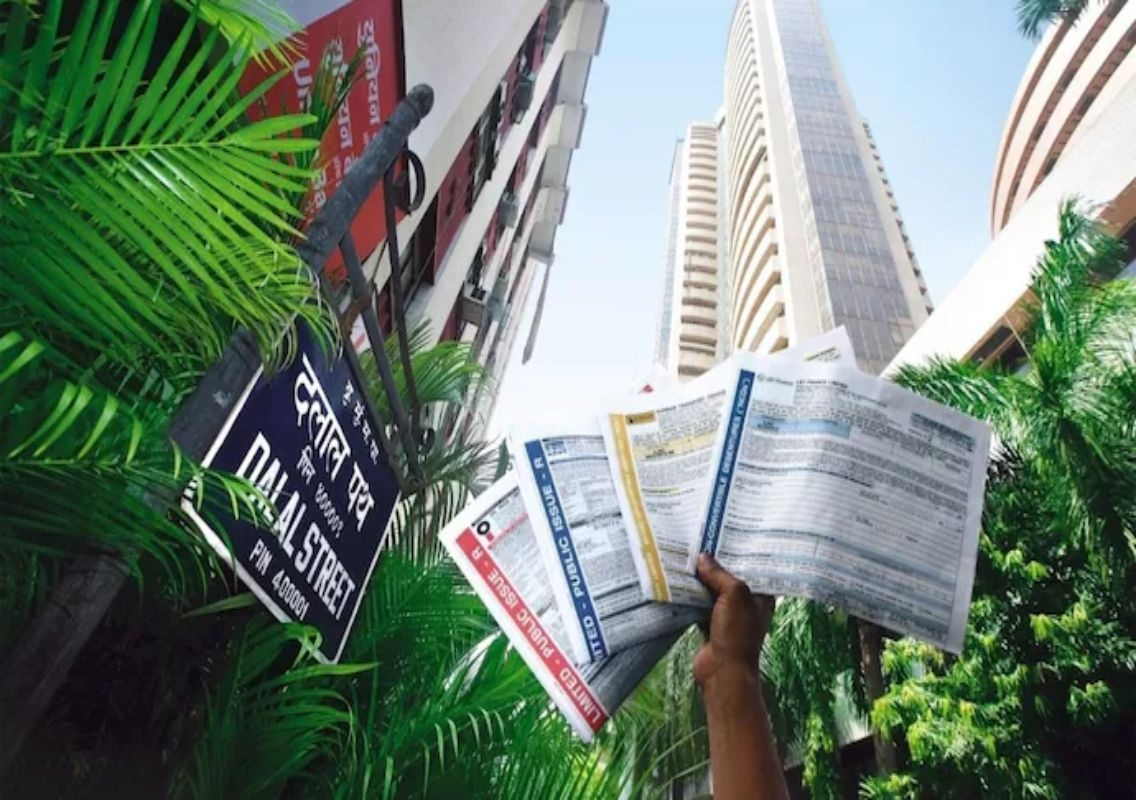


Mumbai: Indian equity benchmarks S&P BSE Sensex and NSE Nifty50 opened on a muted note on Wednesday, reflecting cautious investor sentiment amid escalating geopolitical tensions in the Middle East.
The Sensex slipped 22.10 points, or 0.03 per cent, to 75,987.60 in early trade, while the Nifty50 edged lower by 6.95 points, or 0.03 per cent, to 23,906.75.
Geopolitical concerns weigh on sentiment
Investor mood remained subdued following renewed tensions involving the United States, Iran and Israel. Reports of alleged ceasefire violations and fresh military strikes in the region have heightened uncertainty in global markets.
Iran accused the US of breaching a ceasefire agreement by targeting areas near the Strait of Hormuz, raising fears that the prolonged three-month conflict could intensify further. Meanwhile, Israel reportedly carried out over 120 air strikes in Lebanon, adding to geopolitical risks.
Such developments often trigger volatility in global financial markets, particularly impacting oil prices and investor confidence in emerging markets like India.
Rupee weakens against US dollar
The Indian currency also reflected the cautious sentiment. The rupee opened 0.07 per cent lower at 95.75 against the US dollar, compared to its previous close of 95.68.
A weaker rupee typically indicates capital outflows and risk aversion among foreign investors, especially during periods of global uncertainty.
Broader markets show resilience
Despite the flat opening in benchmark indices, broader markets displayed resilience. The Nifty Midcap 100 rose 0.43 per cent, while the Nifty Smallcap 100 gained 0.35 per cent in early trade.
The volatility index, India VIX, edged up 0.23 per cent, indicating a slight increase in market nervousness.
This divergence suggests selective buying in mid- and small-cap stocks, even as large-cap indices remain under pressure.
Sectoral trends mixed
Sectoral indices presented a mixed picture. Metal stocks led the gains, with the Nifty Metal index rising 1.48 per cent. Nifty Media advanced 0.76 per cent, while Nifty Realty and Nifty Consumer Durables gained 0.50 per cent and 0.47 per cent respectively.
Auto and PSU banking stocks also traded in positive territory, reflecting buying interest in select sectors.
On the downside, Nifty Oil & Gas declined 0.55 per cent, tracking global crude oil uncertainties. Financial stocks also faced selling pressure, with Nifty Private Bank and Nifty Financial Services slipping 0.38 per cent and 0.32 per cent respectively.
Key stocks in focus
Among Sensex constituents, NTPC Limited emerged as the top gainer, rising 2.97 per cent. Adani Ports and Special Economic Zone gained 1.16 per cent, while Power Grid Corporation of India advanced 1.13 per cent.
Other gainers included Asian Paints and Tata Steel, which traded higher in early deals.
On the losing side, HDFC Bank dropped 1.57 per cent, emerging as the top laggard. Infosys declined 0.61 per cent, while Bharat Electronics Limited and Bharti Airtel also traded lower.
Reliance Industries slipped marginally by 0.19 per cent.
Expert view on market outlook
According to VK Vijayakumar, Chief Investment Strategist at Geojit Investments Limited, global market trends continue to influence Indian equities.
He noted that major global indices such as the S&P 500, Nasdaq and Nikkei are hitting record highs, while markets like KOSPI and Taiex are witnessing buying on dips. Despite this, Indian markets remain under pressure due to sustained foreign institutional investor (FII) selling.
“The market appears to be ignoring risks associated with the ongoing AI-driven rally globally. While India will become attractive to FIIs again, the timing remains uncertain,” he said.
Earnings trends and sector outlook
On the domestic front, Vijayakumar highlighted positive trends in recent quarterly results. He noted that overall earnings have been better than expected, with mid-cap stocks outperforming large-cap peers.
A key observation is that profit growth has exceeded revenue growth, pointing to efficiency improvements but also indicating subdued demand conditions in the broader economy.
He added that fairly valued financial stocks offer good prospects, while sectors like pharmaceuticals continue to show resilience due to steady demand and strong export potential.
Conclusion
Indian markets opened on a cautious note, reflecting global uncertainties and geopolitical tensions. While benchmark indices remained flat, broader markets showed signs of strength, indicating selective investor confidence.
Going forward, global developments, FII flows and domestic earnings trends are expected to play a crucial role in determining market direction. Investors are likely to remain watchful in the near term as geopolitical risks continue to evolve.