







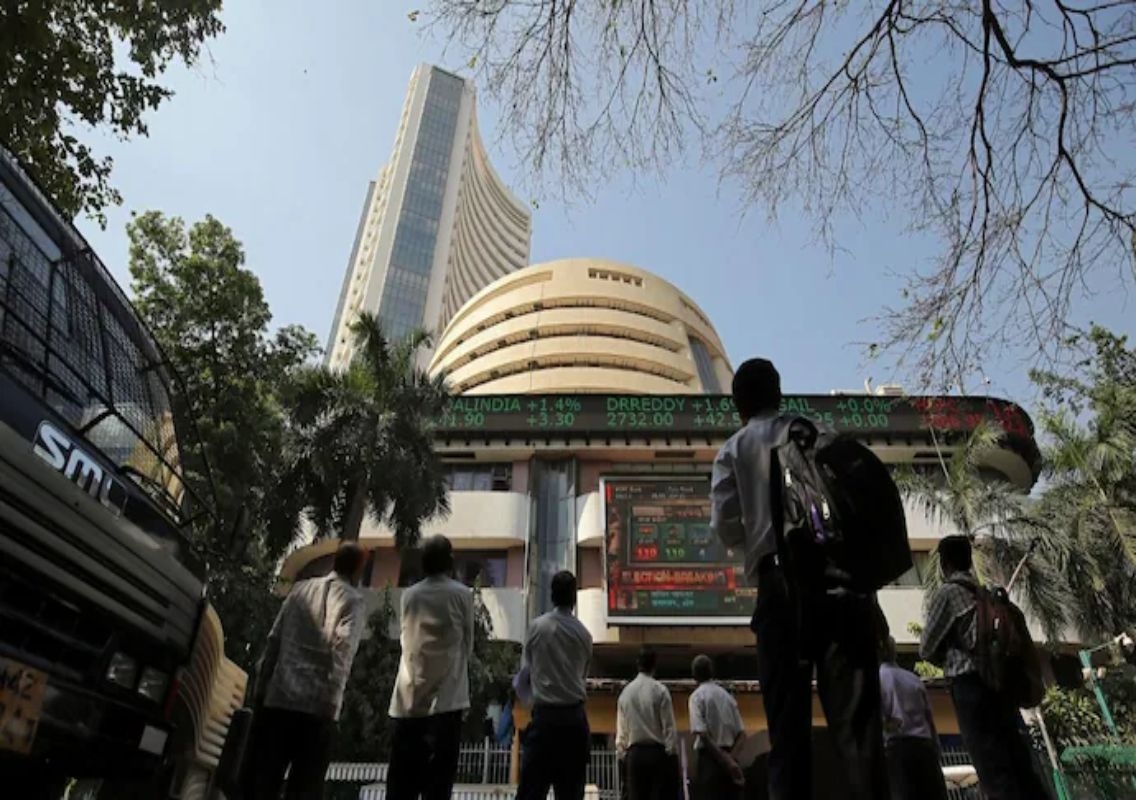


Mumbai: Indian stock markets opened sharply lower on Monday as escalating tensions in the Middle East rattled investor sentiment, pushing crude oil prices above $96 per barrel and triggering a broad-based selloff across sectors.
Benchmark indices witnessed significant declines in early trade. The S&P BSE Sensex fell 803.67 points, or 1.08%, to 73,439.67, while the NSE Nifty50 dropped 236.25 points, or 1.01%, to 23,130.45. The weakness was widespread, with almost all major stocks trading in the red amid rising global uncertainties.
Middle East conflict weighs on markets
The primary trigger for the market decline was the renewed escalation in geopolitical tensions in the Middle East. Over the weekend, Iran launched missile strikes at Israel following Israeli military action in Beirut, intensifying fears of a prolonged conflict in the region.
The developments have significantly reduced hopes of a quick resolution and raised concerns over potential disruptions to global crude oil supply chains. As a result, Brent crude prices surged above $96 per barrel, a level that is considered unfavourable for oil-importing countries like India.
Higher crude oil prices typically lead to increased inflationary pressures, a weakening rupee and strain on economic growth, all of which tend to negatively impact equity markets.
Global cues add to selling pressure
Apart from geopolitical tensions, weak global market cues also contributed to the selloff. US markets ended sharply lower on Friday, with the Nasdaq index plunging more than 4%, largely due to heavy selling in technology stocks.
The decline in US tech stocks had a ripple effect across Asian markets, particularly in tech-heavy economies such as South Korea and Taiwan, which witnessed significant losses. This global weakness further dampened investor sentiment in India.
Market experts believe that a combination of global uncertainties and domestic concerns is creating strong headwinds for equities at the start of the week.
Interest rate concerns persist
Another factor weighing on markets is the growing expectation that the US Federal Reserve may keep interest rates elevated for a longer period. Strong economic data, especially robust jobs numbers in the United States, have reduced the likelihood of early rate cuts.
Higher interest rates generally lead to reduced liquidity in global markets, making equities less attractive compared to fixed-income assets. This has added to investor caution, prompting selling across sectors.
Broad-based sectoral decline
The selloff was visible across all major sectoral indices, indicating widespread nervousness among investors. Realty stocks were among the worst hit, with the Nifty Realty index falling 1.93%.
Technology stocks also came under pressure, with the Nifty IT index declining 1.72% in line with global trends. Metal stocks dropped 1.67%, while auto and oil & gas sectors fell 1.39% and 1.15%, respectively.
Financial stocks were not spared either, with the Nifty Financial Services index declining 0.87%. Broader markets also mirrored the weakness, as the Nifty Midcap 100 fell 0.86% and the Nifty Smallcap 100 slipped 0.62%.
Meanwhile, India VIX, often referred to as the market’s “fear gauge”, surged over 9%, reflecting heightened volatility and uncertainty.
Key stocks under pressure
Among Sensex constituents, Mahindra & Mahindra emerged as the biggest loser, falling 2.26%. Tata Steel declined 2.06%, while InterGlobe Aviation (IndiGo) dropped 2.04%.
Other major losers included TCS, Infosys and HCL Technologies, which fell between 1.4% and 1.8%, tracking weakness in global IT stocks. Larsen & Toubro and Maruti Suzuki also witnessed notable declines.
Select stocks show resilience
Despite the broad-based selling, a few stocks managed to buck the trend. Sun Pharmaceutical Industries emerged as the top gainer on the Sensex, rising 0.64%.
Axis Bank also showed relative resilience, trading nearly flat compared to the broader market decline. Analysts suggest that defensive sectors like pharmaceuticals may continue to attract investor interest during periods of uncertainty.
Outlook: Volatility likely to persist
Market participants are expected to remain cautious in the near term, closely tracking developments in the Middle East and movements in crude oil prices. Any further escalation in the conflict could keep oil prices elevated and markets under pressure.
However, domestic fundamentals may offer some support. India’s GDP growth outlook remains strong, and recent corporate earnings have been largely better than expected.
In conclusion, while the current selloff reflects global uncertainties and geopolitical risks, long-term fundamentals of the Indian economy remain intact. Investors are likely to adopt a cautious approach in the short term, with volatility expected to persist until there is greater clarity on global developments.