


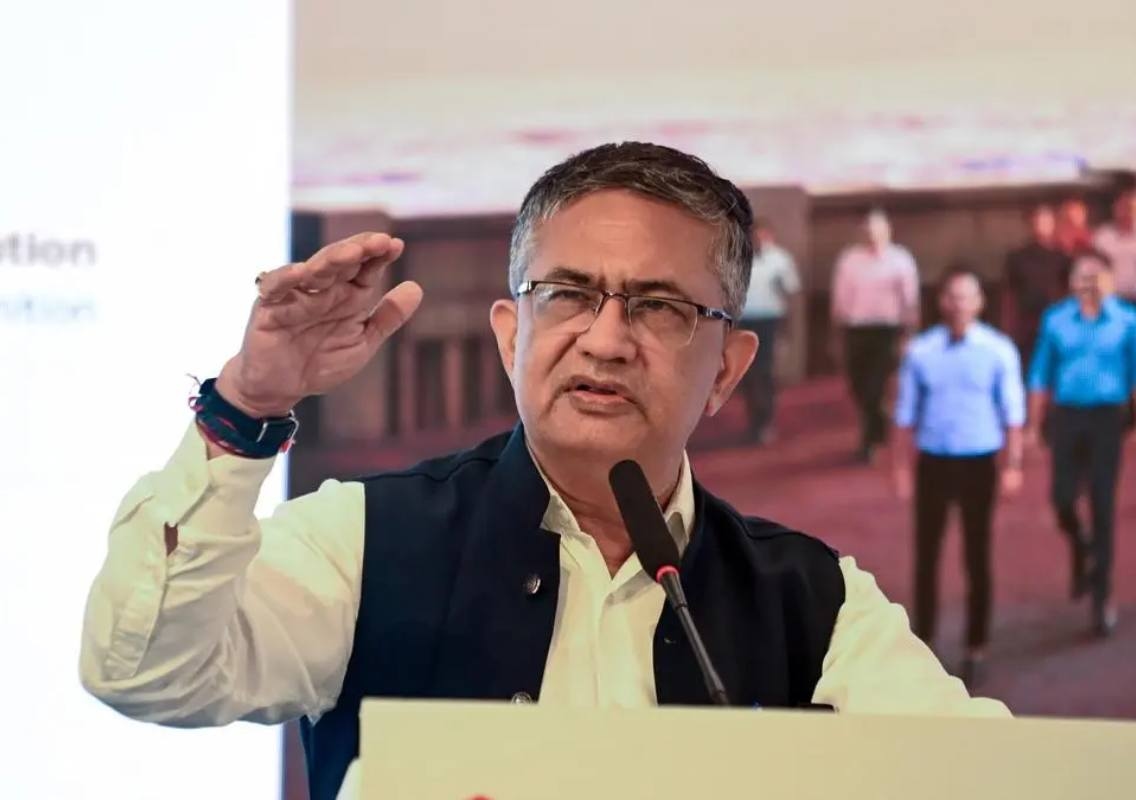


Mumbai: National Stock Exchange (NSE) Managing Director and CEO Ashish Kumar Chauhan has said there have been no discussions with the government over the newly introduced Merchant Discount Rate (MDR) on UPI transactions linked to capital-market activities.
Chauhan said the decision was taken by the National Payments Corporation of India (NPCI), leaving stockbrokers and their clients to determine how the additional cost will be handled.
The new charge is scheduled to take effect from October 15, 2026, and has raised questions within the capital-market industry about whether brokers or investors will ultimately absorb the cost.
0.02% MDR on capital-market UPI payments
Under the revised UPI framework, a 0.02 per cent MDR will apply to UPI payments made for capital-market transactions, including investments in stocks, securities and mutual funds.
The charge will be capped at Rs 300 per transaction.
The change has created a new cost consideration for brokers and financial platforms that use UPI to receive funds from customers for investment-related activities.
While the MDR applies to the transaction, customers will not be directly charged the fee by the UPI system under the framework announced by the authorities.
The question of who ultimately bears the cost will therefore depend on arrangements between brokers, platforms and their customers.
NSE CEO says no government discussions
Chauhan said NSE had not held discussions with the government regarding the new MDR.
According to remarks reported by Economic Times, he said the decision was made by NPCI and that the matter would have to be addressed between stockbrokers and their clients.
He indicated that the industry would need to observe how brokers and customers respond once the new charges come into effect.
The issue is particularly relevant for brokers because UPI payments can be made by customers before an investment or trade is actually executed.
If a client transfers money through UPI but does not subsequently place a trade or investment order, the broker could still face the applicable transaction-related cost.
This has led to concerns over whether brokers would absorb such expenses or introduce mechanisms to recover them.
How the revised UPI MDR framework works
The new capital-market MDR is part of a broader revision to UPI charges.
For standard person-to-merchant (P2M) transactions above Rs 2,000, a 0.4 per cent fee will apply to merchants under the revised framework.
The fee is not intended to be directly passed on to consumers as a separate UPI charge.
Several categories will continue to remain free.
Person-to-person (P2P) transactions will remain free, while transactions up to Rs 2,000 and payments to small merchants covered by the zero-MDR framework will also continue without MDR.
The Finance Ministry has said nearly 96 per cent of P2M UPI transactions will remain unaffected by the revised structure.
This means the changes are primarily aimed at specific categories of larger merchant and capital-market transactions rather than everyday UPI payments made by consumers.
Why brokers are concerned about the cost
The capital-market MDR has raised a specific concern for brokers because the cost can arise even when a customer’s payment does not result in a completed trade.
For example, an investor could transfer money to a brokerage account through UPI and later decide not to purchase securities.
The transaction would still have generated the applicable payment-related cost, potentially leaving the broker to absorb it.
The impact could be more significant for platforms handling a large number of small UPI transactions.
Brokers may therefore have to assess transaction costs, customer behaviour and payment volumes before deciding how to manage the new framework.
Chauhan’s comments suggest that there is currently no government-backed arrangement under which the state would absorb the additional cost.
Instead, the issue will have to be worked out within the commercial relationship between brokers and their customers.
Everyday UPI payments remain largely unaffected
The revised framework does not mean that users will start paying a fee every time they use UPI.
Most routine UPI payments will continue under the existing zero-MDR arrangement.
P2P transfers, transactions up to Rs 2,000 and payments to eligible small merchants remain outside the new charge structure.
The Finance Ministry’s assessment that nearly 96 per cent of P2M transactions will remain unaffected also indicates that the revised framework is targeted at specific transaction categories.
For consumers, the immediate impact is therefore expected to be more relevant when UPI is used for capital-market activities rather than ordinary purchases or transfers.
NSE lists on BSE ahead of MDR rollout
Chauhan’s comments came shortly after NSE made its own stock-market debut.
NSE shares were listed on the BSE on September 24, 2026, following the exchange’s public issue.
The shares opened at Rs 1,800, compared with the IPO price of Rs 1,785, giving them a premium at listing.
The stock ended its first trading session at Rs 1,818.
The public issue involved an offer for sale by existing shareholders. According to the source material, around 12.64 crore shares were offered through the issue, with the issue size reported at Rs 22,561.57 crore.
The listing marks a significant development for India’s largest stock exchange as it enters the public markets.
What happens after October 15?
The practical impact of the new MDR will become clearer after it takes effect on October 15.
Brokers will have to decide whether to absorb the cost as part of their operating expenses or introduce changes to their payment arrangements with customers.
The treatment could also vary between brokers depending on their business models, transaction volumes and customer payment patterns.
For investors, the key distinction is that the MDR is not being imposed as a direct consumer fee by the UPI system. The cost instead enters the transaction chain through the merchant or capital-market service provider.
The coming months will therefore show how the industry adjusts to the new payment structure.
Capital markets enter a new UPI cost regime
The introduction of the 0.02 per cent MDR marks a change for the way UPI is used in India’s capital markets.
Although the rate is relatively small and capped at Rs 300, its cumulative impact could become significant for brokers processing large volumes of transactions.
NSE’s Chauhan has made it clear that there have been no government discussions to absorb the cost, leaving the industry to work out the practical arrangements.
With the October 15 implementation date approaching, brokers and investors will be watching how platforms respond and whether the new cost changes payment practices in the capital-market ecosystem.