


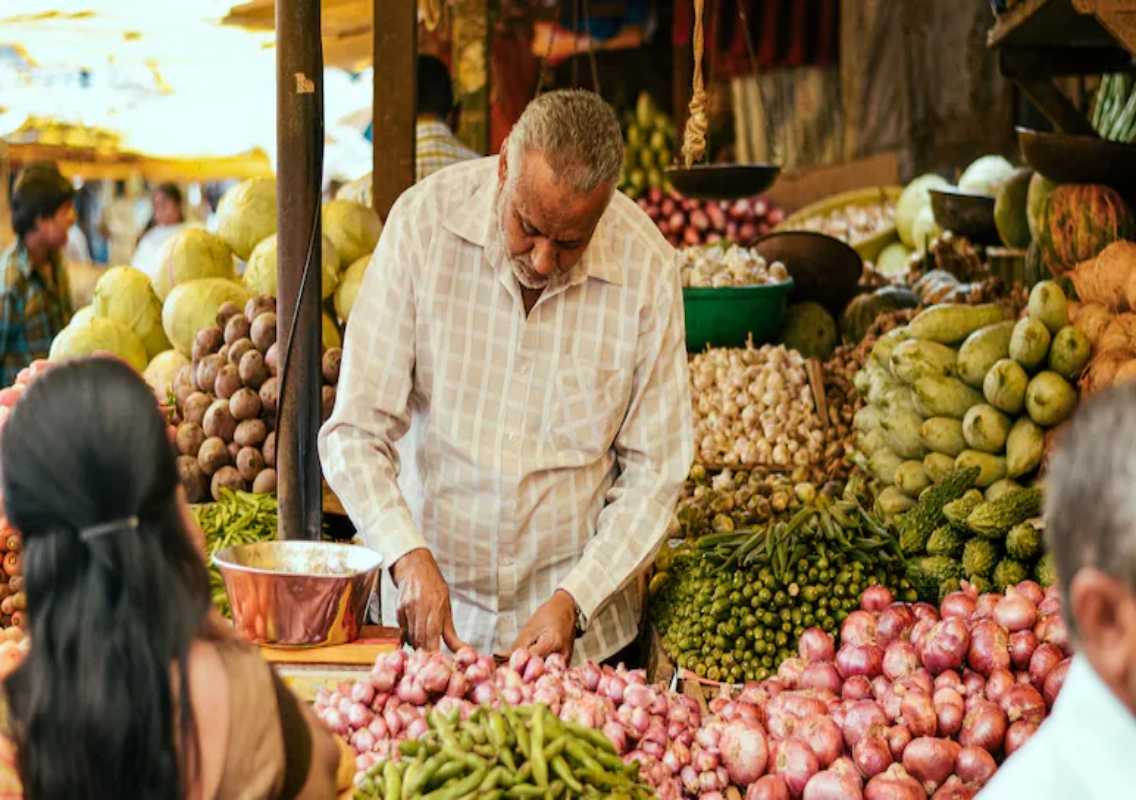


New Delhi: India’s digital shopping habits are changing, but the shift from traditional markets to online platforms remains uneven. While consumers are increasingly comfortable ordering clothes, footwear and several household products online, fresh vegetables and other perishable food items continue to be purchased largely through neighbourhood shops and traditional markets.
Highlights this contrast in household consumption patterns. Online purchases account for 19.97% of clothing sales and 12.05% of footwear sales, while the share remains much smaller for fresh vegetables, at just 1.32%. Fresh fruits account for 1%, while online purchases of eggs, fish and meat stand at 0.59%.
The figures underline a continuing preference for physical markets when it comes to buying fresh food, even as e-commerce and quick-commerce platforms expand their reach across Indian cities.
Clothing leads the shift towards online shopping
Clothing has become one of the categories in which Indian consumers are more willing to use digital platforms. The SBI Research figures put online adoption in clothing at 19.97%, significantly higher than the reported share for fresh food categories.
Footwear also has a relatively strong online presence, with digital purchases accounting for 12.05% of sales. These categories are suited to online browsing because shoppers can compare designs, brands and prices across multiple sellers without visiting several physical stores.
Online platforms also offer access to a wider selection of products, promotional offers and home delivery. Consumers can browse products at different price points and place orders at a convenient time.
However, the figures also show that digital adoption is not uniform across all retail categories. Furniture accounts for just 0.18% of online purchases, medical equipment for 0.32% and recreational goods for 0.52%, according to the report. These figures suggest that many purchases involving higher-value or more specialised products continue to rely on offline channels.
Why vegetables remain a largely offline purchase
Fresh vegetables are different from clothing and footwear because consumers often want to inspect the products before buying them. Appearance, freshness, size, ripeness and quality can influence purchasing decisions, making physical selection important for many households.
Traditional vegetable markets and neighbourhood shops also allow buyers to choose quantities according to their immediate requirements. Customers can compare products at different stalls, ask vendors about freshness and make substitutions based on availability.
Price flexibility is another feature of conventional markets. Some consumers prefer to negotiate prices, particularly when buying multiple items or purchasing vegetables in larger quantities. Regular customers may also have established relationships with local vendors.
The SBI Research figures reflect this continued reliance on physical retail. Online purchases account for only 1.32% of vegetable purchases and 1% of fresh fruit purchases. The share is even lower for eggs, fish and meat, at 0.59%.
These numbers indicate that the convenience of digital ordering has not completely replaced the value consumers attach to choosing perishable products themselves.
Quick commerce has made limited inroads into grocery shopping
The growth of quick-commerce services has brought grocery delivery closer to everyday household routines. Consumers can order packaged food, household essentials and selected fresh products through mobile applications and receive them at their doorstep.
Yet the overall online share of food purchases remains limited compared with several non-food categories. SBI Research puts the online share of grocery purchases at 4.29%, the highest among the food-related categories highlighted in the report.
Within groceries, processed and packaged food products have a higher online presence than fresh food categories. Packaged products are generally easier to store, transport and list on digital platforms because their specifications and shelf life are more predictable.
Fresh vegetables and fruits require more careful handling, sorting and delivery. Their quality can vary from one batch to another, and customers may have different expectations about size, ripeness and freshness. These factors make the online experience more difficult to standardise.
Quick-commerce companies have expanded their fresh-produce offerings, but the figures suggest that physical markets continue to play a major role in everyday vegetable shopping.
Digital payments are spreading, but adoption is not universal
The report also points to the growing use of digital payments for household consumption. Around 45.6% of Indian households reportedly use online payment methods to purchase at least one consumption item.
However, approximately 54.4% of households do not use digital payment methods for such purchases. This indicates that the shift towards digital consumption is still incomplete across the country.
The distinction between online shopping and digital payments is important. A consumer may purchase goods from a physical shop and pay digitally, while another may order products online but use a payment method that does not involve a digital transaction at the point of purchase.
The figures therefore capture different aspects of the changing retail landscape: the adoption of online purchasing platforms and the use of digital payment methods in household spending.
Services and consumables account for a major share
SBI Research data cited in the report places services at around 37.93% of online purchases, while fuel and light account for 15.96%. The broader category of consumables and services represents 39.68% of digital purchases, followed by durable goods at 23.3%.
Medicine and other medical services account for 1.69%, while education represents 1.83% of online purchases, according to the figures.
The distribution shows that India’s digital consumption is shaped by the nature of the product or service. Categories that can be compared easily, ordered repeatedly or delivered in a standardised form have found a stronger place online. Products that depend on personal inspection, physical selection or specific quality checks continue to see substantial offline demand.
Online and offline retail are likely to coexist
The data does not suggest that traditional vegetable markets are disappearing. Instead, it points to a retail environment in which consumers choose different purchasing channels depending on the product.
Online platforms have made it easier to shop for clothing, footwear and packaged goods, while quick-commerce services are attempting to extend that convenience to groceries and fresh produce. Traditional markets, meanwhile, continue to offer direct product selection and familiar relationships with local vendors.
For retailers and digital commerce companies, the challenge is to understand these differences rather than assume that consumers will move every category of shopping online at the same pace.
The figures from SBI Research show that India’s digital shopping expansion is substantial but selective. Clothes are increasingly bought through screens, while vegetables are still largely chosen at neighbourhood shops and mandis.