







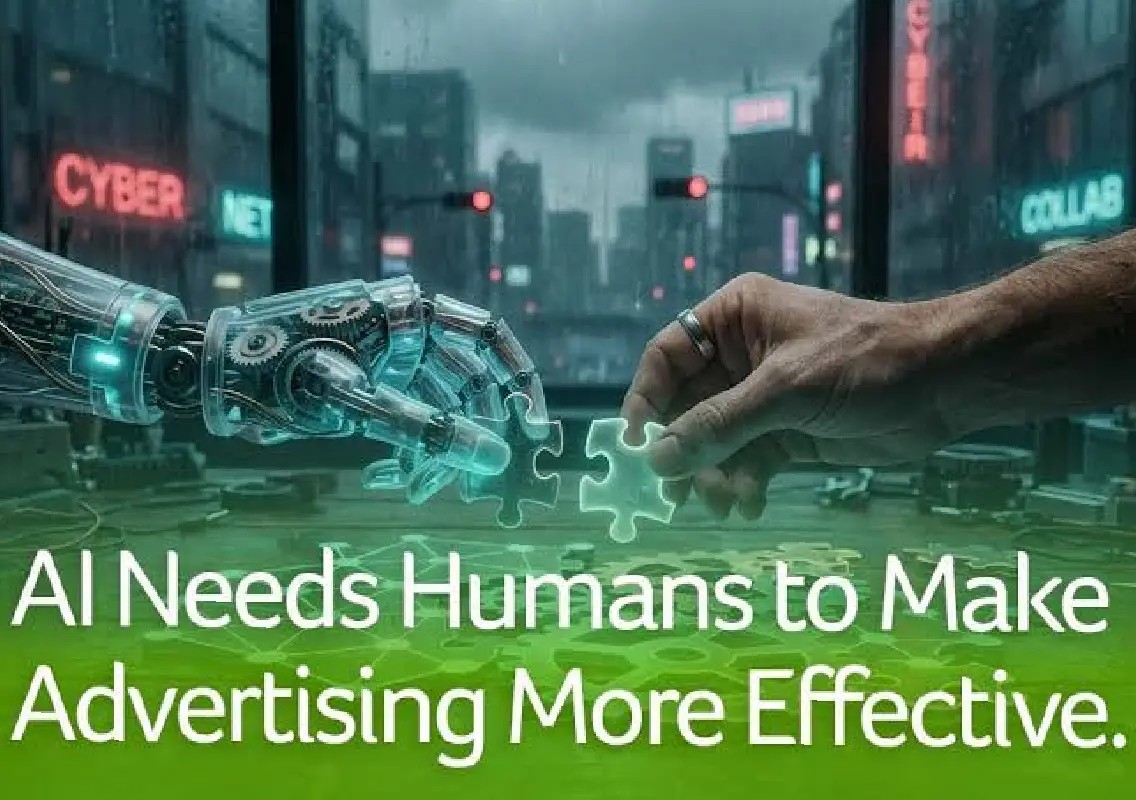


Artificial intelligence has transformed advertising, allowing brands and agencies to create images, videos and copy faster than ever. Yet as AI-generated content increasingly fills digital feeds, a surprising trend is emerging — human-made creativity is becoming more valuable.
What was once considered standard creative work is now being presented as a mark of authenticity, craftsmanship and trust. For brands, the message is increasingly not just about what was created, but who created it and how.
Brands are putting human creativity back in focus
Apple TV’s recent branding exercise offered an example of this shift. When the platform dropped the ‘plus’ from its name, it also released behind-the-scenes footage showing how its new animated logo was created using physical glass versions, colour experiments and carefully controlled lighting.
The process highlighted the craftsmanship behind the final product rather than simply presenting the finished animation.
A 2026 Gartner survey reportedly found that 50 per cent of US consumers would prefer brands that avoid generative AI for consumer-facing content. Ipsos research also found that 47 per cent of Indian consumers preferred human-driven advertising.
Authenticity is becoming a powerful signal
As audiences become more familiar with AI-generated material, polished visuals alone may no longer be enough to attract attention.
The advertising industry is increasingly discussing the idea of ‘human washing’ — deliberately emphasising human involvement to communicate authenticity and trust.
Luxury fashion house Hermès, for instance, commissioned artist Linda Merad for an illustrated website redesign featuring hand-crafted imperfections, textured paper and irregular lines. The approach reinforced the value associated with human artistry and craftsmanship.
Brands are fighting the rise of AI ‘slop’
The growing volume of repetitive or low-quality AI-generated content has also created what marketers describe as ‘AI slop’. Against this backdrop, original ideas, creative judgement and human experience are gaining importance.
Brands including Porsche, Le Creuset, Zevia, Patrón and Merrell have highlighted hand-drawn work, human unpredictability or traditional creative processes in recent campaigns.
Even OpenAI joined the conversation with a 35mm advertising film that drew on nostalgia and appreciation for human-made creativity.
Human stories could become the real differentiator
Industry experts say AI remains valuable for tasks such as creation, personalisation, translation and testing. However, technology cannot automatically replicate the lived experiences and emotional insights that often make a story memorable.
As AI makes content production increasingly accessible, proving that an idea came from genuine human creativity could become a meaningful brand advantage.
The future of advertising, therefore, may not be a simple choice between humans and AI. Instead, brands could increasingly use AI for efficiency while placing human imagination, judgement and storytelling at the centre of communication. #ArtificialIntelligence #Advertising #HumanCreativity #Marketing #AI #Branding #DigitalMedia