







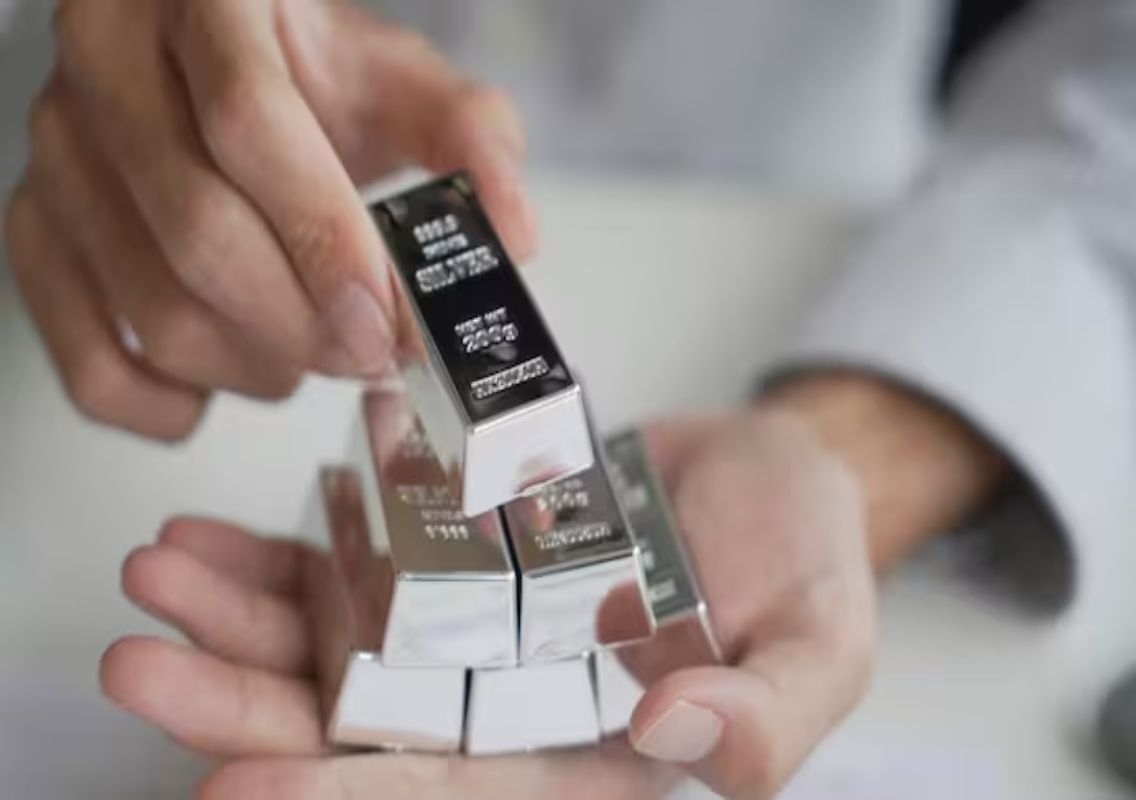


Mumbai: Silver prices witnessed a steep decline on Thursday, falling by more than Rs 4,000 on the Multi Commodity Exchange (MCX), catching investors off guard despite ongoing global uncertainties. Around 12:30 pm, MCX silver dropped by Rs 4,153 to trade near Rs 2,70,112, marking one of the sharpest intraday corrections in recent sessions.
While gold prices also edged lower, the magnitude of the fall in silver was significantly higher, raising concerns among traders and retail investors alike. Market experts attribute this sudden dip to a mix of geopolitical developments, commodity trends and cautious investor sentiment.
Hopes of US-Iran deal reduce safe-haven demand
One of the primary triggers behind the fall in silver prices is the improving outlook around a potential diplomatic agreement between the United States and Iran. Reports suggest that negotiations between the two nations are nearing a crucial stage, with signals pointing towards possible de-escalation of tensions.
Historically, precious metals like silver and gold are considered safe-haven assets. Investors tend to move towards these assets during times of geopolitical uncertainty or conflict. However, when there is optimism about peace or stability, demand for such safe investments tends to weaken.
Recent statements from US leadership indicating progress in talks, combined with a relatively measured response from Iran, have led markets to factor in reduced geopolitical risk. As a result, investors appear to be shifting funds away from safe-haven assets, putting downward pressure on silver prices.
Cooling crude oil prices ease inflation concerns
Another key factor contributing to the decline is the correction in crude oil prices. After recently crossing the $105 per barrel mark, crude oil has seen a notable pullback of over 6 per cent, now trading in the $99–100 range.
Crude oil prices play a crucial role in shaping inflation expectations. Higher oil prices generally lead to increased transportation and production costs, fuelling inflation. In such scenarios, investors often turn to precious metals like silver as a hedge against rising prices.
However, with oil prices cooling, inflation concerns have slightly eased. This has reduced the urgency for investors to hold inflation-hedging assets, thereby weakening demand for silver. Despite this correction, analysts caution that oil prices remain relatively elevated in a broader context and could still influence market sentiment going forward.
Market sentiment remains cautious
Despite the sharp fall, market participants are not entirely bearish. Experts suggest that the overall sentiment remains cautious rather than negative, as global uncertainties have not completely disappeared.
According to market analysts, silver opened with a sharp gap-down on the MCX but is attempting to stabilise around key support levels. Immediate resistance is seen in the Rs 2,75,000–Rs 2,76,000 range, and a sustained move above this could trigger a recovery towards Rs 2,78,000–Rs 2,80,000.
On the downside, if silver breaks below Rs 2,71,000, prices could slide further towards Rs 2,68,000–Rs 2,67,000 levels. This indicates that while the current trend is weak, the market is still highly sensitive to global cues.
Gold also under pressure
Gold prices mirrored the trend, though the fall was less severe. MCX gold was trading around Rs 1,59,390, down by Rs 616 during the same period.
Like silver, gold is also experiencing subdued demand due to easing geopolitical fears and softer inflation expectations. Analysts note that gold needs stronger buying momentum to break past resistance levels near Rs 1,60,000–Rs 1,60,400 to regain upward traction.
Until then, both gold and silver are expected to trade within a range, influenced largely by global risk sentiment and macroeconomic developments.
What investors should watch
Going ahead, investors are advised to closely monitor developments on multiple fronts. The progress of US-Iran negotiations remains a key factor, as any setback could quickly revive safe-haven demand and push prices higher.
Similarly, crude oil trends will continue to play a crucial role in shaping inflation expectations and, in turn, precious metal prices. Any sharp movement in oil could lead to renewed volatility in silver and gold.
Market participants should also keep an eye on global economic indicators, interest rate outlooks and currency movements, all of which have a bearing on commodity prices.
Conclusion
The sharp fall of over Rs 4,000 in silver prices highlights how sensitive the commodity is to global developments and investor sentiment. While easing geopolitical tensions and falling crude oil prices have triggered the current decline, the overall outlook remains uncertain.
For investors, this serves as a reminder to stay cautious and informed. With multiple global factors at play, volatility in precious metals is likely to persist in the near term, making it essential to track market signals before making investment decisions.