







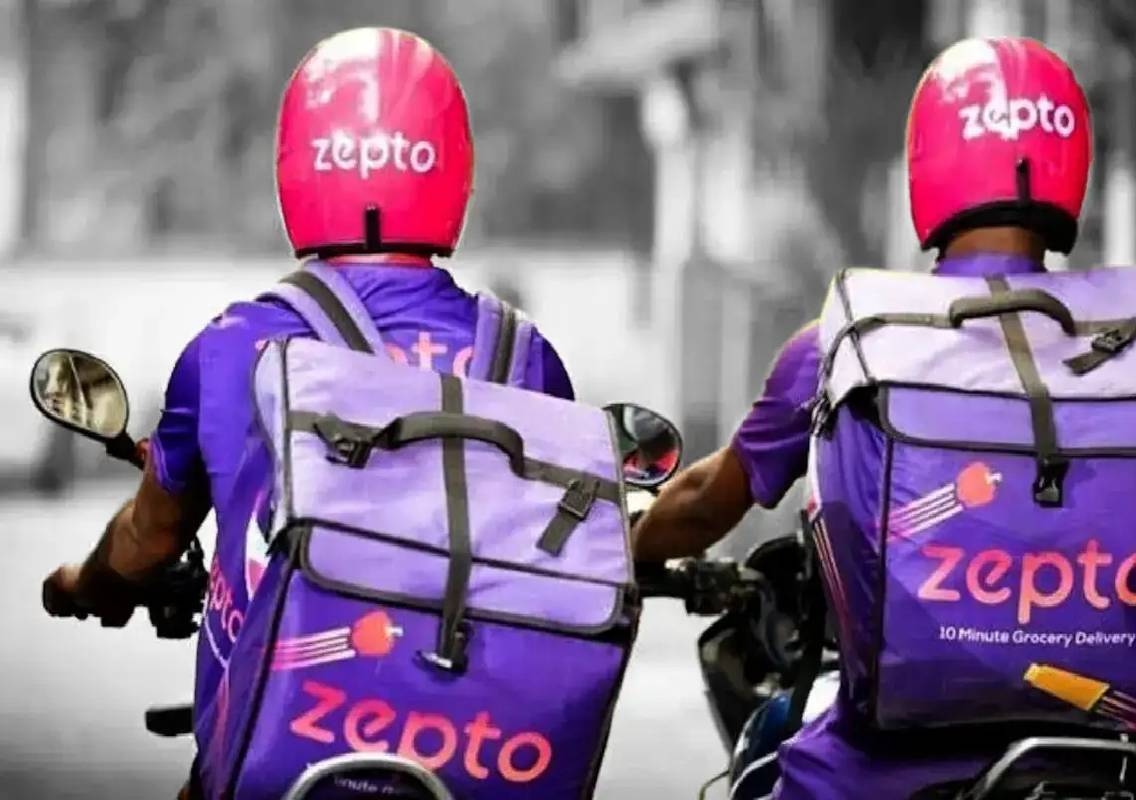


Bengaluru: Quick commerce platform Zepto has reported its first quarterly decline in active users, marking a notable development in India’s rapidly expanding quick commerce sector. Despite strong revenue growth and aggressive marketing efforts, the company’s annual transacting user (ATU) base fell during the January-March 2026 quarter.
According to disclosures made in its updated draft red herring prospectus (DRHP) filed with the Securities and Exchange Board of India (SEBI), Zepto’s user base declined from 4.95 crore in the December 2025 quarter to 4.79 crore in the March 2026 quarter.
The decline comes at a time when competition in the quick commerce segment is intensifying, with players focusing heavily on customer acquisition, retention and increasing order frequency.
User base sees quarterly decline
Zepto’s annual transacting user base stood at 4.95 crore in the quarter ended December 2025. However, the figure dropped to 4.79 crore in the quarter ended March 2026, representing the company’s first recorded quarterly decline in active users.
Despite the sequential drop, the company still registered strong year-on-year growth, with the user base increasing by around 25 per cent compared to the corresponding period of the previous year.
The decline is particularly significant because it occurred despite substantial investments in advertising and customer acquisition initiatives.
Industry analysts suggest that customer retention is becoming increasingly challenging as competition among quick commerce firms intensifies and users gain access to multiple delivery platforms offering similar services.
Revenue more than doubles in FY26
While the user base contracted during the quarter, Zepto reported robust revenue growth during the financial year 2025-26.
Revenue from operations surged to Rs 22,623.58 crore in FY26, compared to Rs 11,109.94 crore in FY25. The growth reflects increasing adoption of quick commerce services across urban markets and higher spending by existing customers.
The company’s expanding product portfolio, faster delivery network and wider geographic presence have contributed to the strong revenue performance.
Annual losses widen
Despite significant revenue growth, Zepto’s losses continued to rise as the company invested heavily in expansion, logistics and customer acquisition.
The company reported a net loss of Rs 5,905.19 crore in FY26, compared to Rs 4,699.71 crore in the previous financial year.
However, there was some improvement at the quarterly level. During the March 2026 quarter, Zepto’s net loss narrowed to Rs 1,538.67 crore from Rs 1,831.91 crore reported in the corresponding quarter of FY25.
The reduction suggests that the company is making progress towards improving operational efficiencies, although profitability remains a challenge.
IPO plans gain momentum
The financial details were disclosed as part of Zepto’s updated DRHP submitted to SEBI ahead of its proposed initial public offering (IPO).
The company plans to raise Rs 8,010 crore through a fresh issue of shares. In addition, existing investors are expected to sell approximately 11.35 crore equity shares through an Offer for Sale (OFS).
According to reports, the total IPO size could be around Rs 11,000 crore, making it one of the most closely watched public offerings in India’s startup ecosystem.
Dark store network remains critical
In its regulatory filings, Zepto highlighted that its operational model depends heavily on its dark store network, which forms the backbone of its quick delivery ecosystem.
The company acknowledged that efficient management and expansion of these facilities are essential for sustaining growth and maintaining service quality.
According to the filing, any inability to expand the dark store network in a cost-effective manner could adversely impact business operations, cash flows and overall financial performance.
As competition intensifies, companies are increasingly focusing on improving delivery efficiency while controlling operational costs.
Growing competition in quick commerce
India’s quick commerce market has become one of the most competitive segments within the digital economy. Companies are competing aggressively on delivery speed, product assortment, discounts and customer experience.
Industry experts note that the focus is gradually shifting from acquiring new users to increasing order frequency and retaining existing customers. This trend is becoming particularly important as customer acquisition costs continue to rise.
The sector’s long-term sustainability is likely to depend on balancing rapid growth with operational efficiency and profitability.
Conclusion
Zepto’s first quarterly decline in active users highlights the growing challenges within India’s quick commerce industry. While the company continues to post strong revenue growth and is moving ahead with ambitious IPO plans, rising competition and mounting operational costs are putting pressure on user retention and profitability. The coming quarters will be closely watched by investors as the company seeks to sustain growth while improving financial performance.