







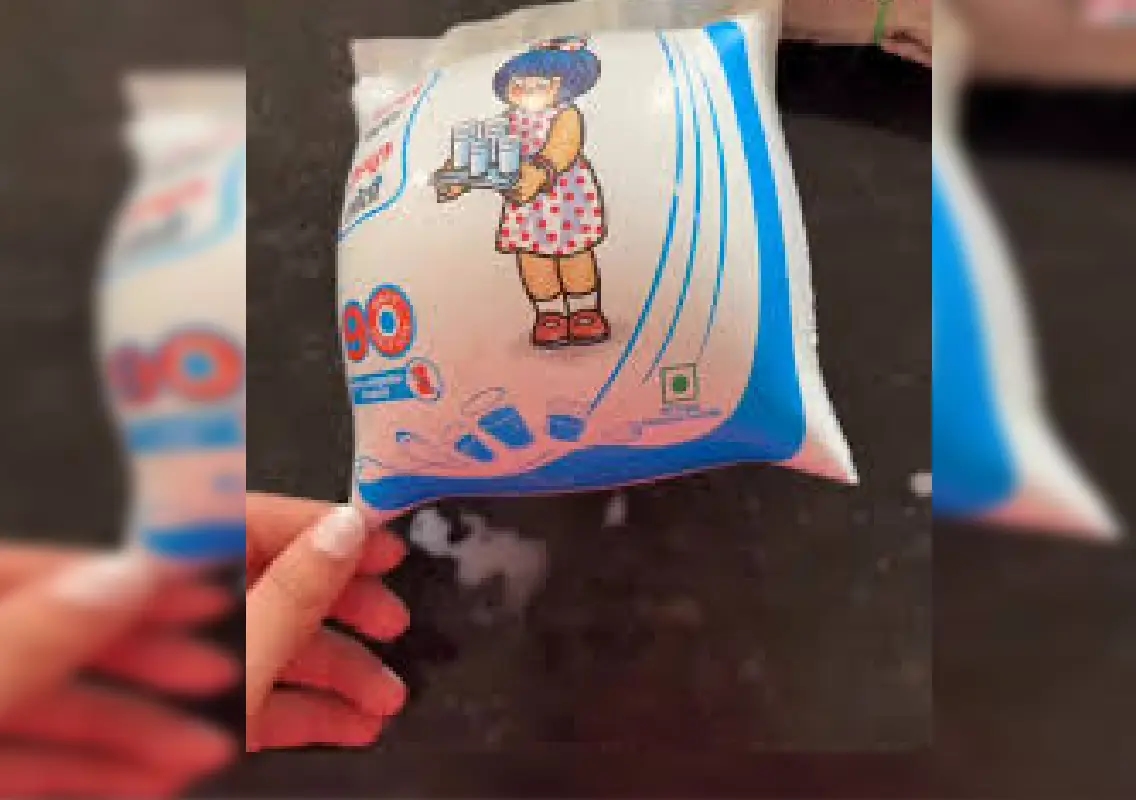


A viral video showing a swollen milk packet from Amul has sparked fresh concerns about food safety and delivery practices, with users questioning the handling standards of quick commerce platform Zepto.
What the video shows
The clip, widely shared on social media, highlights a visibly bloated milk packet—often considered a warning sign of spoilage. The incident has led to growing public concern about how perishable items are stored and transported in rapid delivery systems.
Experts warn of spoilage risks
Food safety experts note that swelling in milk packets can occur due to bacterial growth, typically caused by improper temperature control during storage or transit.
If milk is not consistently kept within the required cold chain, it can spoil quickly, making it unsafe for consumption.
Spotlight on quick commerce
The incident has intensified scrutiny on fast-delivery platforms like Zepto, which promise delivery within minutes but rely heavily on efficient warehousing and logistics.
Consumers are now questioning whether speed is being prioritised over proper handling of temperature-sensitive products like milk and dairy.
Calls for stricter checks
Experts and users alike are calling for:
- Better cold storage systems
- Regular quality inspections
- Clear accountability in supply chains
They emphasise that maintaining food safety standards is critical, especially for essential daily items.
Consumer awareness grows
The viral video has also highlighted the importance of consumer vigilance. Buyers are being advised to check packaging conditions and avoid using products that appear swollen, damaged or unusual.
As quick commerce continues to expand rapidly in urban India, the incident serves as a reminder that speed must not compromise safety.