









The greatest celebratory event in the world, with the least amount of political clout among people who love a game, is the FIFA World Cup. Christmas, celebrating the birth of Jesus Christ; Vesak, the Buddhist global festival; Eid-al-Fitr, the festival of breaking the fast; Kumbhamela, the sacred river-bathing festival of light; the Lantern festival, the last day of the spring festival in China; or the Vienna festival in Austria are not comparable to the FIFA World Cup festival, whenever or wherever it is played, for no sectarianism being present.
This time the world cup is celebrated in three places; in eleven stadiums in the United States, three stadiums in Mexico and two stadiums in Canada with the inaugural in a stadium in Mexico. The event is exceptional as every unit is game-centric, play-centric, team-centric, goal-centric, success-centric, pleasure-centric and more than anything else, people-centric. There is a small Indian presence, in the member of the Qatari World Cup Squad, Tahsin Mohammed Jamshid, born in Qatar, to Keralite parents from Kannur in Kerala, the first player of Indian descent to be selected in any World Cup team. India has also a symbolic presence in one of the eighteen title songs of the world cup, with Ranjith from Mumbai’s Andheri, originally a Keralite from Palakkad in Shornur who choreographed a major promotional song, sung by Nora Fatehi, the Moroccan born Canadian singer.
Eighteen songs of the world cup were sung by very well known celebrities of music. Shakira, the Colombian singer who sang ‘Waka Waka’ song in the South African FIFA Cup contests more than fifteen years ago, was there to sing a new song titled ‘Dai Dai’. In every stadium people sang together when they arrived dressed in the uniforms of each of the teams of the contesting countries and indeed some of them in traditional attire.
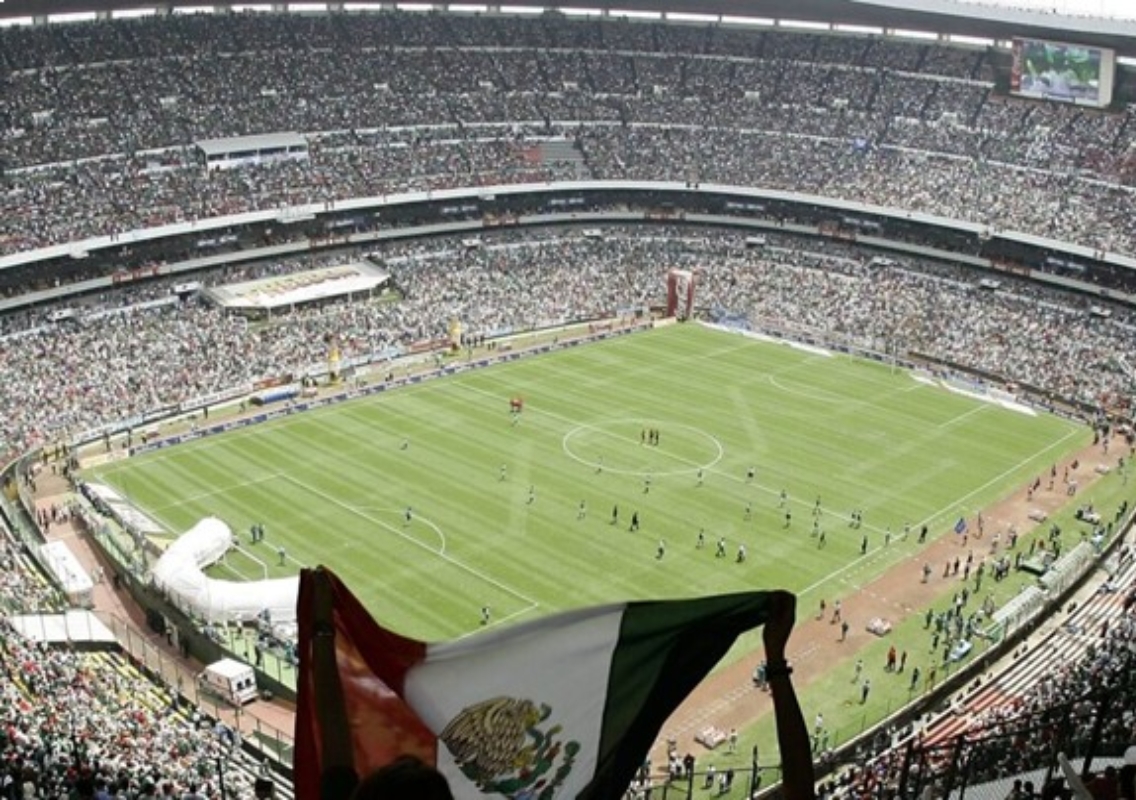
The inaugural of the thirty-fifth FIFA World Cup took place at the stadium, Estadio Azteca located in Coyoacan, Mexico City. Mexicans who suffered the most from the Spanish invasion forgot about it and sang Spanish songs in their usual style. For them it was playing a people’s game and they were a part of it. The presence of the ball was felt everywhere; through exhibitions in bookstalls, shop windows, on dining tables in the courtyards of the houses, in sitting rooms where they watched television and in their loud shouts and shrieks in stadiums, as any player made a quick move or a pass or a dribble or a kick. It looked as though the ball rolled even in their sleep. The magical mesmerism of the football kept rolling with no moment of unwanted disturbances ever.
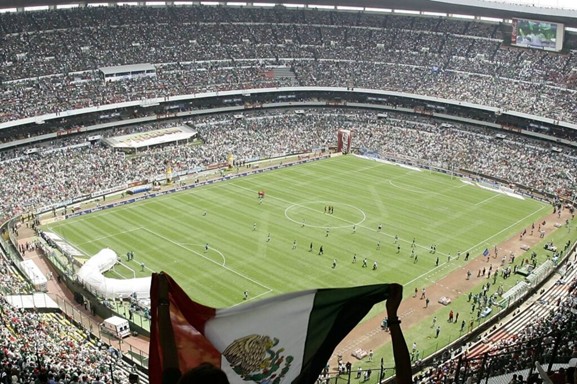
On 11 June 2026, at the inaugural, there seemed to be the presence of a ball which got a strong kick four years ago from Qatar where the previous world cup festival was organised and landed inside the covered stadium. The hosting nations are three instead of one; from thirty two teams it has gone to forty eight teams and from sixty four competitions it has gone to hundred and two. Major nations who won the cup in the past like Argentina, Brazil, France, Portugal, Germany, Spain and England are all contesting, while teams like Morocco, Colombia, Belgium, Qurasia, Netherlands and Senegal are some of those countries who will vie with each other as usual. Curaçao, Cape Verde, Jordan and Uzbekistan have joined as new members. The hosting countries have created new fields. Flags of many countries are flying in different streets wherever the matches are conducted. Plenty of Fun Parks are created for the benefit of the crowding people in each of the locations as the forty day tournament follows. Boundaries between and among people are wiped out as the multi-lingual song with ‘Dai’, Italian; ‘Kou’, Japanese; ‘Dale’, Spanish; ‘Allaz’, French; and ‘Let us go’, English; are heard in the inaugural song in the Estadio stadium when Shakira the Colombian and Burna Boy, the Nigerian presented it together as the international motivation cry.
Most who came over recalled the words of Gabriel Garcia Marquez, the Colombian; who won a Nobel Prize in 1982 for his novel ‘One Hundred Years of Solitude’; a football lover, is supposed to have made a statement that ‘who wins or loses is immaterial, the best sought is one of seeing the match’. The man lived in a house, twelve kilometers away from the stadium, in a place called San Angel.
Football technically has improved very much. Cerberus cameras are kept to record the goal keeper’s movements. There are Hawk-Eye visual tracking systems with multiple high speed cameras; fourteen camera systems in the view of the goal frame to record the exact position of the player and the ball through goal technology.
People remembered Pele, the Brazilian, the king of football, the forward player; Diego Maradona, the Argentinian; Franz Beckenbauer, the German; Zinedine Zidane, the French; George Best, the Irish; Eusebio the Portuguese; and Johan Cruyff, the Dutch; Ronaldino, the Brazilian; all of whom lifted the game of football into the greatest of games of common people who loved it beyond the players, the venue and the team countries.
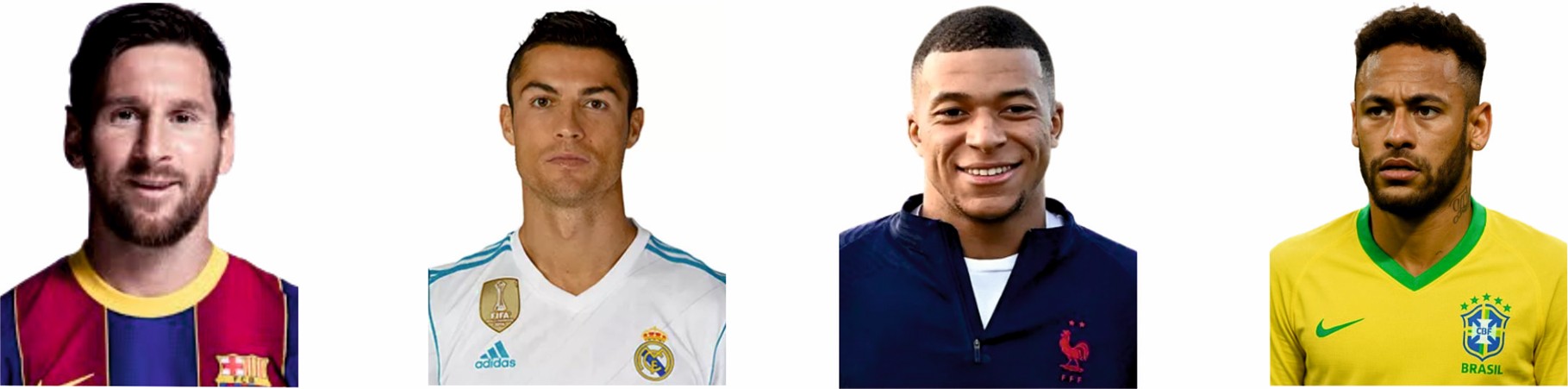
Similarly, people now look up to Lionel Messi, the Argentinian; Christiano Ronaldo from Portugal; Kylian Mbappe from France and Neymar from Brazil, not to forget many others, and their playing of the game. It does not matter to the people who win or who loses as Gabriel Marquez said, but what matters to them is the playing of the game and it may not be wrong to say that they look at the movement of the ball and as the goal is achieved, look at the person who did it. For people, football is the most wonderful game that they could ever participate by watching the movements of the ball through the players.
………………………………….
Prof. Sunney Tharappan, is Director of College for Leadership and HRD, Mangaluru. He trains and writes and lives in Mangaluru. Email: [email protected]