







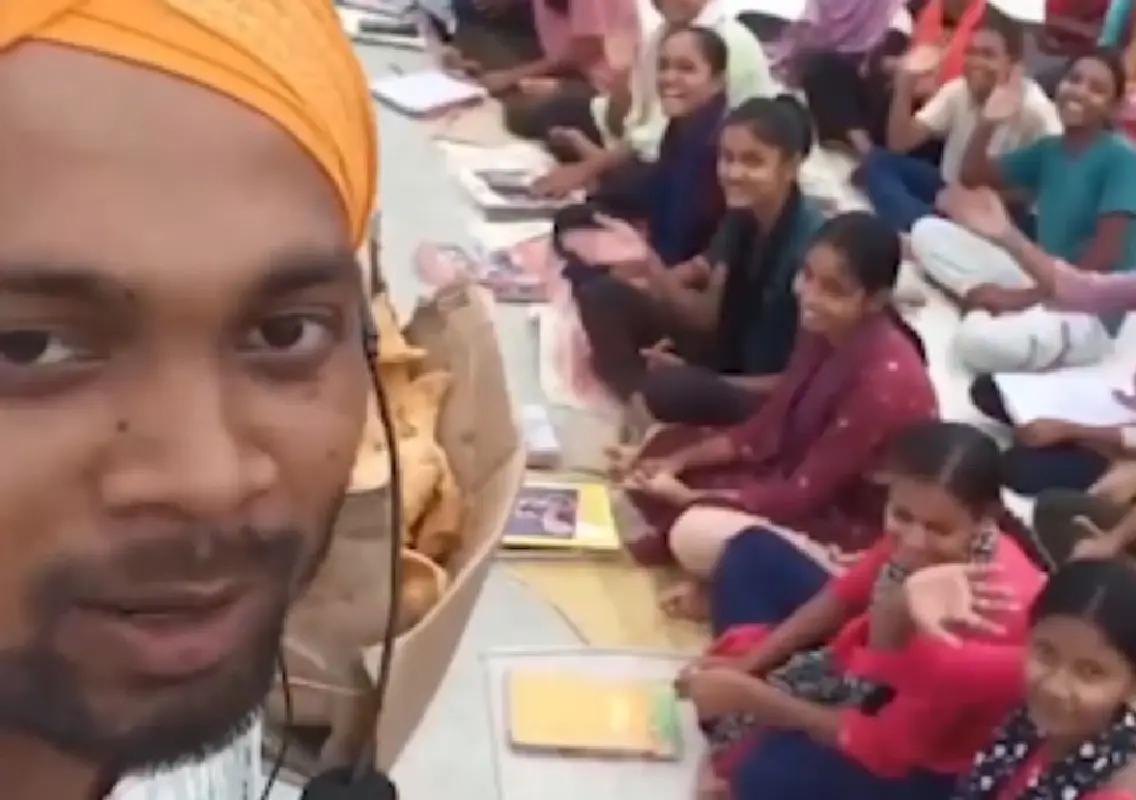


In a small town in Bihar, a simple rooftop has become a powerful symbol of hope and education, thanks to the efforts of Rohit Kumar, a vegetable seller who turned his struggle into a mission.
From survival to purpose
Rohit Kumar grew up in a financially struggling family, where his mother worked tirelessly—selling cow dung—to support his education. Despite his own academic difficulties, including struggling to pass Class 10, he always believed in the power of learning.
To support his family, Rohit sold vegetables after school. But when financial pressures increased, he began tutoring a few children in his neighbourhood, charging a modest fee of ₹125 per month—while allowing those who couldn’t afford it to study for free.
A classroom on a rooftop
What started with just four students on his rooftop soon began to grow. Despite facing ridicule from people who doubted his abilities, Rohit remained committed to teaching.
He focused on simplifying complex subjects like science, moving away from rote learning and encouraging curiosity. His classes often run from early morning till evening, including weekends.
From 4 students to 1,000 dreams
Over time, word spread, and more children joined. Today, nearly 1,000 students attend classes on his rooftop—many from families who cannot afford formal schooling or private tuition.
The rooftop has become more than just a learning space; it is a place where children feel safe to ask questions, explore ideas, and build confidence.
Beyond the classroom
Rohit’s students have even created his social media presence, where his teaching methods and simple experiments now reach a wider audience.
However, for Rohit, the biggest achievement is personal—his mother no longer has to work. She now watches her son teach, witnessing the impact of a dream that grew from hardship.
A vision for the future
Rohit hopes to expand his initiative into affordable online education, aiming to reach more children across the country.
His journey highlights how determination and compassion can transform even the simplest spaces into centres of learning—proving that education does not always need walls, but it always needs purpose.