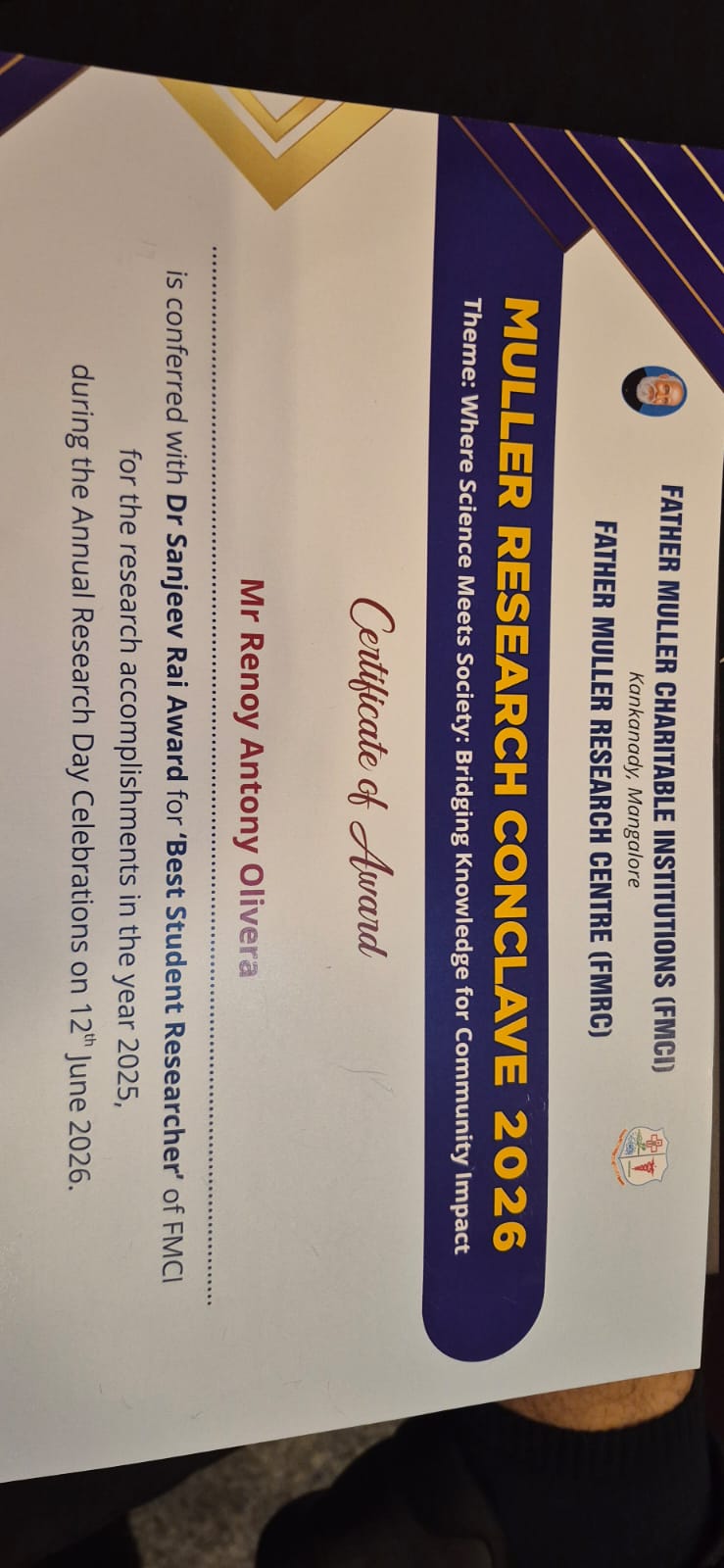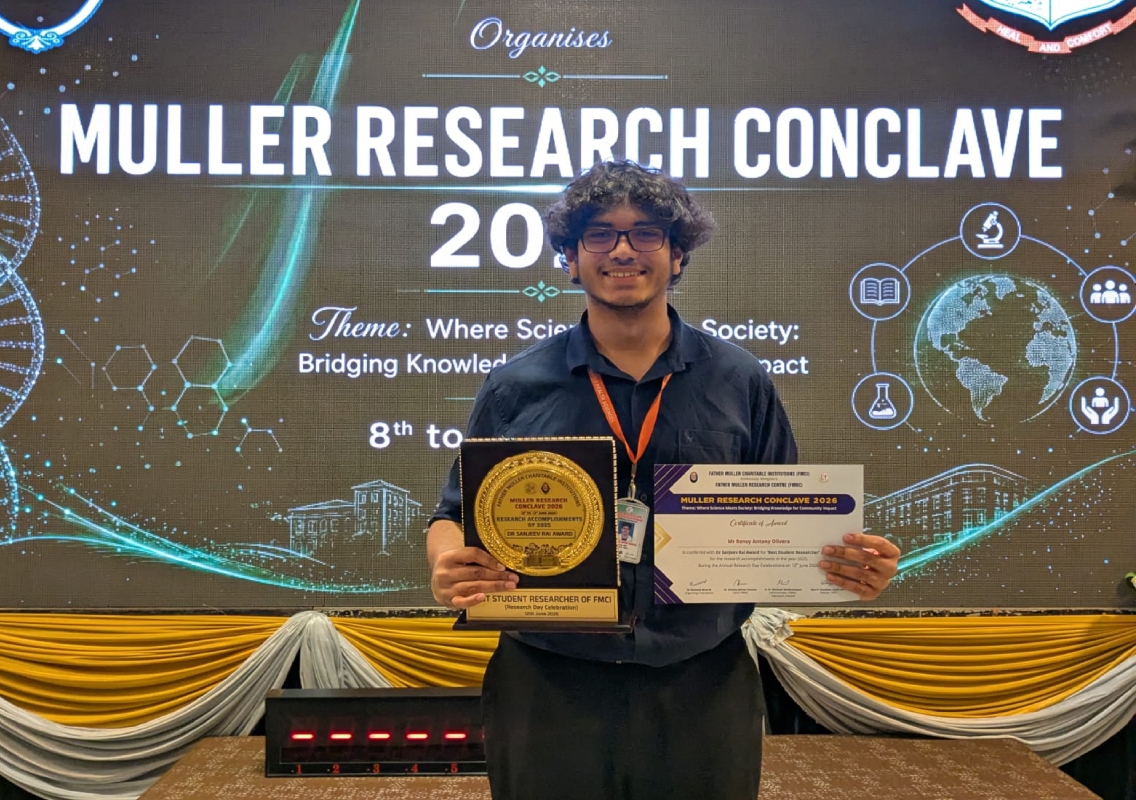


Mangaluru: Renoy Antony Olivera, a student of Neuroscience Technology at Father Muller College of Allied Health Sciences, has been honoured with the prestigious Dr. Sanjeev Rai Award for Best Researcher by Father Muller Charitable Institutions (FMCI), recognising his exceptional contributions to scientific research and academic scholarship.
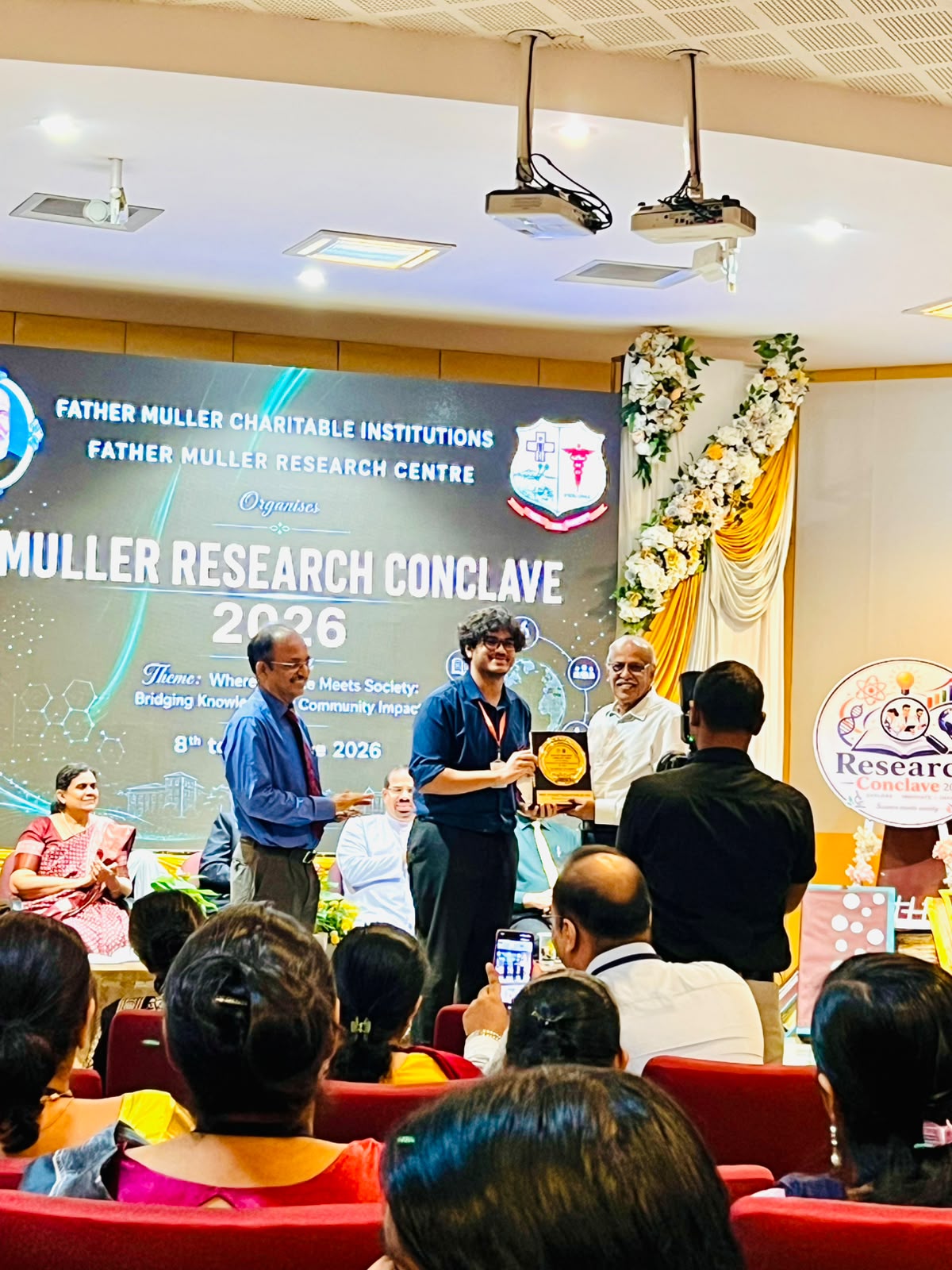
The award, one of the institution’s highest honours for research excellence, was presented during the Muller Research Conclave 2026.
First non-MBBS student to receive the honour
Named after Dr. B. Sanjeev Rai, whose visionary leadership played a pivotal role in shaping the Father Muller Research Centre, the award recognises outstanding research contributions across FMCI’s constituent institutions, including Medical, Allied Health Sciences, Nursing, Physiotherapy, and Homoeopathy.
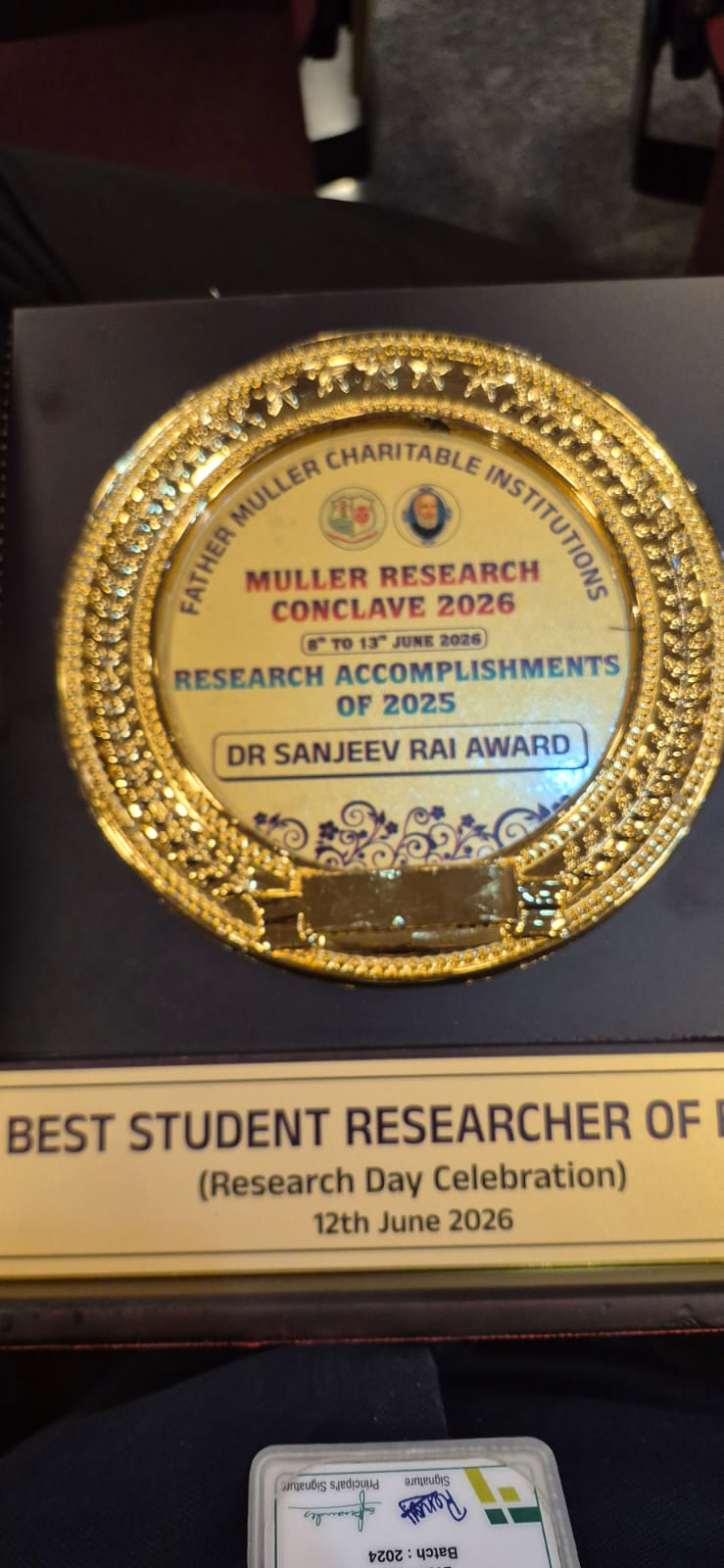
In a significant milestone, Renoy becomes the first and only non-MBBS student to receive this prestigious distinction, highlighting the growing research culture within Allied Health Sciences and other non-medical disciplines.
The recognition reflects FMCI’s commitment to fostering innovation, inquiry, and academic excellence among students across diverse fields of study.
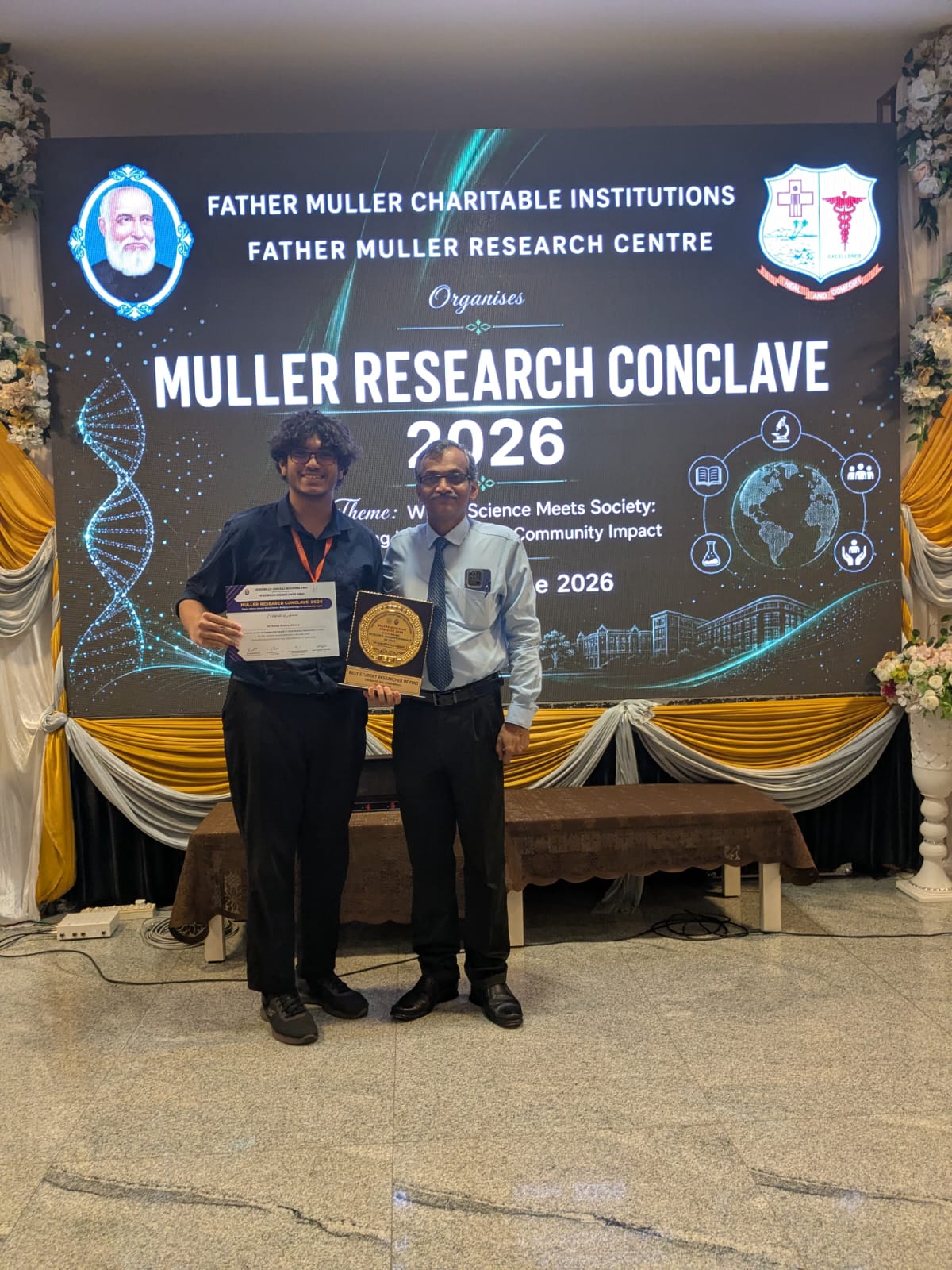
International recognition through neuroscience research
Renoy’s achievement follows an impressive research journey spanning neuroscience, computational science, genomics, and mathematics.
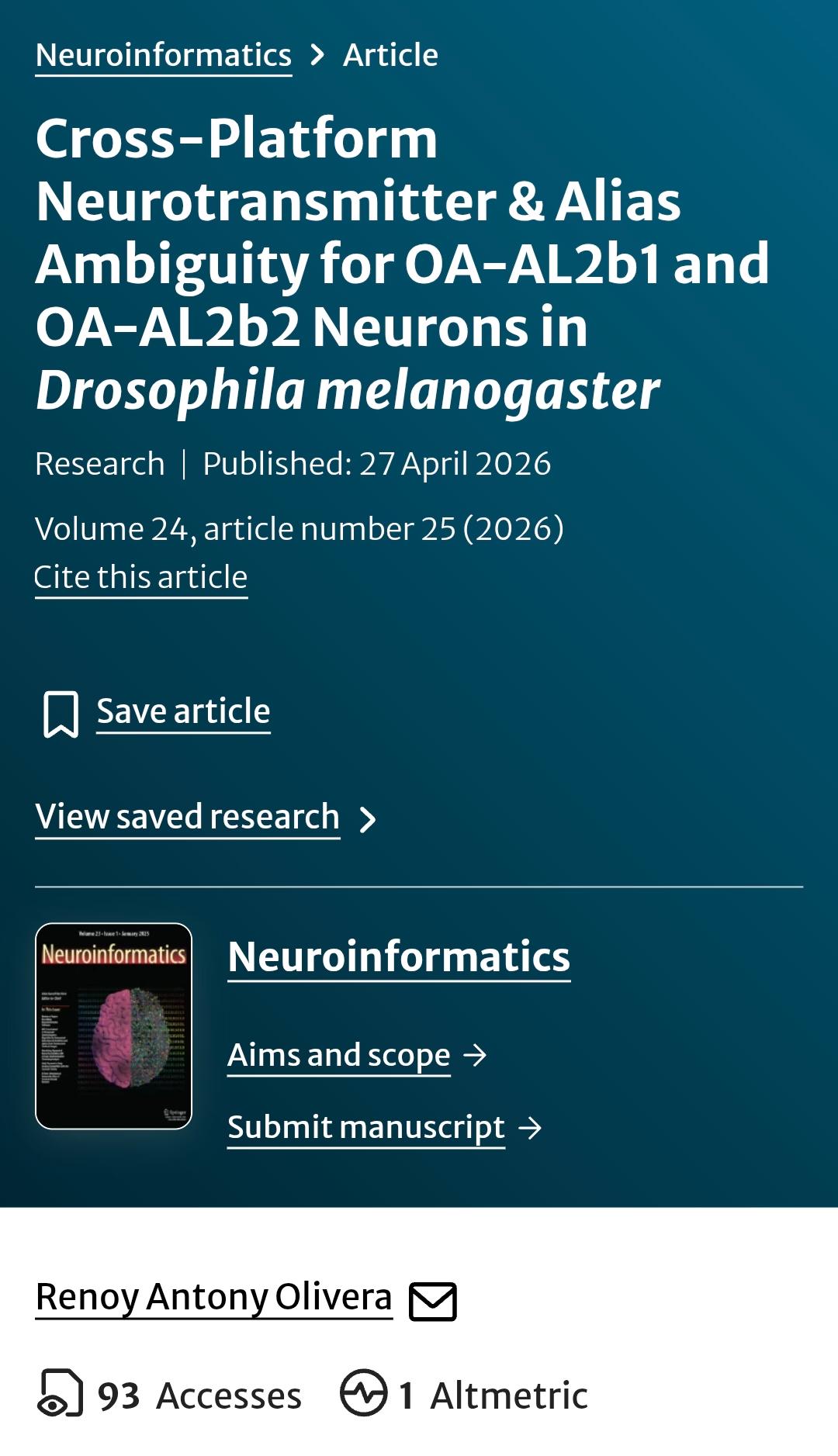
Earlier this year, he achieved a major academic milestone by publishing a single-author research paper in Neuroinformatics, a leading Q1 journal published by Springer Nature.
His research paper, titled “Cross-Platform Neurotransmitter & Alias Ambiguity for OA-AL2b1 and OA-AL2b2 Neurons in Drosophila melanogaster,” examined inconsistencies in neuron nomenclature and neurotransmitter annotation across major neuroscience databases and connectomics platforms.
The publication brought international visibility to undergraduate-led research from Father Muller Institutions and demonstrated the growing contribution of young researchers to global scientific discourse.
Mentorship played key role
Renoy’s research journey began through an institutionally funded project under the mentorship of Dr. Shivashankara A.R. and co-mentorship of Dr. Pauline Anand.
He credits their guidance in helping him develop research skills, formulate scientific questions, and navigate the publication process.
Their mentorship enabled him to pursue interdisciplinary research and contribute meaningfully to emerging areas of neuroscience and computational biology.
Global success at international competition
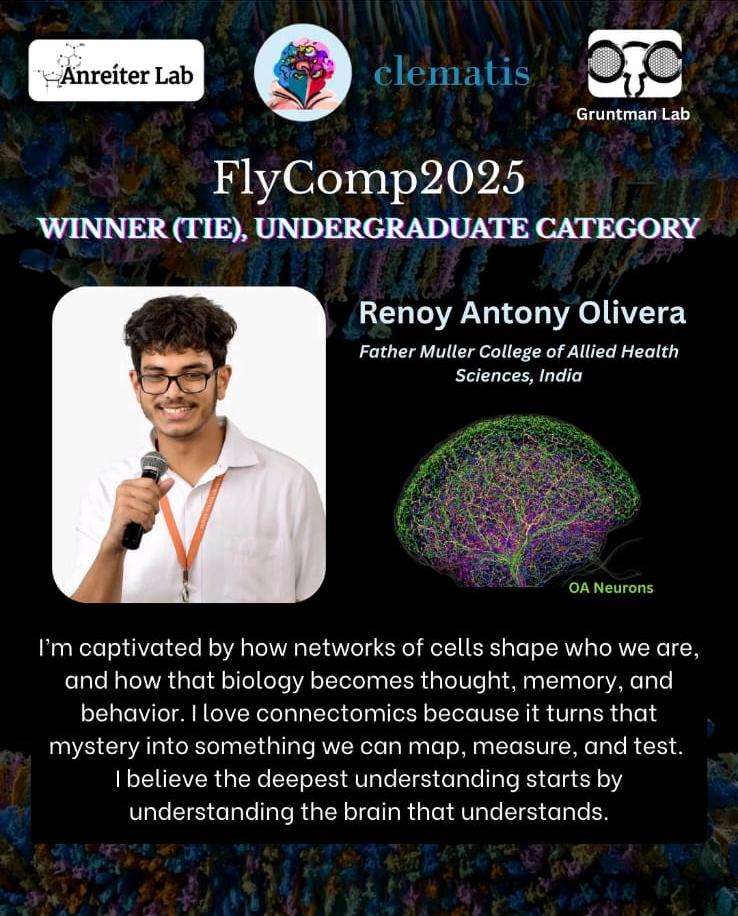
Further enhancing his academic credentials, Renoy secured first place in the Undergraduate Category at the International Clematis Connectomics Research Competition.
Notably, he was the only Indian among the winners of the prestigious competition, which brought together emerging scholars in connectomics and computational neuroscience from across the world.
The competition was associated with leading research groups, including the Gruntman Lab and the Anreiter Lab at University of Toronto.
His success on the international stage has further elevated the profile of undergraduate research at FMCI.
Recognition inspires future research
Speaking on the occasion, Renoy expressed gratitude to the management of the Father Muller Research Centre, his mentors, faculty members, collaborators, friends, and family for their unwavering support.
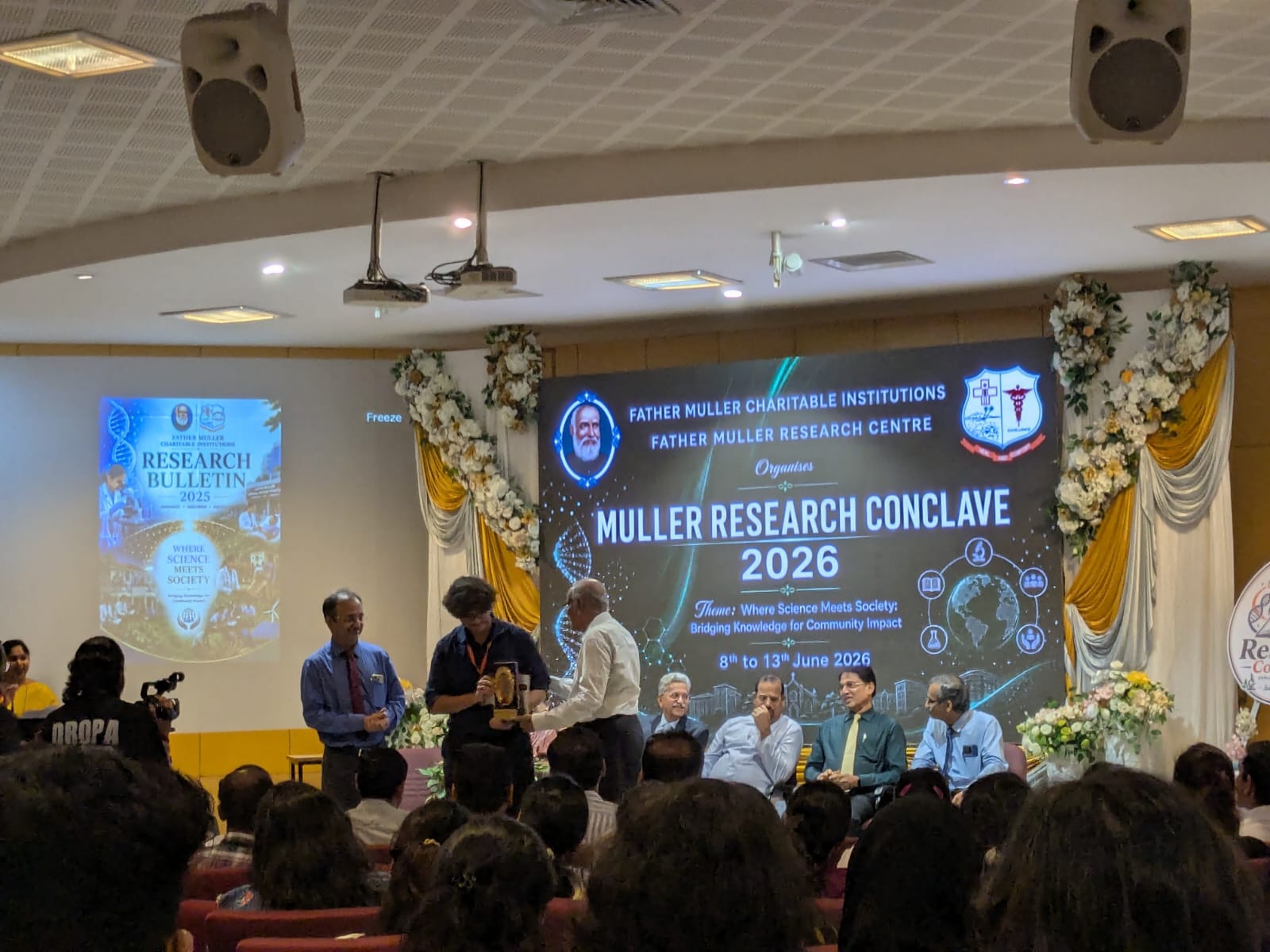
He stated that the award represents not the culmination of his academic journey but a motivation to continue pursuing meaningful scientific questions and contributing to interdisciplinary research.
Renoy is the son of noted educationist, global public speaker, and writer Ronald Olivera and Smitha Olivera.
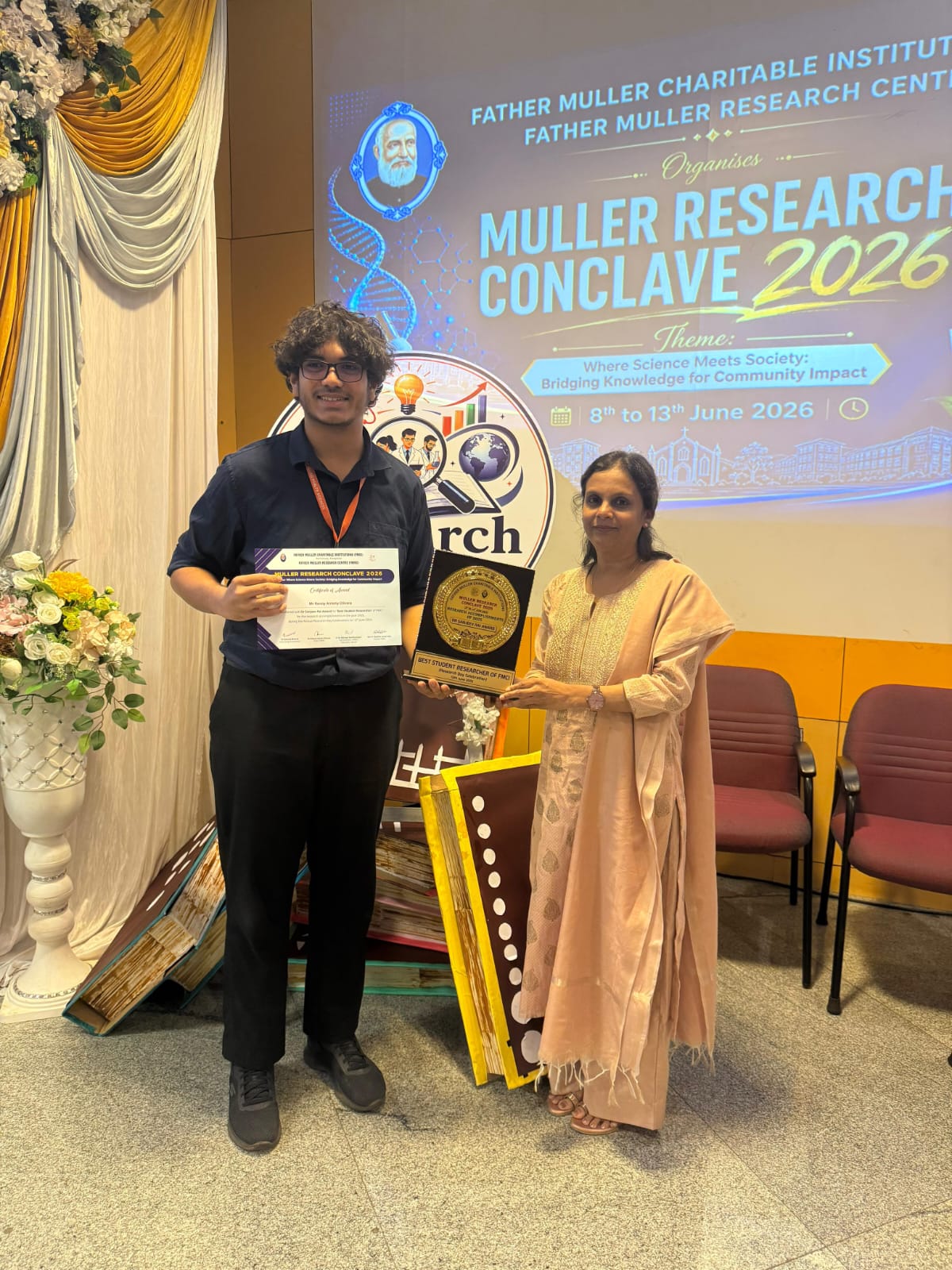
His achievement stands as a testament to the power of curiosity, perseverance, and dedication to learning, while setting new benchmarks for aspiring undergraduate researchers.
The recognition also reflects the growing emphasis placed by Father Muller Charitable Institutions on nurturing research talent and creating opportunities for students to contribute to scientific advancement from an early stage in their academic careers.