







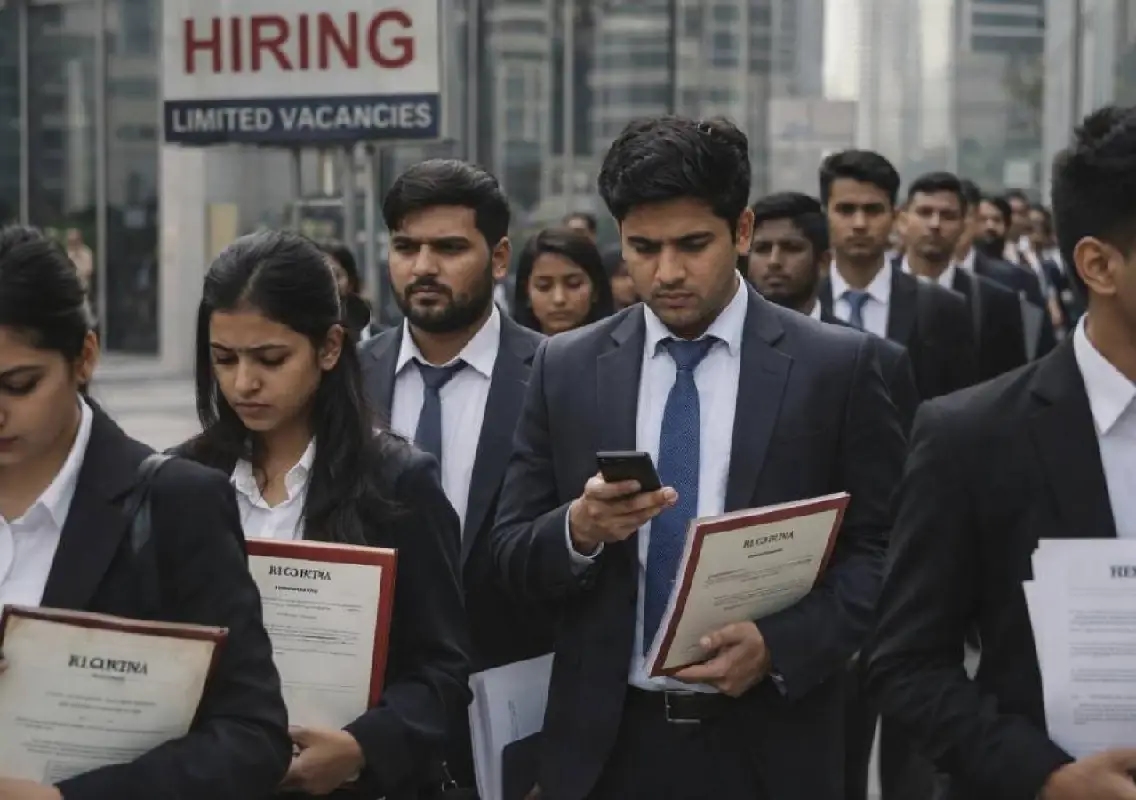


India is witnessing a worrying shift in its employment landscape, with a sharp rise in the number of educated yet unemployed youth. A new report by Azim Premji University highlights that graduates now make up a significant majority of the unemployed population aged 20 to 29.
Sharp rise in unemployed graduates
According to the ‘State of Working India 2026’ report, nearly 67% of unemployed youth in 2023—around 1.1 crore individuals—were graduates. This marks a dramatic increase from 32% (30 lakh) in 2004.
At the same time, access to higher education has expanded significantly. The share of graduates among youth rose to 28% in 2023 (6.3 crore) compared to just 10% in 2004 (1.9 crore).
Jobs not keeping pace with education
The report points out a clear imbalance: while approximately 50 lakh graduates were added annually between 2004 and 2023, only around 28 lakh jobs were created each year for them. Of these, just 17 lakh were salaried positions.
This mismatch has resulted in a surplus of degree holders without adequate employment opportunities, slowing income growth among graduates.
Skill gaps and employability concerns
Experts attribute the issue to several factors, including lack of job-ready skills, limited work experience, and mismatches between education and industry needs. Many young graduates are also choosing to wait longer for suitable employment rather than taking up immediate work.
Interestingly, this trend is observed even among youth from lower-income households, reflecting improved financial resilience compared to earlier years.
Earnings gap narrowing
While graduates still earn more than non-graduates in entry-level jobs, the advantage is shrinking. After a period of growth between 2004 and 2011, earnings for young graduates—especially men—have slowed since 2017.
The report also notes a decline in young men pursuing education, dropping from 38% in 2017 to 34% in 2024, often due to the need to support family incomes.
Barriers to higher education remain
Despite expansion, access to professional courses like engineering and medicine remains limited for many due to high costs, often exceeding the annual expenditure capacity of poorer households.
A growing challenge for India’s future
The findings underline a critical challenge—bridging the gap between education and employment. As more youth pursue degrees, the need for job creation, skill alignment, and inclusive opportunities becomes increasingly urgent.