







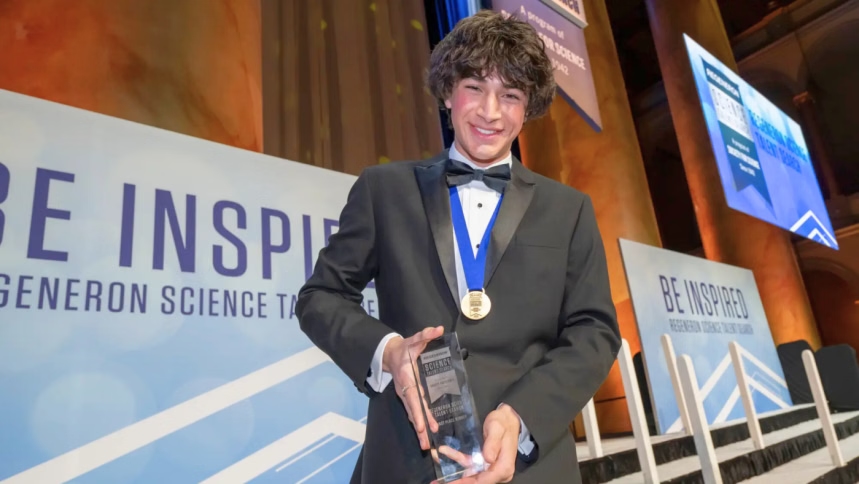


In a discovery that has astonished the global scientific community, a high school student from California has identified nearly 1.5 million previously unknown cosmic objects by applying artificial intelligence to archival data from a retired NASA mission, dramatically changing how astronomers mine space data.
Seventeen-year-old Matteo Paz used AI and machine learning techniques to analyse vast datasets from NASA’s decommissioned NEOWISE mission, uncovering objects that had remained hidden for years.
Forgotten data, fresh approach
Paz worked with nearly 200 billion infrared data points collected by NEOWISE, which previously focused mainly on tracking near-Earth objects. Traditional analysis methods had missed faint or irregular signals buried in the data. Paz designed his own machine-learning model capable of detecting subtle patterns at unprecedented speed.
Within just six weeks, the AI system identified a vast range of celestial phenomena, including distant quasars, supernovas, and other deep-space objects. Scientists say the sheer scale of the discovery is as remarkable as the method itself.
Mentorship at Caltech
The project began at Caltech’s Planet Finder Academy, where Paz was mentored by astrophysicist Davy Kirkpatrick. As a secondary school student from Pasadena, Paz benefitted from close academic guidance, helping refine both the scientific goals and computational design of the project.
The findings were later peer-reviewed and published in The Astronomical Journal, marking a rare achievement for a student at his level.
NASA praise and real-time impact
NASA Administrator Jared Isaacman publicly praised Paz, even offering him a future role at the agency along with a symbolic fighter jet ride as encouragement. Paz has since been offered a research assistantship at Caltech.
More significantly, the coordinates generated by his AI model are now being used to guide follow-up observations by the James Webb Space Telescope, directly influencing active space research.
A glimpse of astronomy’s future
Paz’s work highlights a growing shift in astronomy, where artificial intelligence and young researchers are unlocking discoveries from existing data. Scientists say the project demonstrates how fresh perspectives, strong mentorship, and technology can reshape our understanding of the universe—without launching a single new satellite.