





Chennai: Vijay Sethupathi‘s Tamil drama Baththa is set to make its digital debut on Netflix on October 29, 2026, giving audiences another opportunity to watch the film after its modest theatrical performance. Directed by Balaji Tharaneetharan, the emotionally driven drama will be available in five languages: Tamil, Telugu, Hindi, Kannada and Malayalam.
The film, which arrived in theatres on October 1, combines an unusual premise with humour and emotional storytelling. It follows an encounter between a feared gangster and a young schoolboy whose accidental mistake sets off an unexpected chain of events.
Despite favourable reviews for its direction, performances and music, Baththa struggled to make a significant impact at the box office. Its reported worldwide gross stood at around Rs 33 crore, according to Sacnilk.
The Netflix release is expected to introduce the film to viewers who may have missed its theatrical run, while making it accessible to audiences across several language markets.
Baththa OTT release date and streaming platform
Baththa will premiere on Netflix on October 29, 2026. The digital release follows its theatrical run, which began on October 1.
The film will be available in Tamil, Telugu, Hindi, Kannada and Malayalam, allowing viewers to watch it in their preferred language.
The five-language release could help the drama reach a wider audience beyond Tamil-speaking viewers. Its mix of an unconventional premise, dark humour and emotional themes also distinguishes it from more conventional gangster films.
For viewers planning to watch the film online, Netflix is the announced streaming platform. The release date places the digital premiere less than a month after its theatrical debut.
What is Baththa about?
The story of Baththa revolves around an unusual predicament involving a gangster and a young boy.
A feared gangster becomes accidentally locked inside a school toilet by the boy. When the child later returns to free him, fear prevents him from completing what should be a simple task.
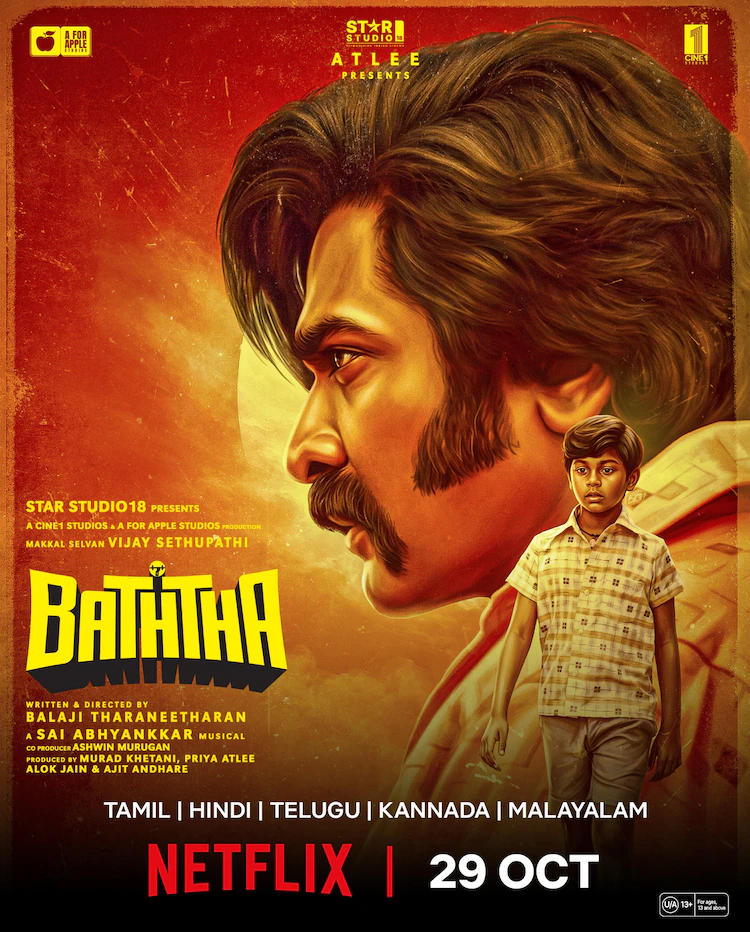
The situation creates an awkward and tense encounter between two people from very different worlds. What begins as a problem involving a locked door gradually develops into an unexpected relationship between the gangster and the child.
The film uses this unusual setup to explore how fear, vulnerability and human connection can emerge in circumstances that initially appear threatening.
Rather than relying entirely on violence or action, the narrative blends comic situations with emotional developments. The boy’s hesitation and the gangster’s presence create the central tension, while their interactions gradually reveal different aspects of their personalities.
The premise also allows the film to examine how people respond when their assumptions about others are challenged.
Vijay Sethupathi leads the cast
Vijay Sethupathi headlines the film, bringing his screen presence to a story that combines the gangster genre with a more intimate emotional narrative.
The cast also includes Lijomol Jose and Sai Prithviraj, alongside Santhy Balachandran, Ajay Ghosh and Arjun Chidambaram.
The film’s character-driven approach places considerable emphasis on performances and interactions rather than spectacle alone. The unusual relationship at the centre of the story provides the foundation for its emotional and comic moments.
Sai Prithviraj plays the young boy whose fear sets the story in motion, while Sethupathi’s character represents the intimidating figure whose encounter with the child becomes central to the narrative.
The contrast between the gangster’s feared reputation and the boy’s vulnerability gives the film much of its distinctive character.
Balaji Tharaneetharan directs the drama
Baththa is directed by Balaji Tharaneetharan, who has shaped the film around an unconventional premise and the interactions between its central characters.
The narrative combines elements of gangster drama with humour and sentiment, moving away from a straightforward crime story. The school setting and the boy’s predicament provide opportunities for awkward situations, while the evolving relationship adds an emotional dimension.
The film also explores themes of masculinity, patriarchy, redemption and empathy. These ideas emerge through the characters and their responses to one another rather than through the gangster premise alone.
The contrast between a feared adult and a frightened child allows the story to examine vulnerability in a setting where physical strength and authority might otherwise dominate.
Critics praised aspects of the film’s direction and performances, although its theatrical collections remained modest.
Music adds to Baththa’s emotional appeal
The music for Baththa has been composed by Sai Abhyankkar, whose work contributes to the film’s blend of humour and emotional storytelling.
One of the songs, Magale, gained attention on social media, appearing in reels and short-form videos.
The song’s online popularity provided the film with visibility beyond its theatrical audience. Music can play an important role in extending a film’s reach after release, particularly when individual tracks connect with audiences through social media.
For Baththa, the soundtrack forms part of the film’s emotional framework, complementing a narrative that focuses on the relationship between its central characters.
The digital premiere could also bring renewed attention to the film’s music as viewers discover the story through streaming.
Baththa’s box-office performance
Although Baththa received favourable responses from critics for its direction, performances and music, it struggled commercially during its theatrical run.
According to Sacnilk, the film collected approximately Rs 33 crore gross worldwide. The figures indicate that the film did not achieve the commercial impact its makers may have hoped for during its cinema release.
Its performance also highlights the difference between critical response and box-office results. A film may attract appreciation for its storytelling or performances without drawing a sufficiently large theatrical audience.
The Netflix premiere provides another route for Baththa to reach viewers. Streaming can make a film accessible to people who were unable to watch it in theatres, while also allowing audiences to discover it after its initial release.
However, the digital release’s eventual viewership and reception will depend on audience interest and the film’s performance on the platform.
Why Baththa could find a new audience on Netflix
The film’s central premise sets it apart from more conventional gangster dramas. By bringing a feared criminal and a frightened schoolboy together, Baththa creates a situation in which humour and tension can coexist.
Its themes of empathy, redemption and human relationships may also appeal to viewers looking for character-driven storytelling rather than action alone.
The five-language release gives the film access to a broader potential audience across India. Viewers who prefer Telugu, Hindi, Kannada or Malayalam will be able to watch the drama without relying exclusively on its original Tamil version.
The streaming premiere also gives the film another opportunity to generate discussion around its performances, soundtrack and unusual narrative.
For Vijay Sethupathi, the release adds another title to his body of work available to streaming audiences. For viewers, it offers a chance to explore a drama that combines the familiar setting of a school with the unexpected presence of a gangster.
Baththa OTT release: Key details
- Film: Baththa
- OTT platform: Netflix
- Digital release date: October 29, 2026
- Theatrical release: October 1, 2026
- Director: Balaji Tharaneetharan
- Lead cast: Vijay Sethupathi, Lijomol Jose and Sai Prithviraj
- Other cast members: Santhy Balachandran, Ajay Ghosh and Arjun Chidambaram
- Music composer: Sai Abhyankkar
- Languages: Tamil, Telugu, Hindi, Kannada and Malayalam
With its Netflix premiere approaching, Baththa is set to reach viewers beyond its original theatrical audience. The film’s unusual storyline, emotional themes and blend of humour and gangster drama could help it find a new audience when it arrives on the streaming platform.