


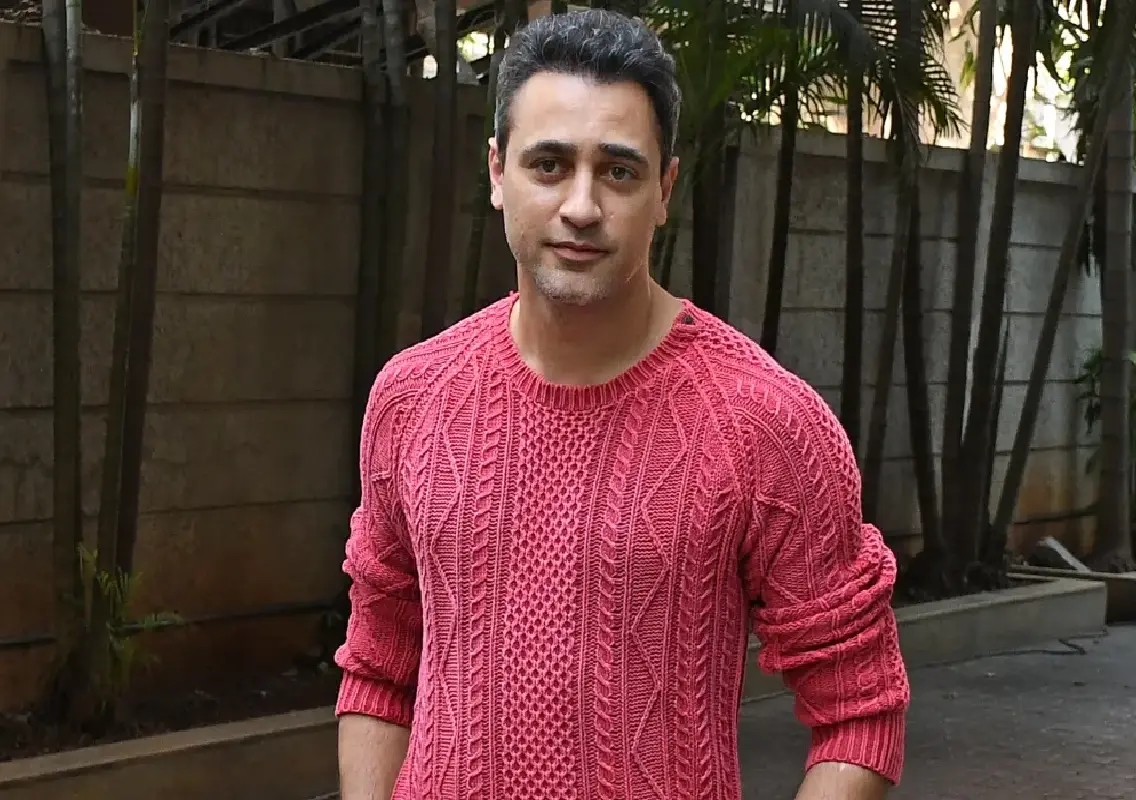


Mumbai: Actor Imran Khan has tendered an unconditional apology before the Bombay High Court for participating in a protest against the Election Commission over the Special Intensive Revision (SIR) of electoral rolls. The 42-year-old actor has also assured the court that he will not participate in similar demonstrations or encourage others to do so in the future.
Khan was detained on October 10 during a protest at Mumbai’s August Kranti Ground. He subsequently received a Leave India Notice (LIN) from the Foreigners Regional Registration Office (FRRO), directing him to leave the country. He challenged the notice before the Bombay High Court.
During Monday’s hearing, Khan submitted that he had no association with the organisers of the demonstration and was unaware of the consequences of participating in the protest.
In his undertaking, the actor stated that he would not take part in any protest in the future, either directly or indirectly influence or instigate others to participate in such demonstrations. He also expressed his respect for India and its Constitution.
High Court questions actor’s participation in political protest
The apology followed strong observations from a bench of the Bombay High Court regarding Khan’s participation in the demonstration. The court pointed out that the actor was an American citizen holding an Overseas Citizen of India (OCI) card and questioned his right to participate in political protests.
The bench told Khan that an OCI cardholder could not participate in political activities in the same manner as an Indian citizen. It asked him to provide a categorical undertaking that he would not take part in similar demonstrations.
“You are an OCI card holder. You can’t behave like an Indian citizen. You have nothing to say about SIR. You had no right to participate. You have to give a categorical undertaking to the court,” the bench observed.
Senior advocate Venkatesh Dhond, appearing for Khan, submitted that the actor had spent his entire life in India despite being born in the United States. He argued that Khan had acquired American citizenship by birth and had not intended to violate any law through his participation in the protest.
The court, however, said his place of birth did not alter his status as a foreign national.
Court draws comparison with protests in the US
During the hearing, the bench asked Khan to consider how an Indian citizen would be treated if they participated in a political demonstration in another country, particularly the United States.
The court observed that an Indian national taking part in such protests abroad could face action, including being sent back to India.
The bench also questioned why Khan had not sought Indian citizenship despite growing up in the country and establishing himself as an actor in the Hindi film industry.
“Since your childhood you have been here. Why don’t you accept Indian citizenship? You have become a Bollywood star here,” the court remarked.
Dhond informed the court that Khan was born in the US and had initially held a Person of Indian Origin (PIO) card before obtaining OCI status in 2006. He also pointed out that the actor had married and worked in India.
The lawyer maintained that Khan was a novice in such matters and had not fully understood the legal implications of participating in the demonstration.
FRRO opposes actor’s submissions
Additional Solicitor General Anil Singh, representing the FRRO, opposed Khan’s submissions. He referred to the actor’s social media posts and an interview as evidence of his involvement in the protest.
Singh also alleged that Khan had participated in several protests in the past and made provocative statements. He argued that tendering an apology could not automatically absolve a foreign national of the allegations raised against him.
The bench also highlighted the consequences of public statements made by celebrities, particularly those with substantial social media followings.
“You are a celebrity and what you say has consequences. See the magnanimity of this country. You are an OCI cardholder and all your recognition is from India, Maharashtra,” the court observed.
The hearing also involved discussion of the government’s authority to take action against foreign nationals and the circumstances surrounding Khan’s participation in the protest.
Court says apology is not a ‘green signal’
The bench clarified that Khan’s apology and undertaking should not be interpreted as permission to participate in similar demonstrations in the future.
It reiterated that OCI cardholders were not entitled to engage in political activities in the same manner as Indian citizens.
“They are here at the mercy of the government. They can’t stay here and criticise. This cannot be accepted. The tendering of the apology is not a green signal,” the bench said.
The observations were made during the hearing of Khan’s petition challenging the Leave India Notice issued by the FRRO. The notice had directed him to leave India but was kept in abeyance last week by a bench comprising Chief Justice MC Tripathi and Justice Advait Sethna.
On Monday, the court took note of Khan’s unconditional apology and undertaking and continued to keep the Leave India Notice in abeyance. The matter has been posted for further hearing on December 7.
The proceedings will continue to determine the challenge to the notice, while the court’s observations underline the restrictions applicable to OCI cardholders participating in political activities in India.